Beijing, historically known as Yanjing and Beiping, is the capital of our nation. Serving as both a political and cultural center, it is also a six-dynasty ancient capital with a profound history. Beyond its majestic city gates, crisscrossing ancient bridges, and densely clustered hutongs, it boasts temples where morning bells and evening drums resonate—sanctuaries of faith and artistic expression. You've surely heard the saying: “Tanze Temple came first, then Beijing City.” But what exactly is the story behind it?
Further Reading:[Beijing Free Travel Guide] Must-Visit Attractions, Accommodation, Food, and Costs
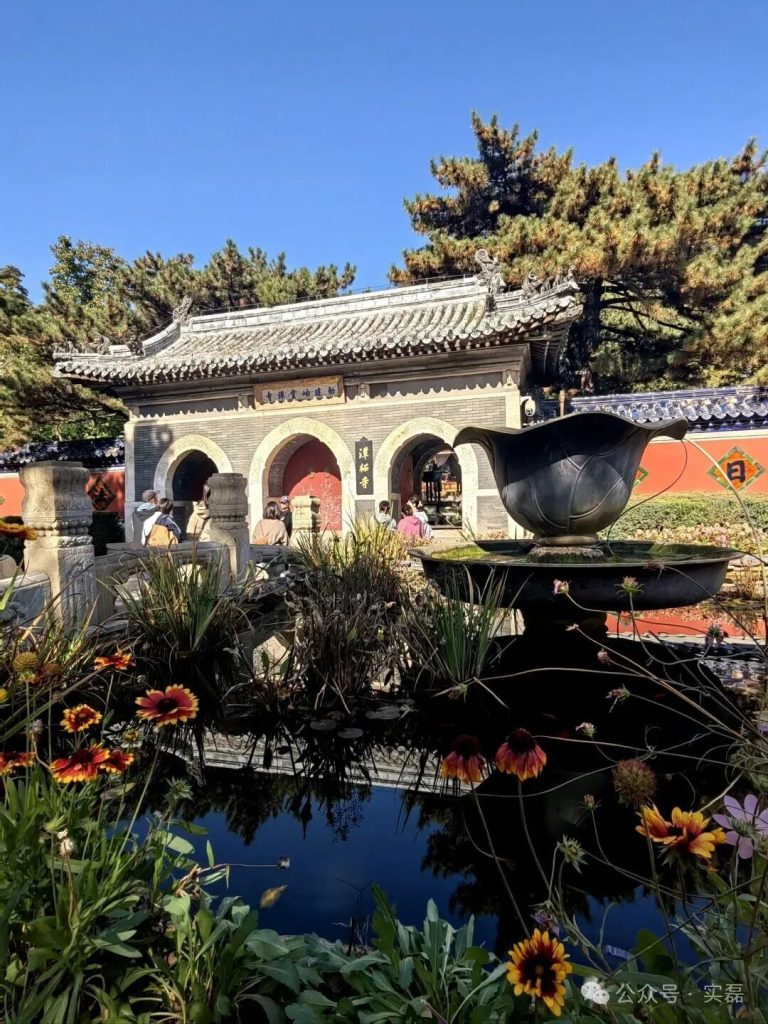
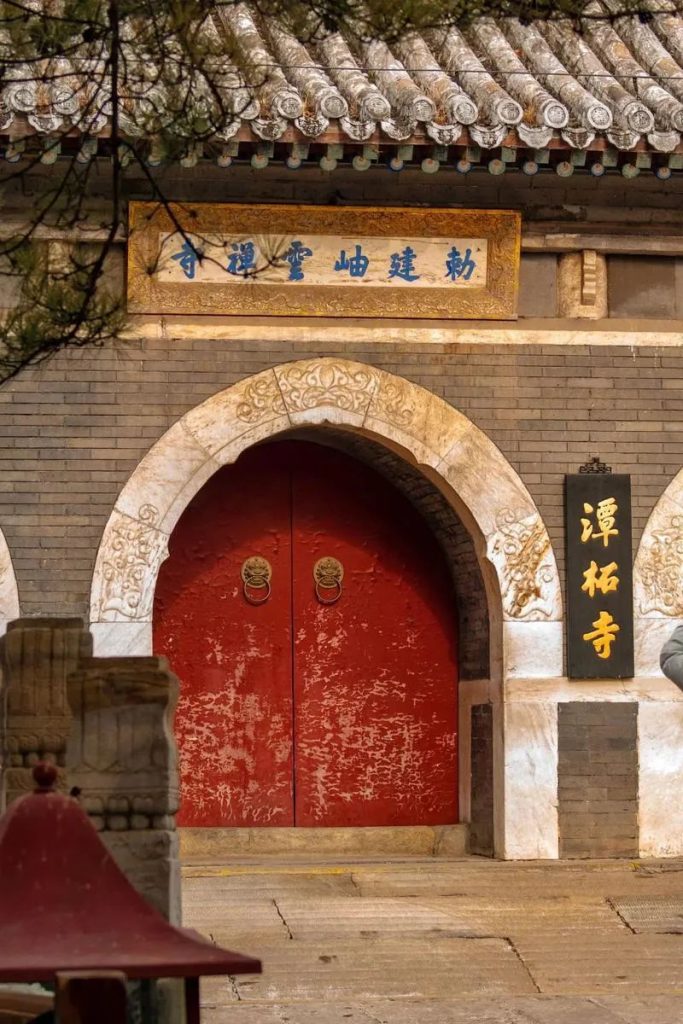
Tanzhe Temple, situated at the foot of Tanzhe Mountain in the southeastern part of Mentougou District, Beijing, is the oldest documented temple in the capital. It is commonly known as Tanzhe Temple due to its fame for the Dragon Pool and zhe trees.
Perched on the southern slope of Baozhu Peak, the temple faces south with its back to the north. Its grounds cover 0.025 square kilometers, while the surrounding area spans 1.12 square kilometers. Including the forests and mountain areas under the temple's jurisdiction, the total area exceeds 1.21 square kilometers.
Tanze Temple stands as one of the cradles of early Buddhist culture in Beijing. A local proverb states, “Tanze Temple came first, then Youzhou City.” Its architectural scale also ranks among the largest of all temples in the capital.
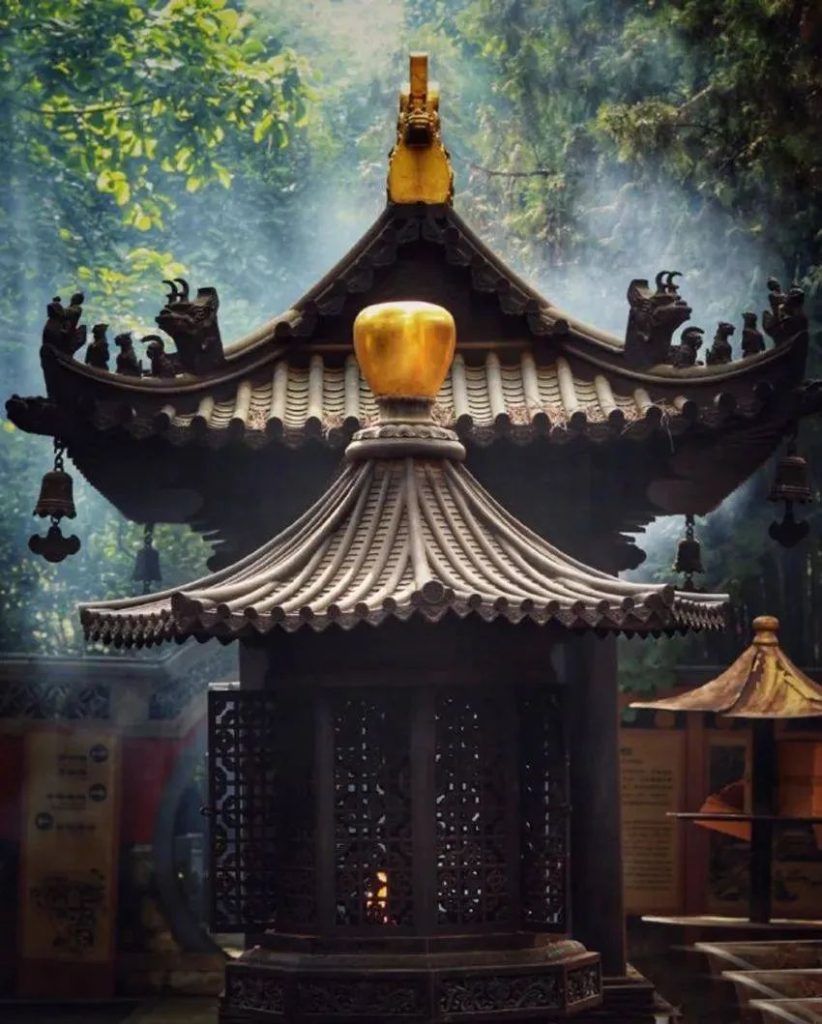
The temple's structures are built along the contours of the mountain, with the northern section higher than the southern. The entire complex is divided into several major sections: the central axis, eastern wing, western wing, and pagoda courtyard, forming the core architectural cluster of Tanzhe Temple.
The central axis runs northward from south to north, featuring a memorial archway, mountain gate, Heavenly Kings Hall, Great Hero Hall, Three Saints Hall (now demolished), and Pilu Pavilion, flanked by eastern and western side halls and corridors.
The eastern wing includes the abbot's quarters, a Qing Dynasty imperial retreat, and the Floating Cup Pavilion. Primarily courtyard-style structures, these served as residences for monks and lodgings for visiting royalty and literati.
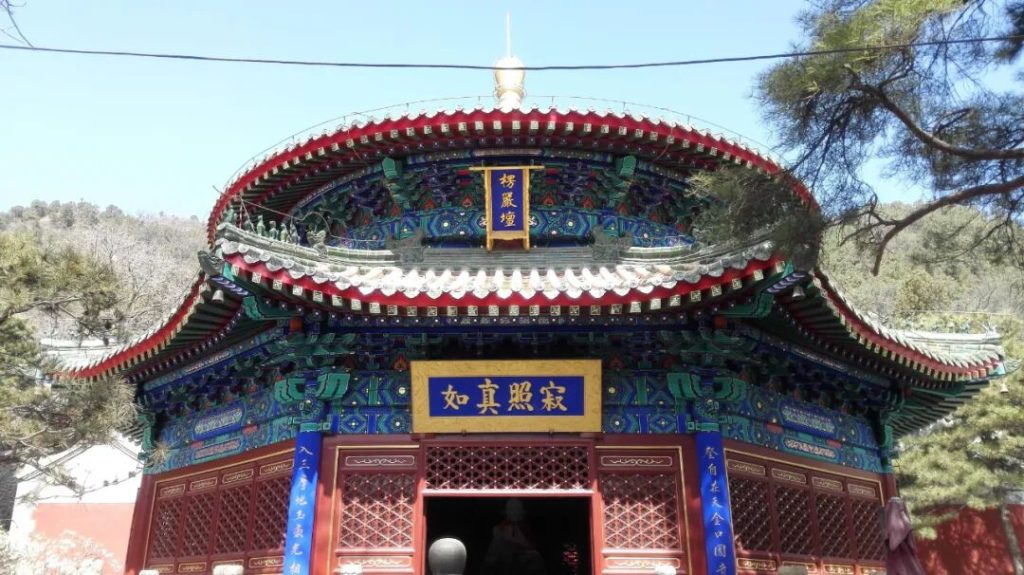
The western wing comprises a temple-style complex of halls, including the octagonal, double-eaved Lingyan Altar (now destroyed), the Precept Platform Hall, and the Guanyin Hall. The Precept Platform, constructed of white marble, features three tiers with intricate patterns carved into its body. The Guanyin Hall stands prominently on the second tier, flanked by the Manjusri Hall and the Ancestral Hall.
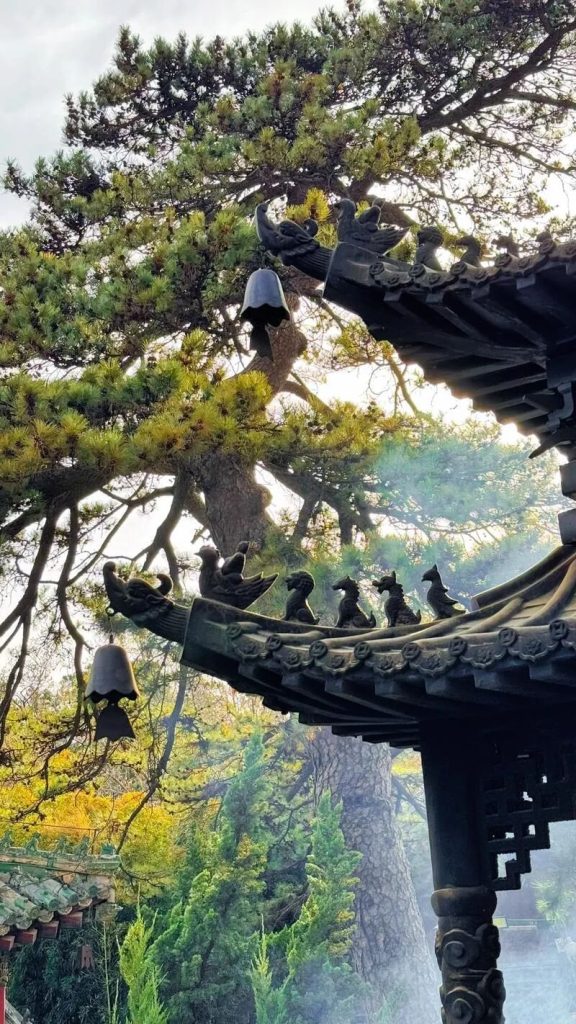
Tanze Temple was first established in the first year of the Yongjia era (307 AD) during the Western Jin Dynasty, initially named Jiafu Temple. During the Wansui Tongtian era (696–697 AD) of Empress Wu Zetian's reign in the Tang Dynasty, the monk Huayan rebuilt the temple centered around the dilapidated Jiafu Temple and renamed it “Longquan Temple.”
Emperor Wanyan Dan of the Jin Dynasty visited Tanzhe Temple to pay respects to the Buddha in the first year of the Huangtong era (1141). He allocated funds for the temple's renovation and expansion, renaming it “Dawanshou Temple.” He became the first emperor to make a pilgrimage to Tanzhe Temple. During the Ming Dynasty, spanning over two centuries, Tanzhe Temple underwent multiple renovations and expansions. Emperors bestowed new names upon the temple several times, resulting in frequent name changes. It was later restored to its original name, Jiafu Temple. The current overall layout was established during the Ming Dynasty.
In the 31st year of Emperor Kangxi's reign (1692), the Qing emperor allocated funds for the temple's restoration. In the 36th year (1697), Kangxi personally bestowed the name “Imperially Commissioned Xiuyun Chan Temple.” From then on, Tanzhe Temple became the largest imperial monastery in the Beijing region. Most of the existing structures within the temple are relics from the Ming and Qing dynasties.
Tan Zhe Temple Tourist Attractions
Mountain Gate
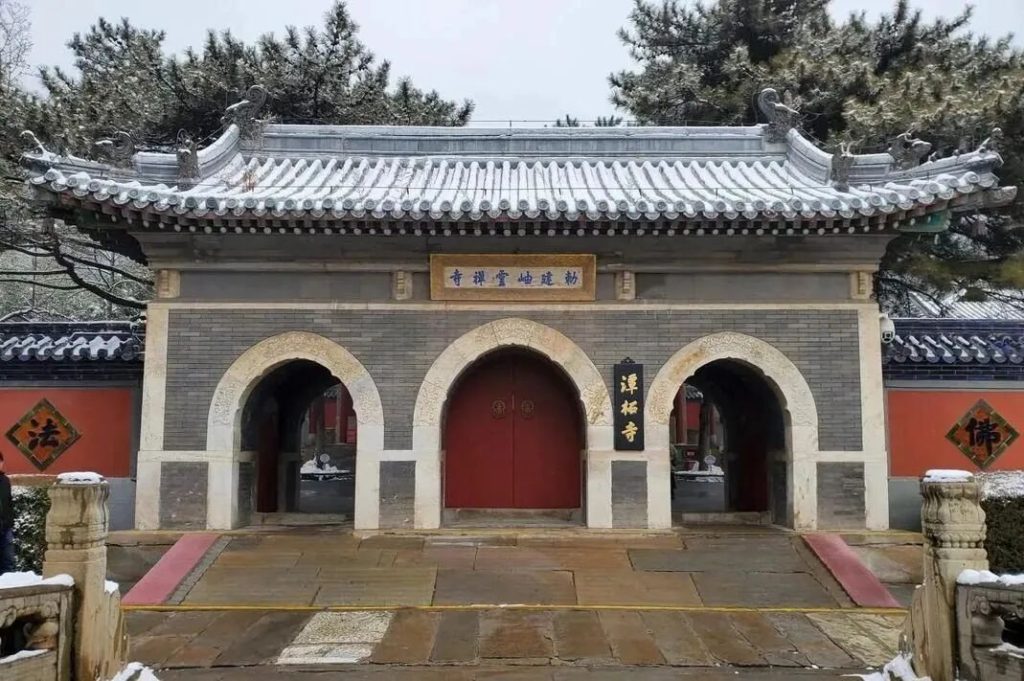
The Mountain Gate of Tanzhe Temple
The Mountain Gate is a three-bay beamless hall with a hip-and-gable roof topped with barrel tiles. Beneath its eaves hangs a stone tablet inscribed with the words “Imperially Commissioned Xiu Yun Chan Temple,” personally penned by Emperor Kangxi of the Qing Dynasty.
Hall of the Heavenly Kings
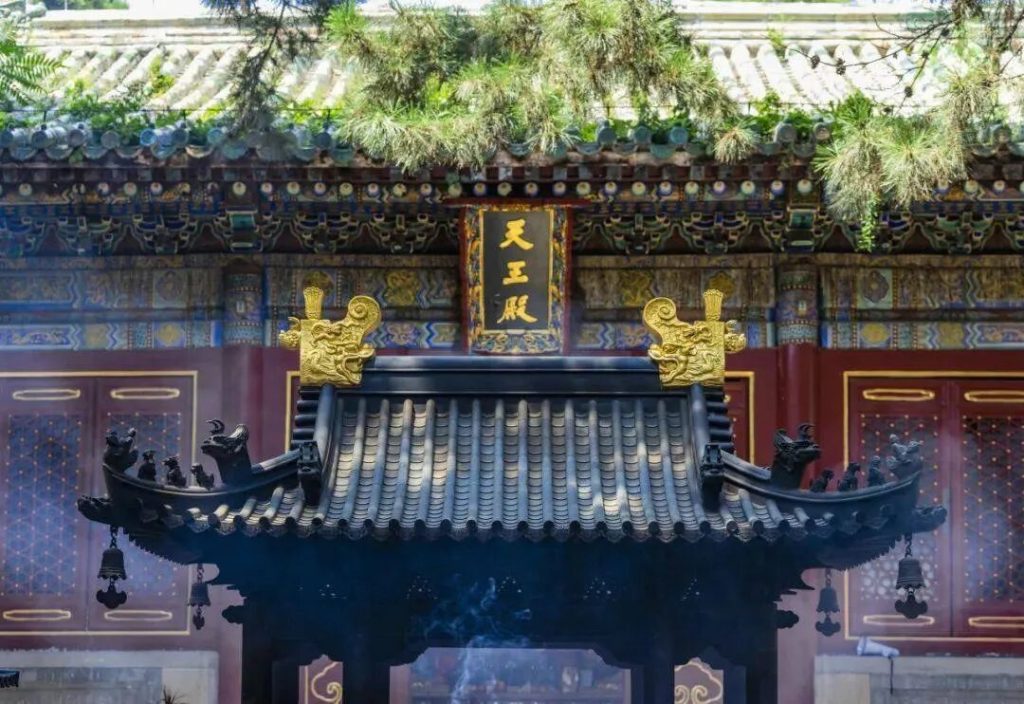
Tanhaz Temple's Heavenly King Hall
The Heavenly King Hall has three bays wide and a hipped roof with green glazed roof tiles. A “Heavenly King Hall” scroll, handwritten by Emperor Kangxi, hangs from its eaves. Inside the hall, a statue of Maitreya Buddha is placed in the center, with a statue of Wenzhuo behind it and statues of the Four Heavenly Kings on either side.
Great Hall of the Dharma
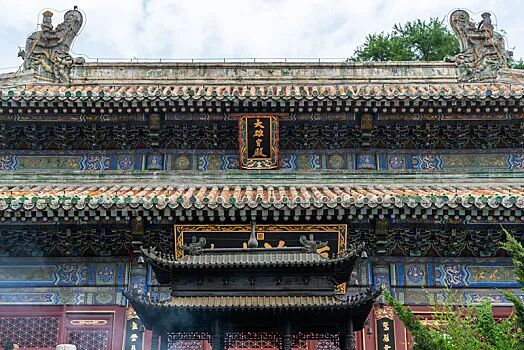
The Great Hero Hall at Tanzhe Temple The Great Hero Hall stands as the highest-ranked hall within Tanzhe Temple's complex. Spanning five bays in width, it features a double-eaved hall roof. The upper layer is clad in yellow glazed tiles, while the lower layer combines yellow glazed tiles with green trimmed edges.
The main ridge of the hall is towering, with a pair of glazed chimera finials placed at both ends, each standing 2.9 meters tall. Crafted in the 31st year of the Kangxi reign (1692), these finials replicate the style of Yuan Dynasty finials and are the largest among all Buddhist temples in Beijing. Each finial is adorned with a golden chain, known as the Gilded Sword-Light Chain, a royal gift from Emperor Kangxi unique to Tanzhe Temple.
The central hall enshrines a statue of Shakyamuni Buddha flanked by eighteen Arhat statues. Symmetrically positioned on either side of the main hall are the Guardian Deities Hall and the Patriarchs Hall. The courtyard also features a bell tower and a drum tower. Behind the Great Hero Hall once stood the Three Saints Hall, of which only the foundation remains.
Pilu Pavilion
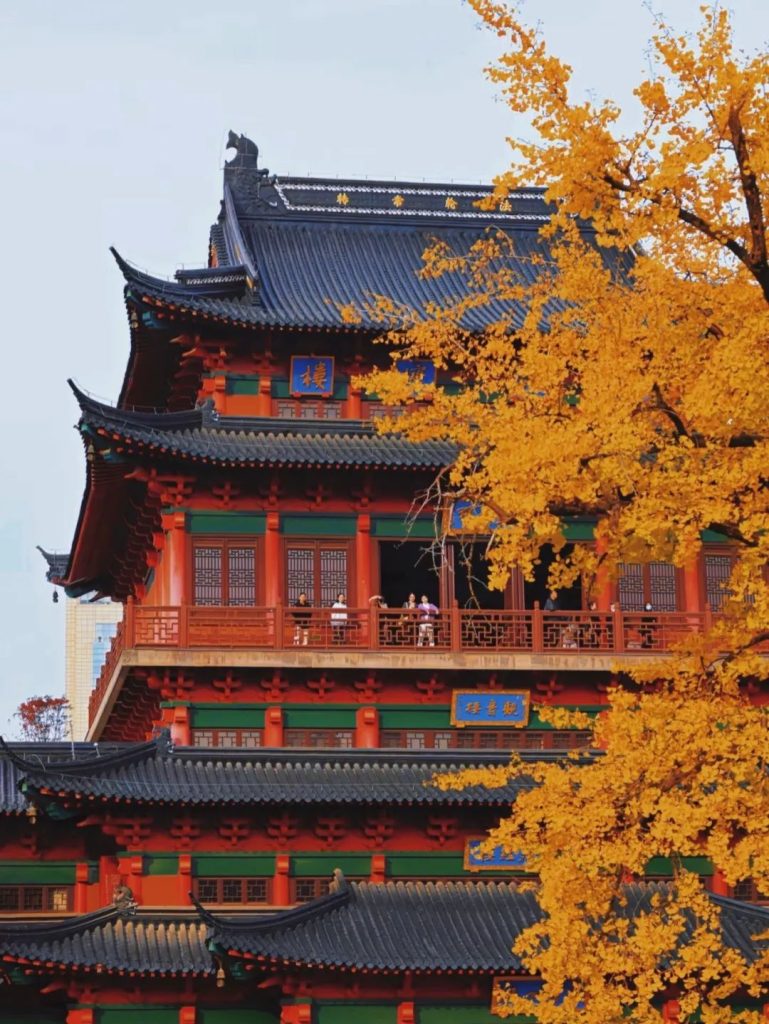
Pilu Pavilion is the final hall along the central axis, situated at the highest point of the temple complex. Originally serving as a repository for Buddhist scriptures, it is commonly known as the Sutra Repository. The structure spans seven bays in width, featuring a hip-and-gable roof topped with cylindrical tiles.
Guanyin Hall
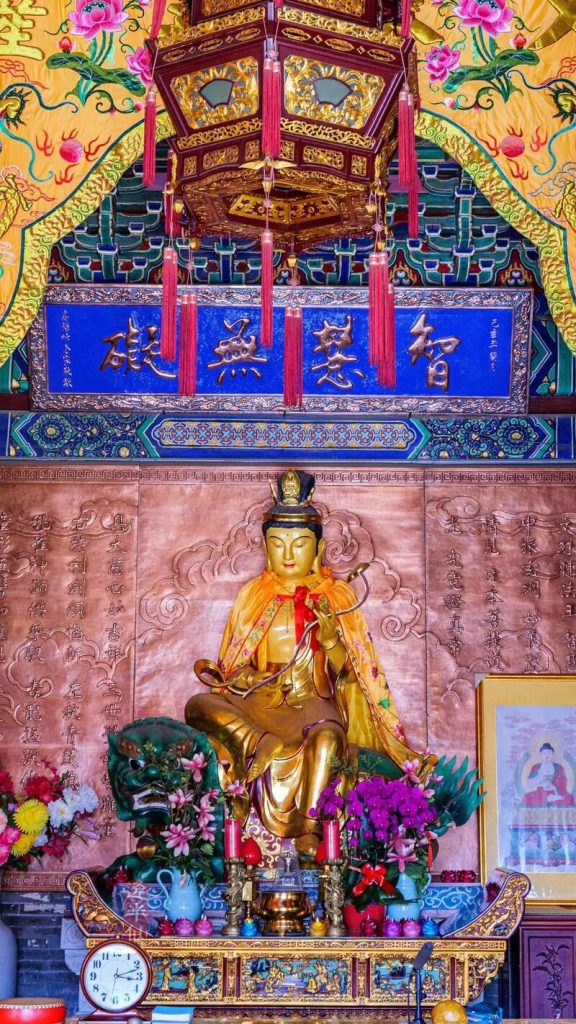
Guanyin Hall at Tanzhe Temple Guanyin Hall stands in a separate courtyard behind Pilu Pavilion, the highest structure within the temple complex. Above its entrance hangs a plaque inscribed with the words “Lotus Realm, Compassionate Vessel” by Emperor Qianlong of the Qing Dynasty. At the hall's center stands a statue of Guanyin Bodhisattva. Flanking the Guanyin statue are the Dragon Princess and the Boy of Good Fortune. On the left side of the hall lies the “Bowing Brick” of Princess Miaoyan, daughter of Kublai Khan, founder of the Yuan Dynasty.
Abbot's Quarters
The Abbot's Quarters of Tanzhe Temple are situated south of the Stupa and east of the Hall of the Three Saints. The abbot's chamber faces south, originally serving as the Amitabha Hall before being converted into the abbot's main residence. It comprises five rooms with a gable roof, standing 28 feet tall, 35 feet deep, and 60 feet wide. The doorframe once bore plaques inscribed with “Pine and Bamboo in Serene Solitude” by Emperor Kangxi and “Western Peak Realm of Bliss” in Emperor Qianlong's own handwriting, though these are now lost. Several ancillary rooms flank the abbot's quarters on both the east and west sides.
Imperial and Empress's Palace
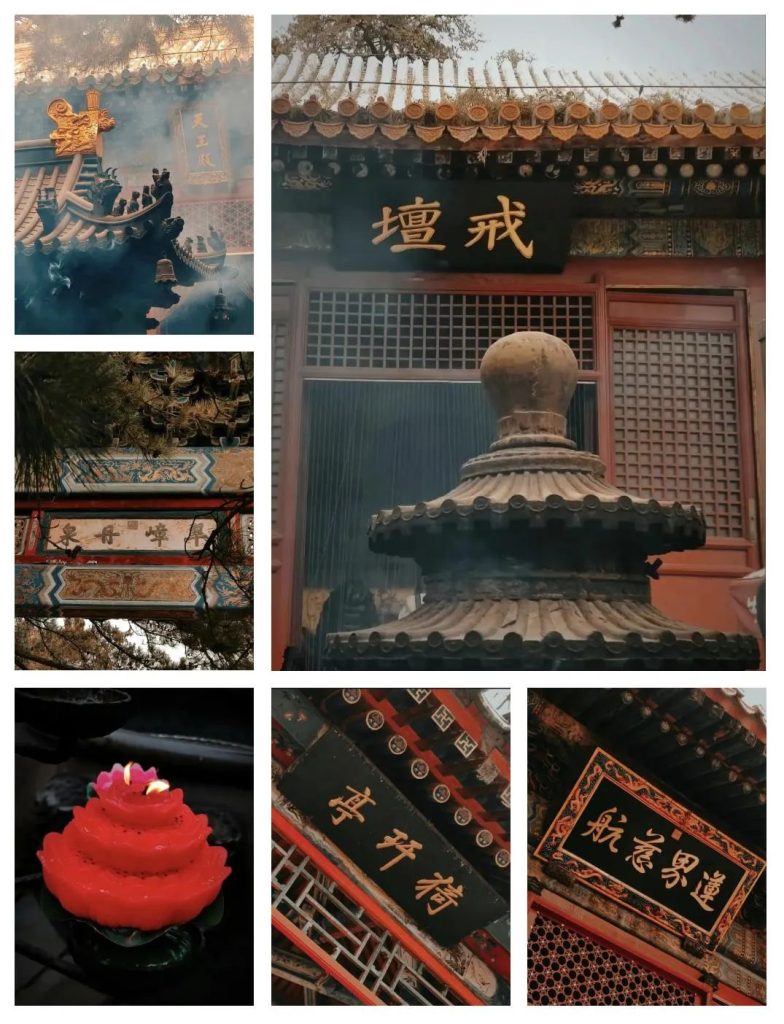
The Imperial Consort's Palace lies east of the Abbot's Quarters, serving as the Qing dynasty imperial consort's temporary residence and thus also known as the Temporary Palace Courtyard. Originally situated south of the Abbot's Quarters, the temple's temporary palace featured a quadrangle courtyard layout. Its northern wing comprised three rooms housing the Empress Dowager's Palace, measuring 21 feet in height, 27 feet in depth, and 33 feet in width, constructed with a gable roof. The palace now houses a wooden carved throne adorned with a carved wooden canopy with hanging floral ornaments. Upon the throne sits a wax figure of Emperor Qianlong, flanked by a wax figure of an attending eunuch. To the east of the Empress Dowager's Palace are two side rooms, originally serving as quarters for the emperor's personal eunuchs.
Yigang Pavilion
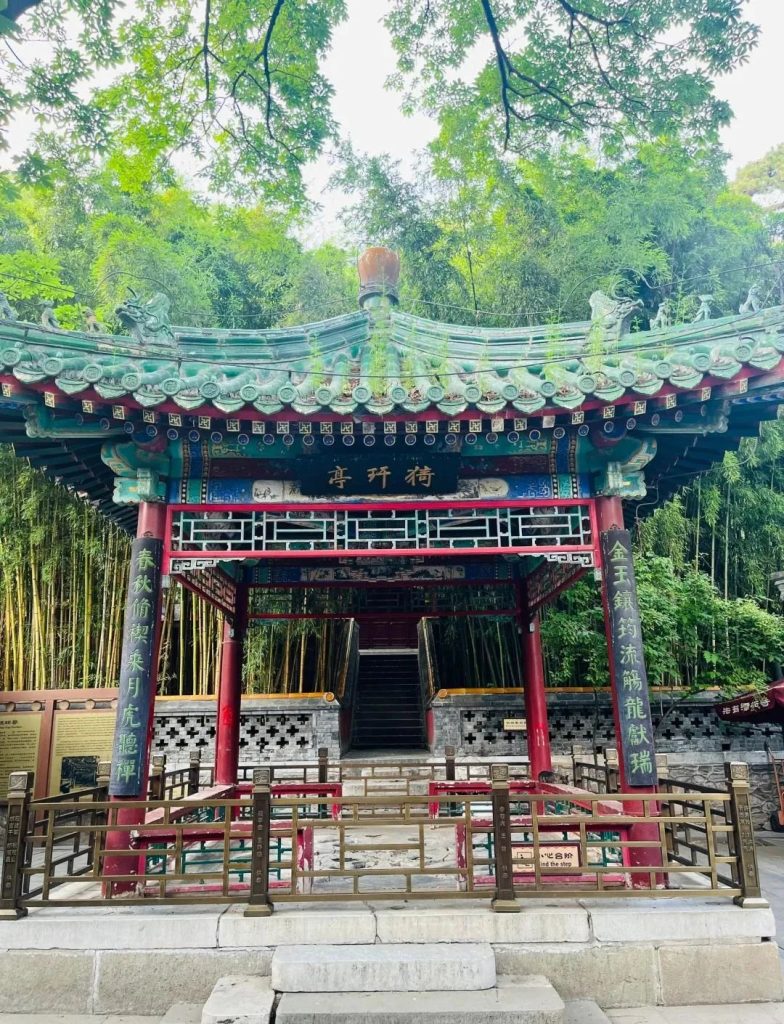
Yiganting Pavilion at Tanzhe Temple Yiganting Pavilion, commonly known as the Floating Cup Pavilion, is situated within the Imperial and Empress Palaces. It served as the imperial venue for the “Curving Stream Wine-Drinking” ritual. Constructed upon the ruins of the former Wuyi Hall, the pavilion features a four-cornered pyramidal roof topped with green glazed tiles. Beneath its eaves hangs a plaque inscribed with the characters “Yiganting” in the handwriting of Emperor Qianlong. Inside, the floor is paved with white marble slabs carved with a winding water channel 10 centimeters wide and deep. Viewed from south to north, the pattern formed by the stone channel resembles a dragon's head; from north to south, it resembles a tiger's head. This ingenious design earned the pavilion its alternative name, the Dragon-Tiger Pavilion.
Bamboo Grove Courtyard
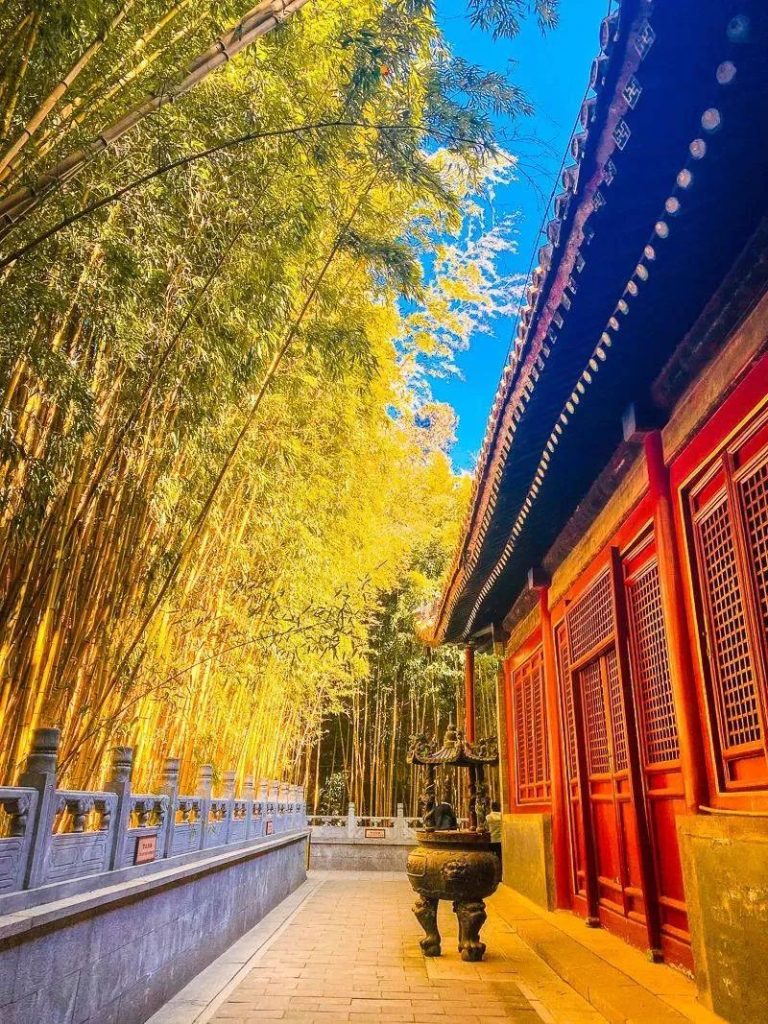
The Bamboo Grove Courtyard at Tanzhe Temple derives its name from two pools of rare “jade-inlaid-gold” bamboo planted within. The three eastern chambers served as the Imperial Study, where the emperor read and conducted affairs during his stays at the temple. The doorframe originally bore a plaque inscribed by Emperor Qianlong with the characters “Yigan Qingjing” (Pure and Serene Bamboo), along with the couplet: "Stone, water, mountains, flowing—all still; Clouds and mountains emerge illusory yet serene." This plaque and couplet were later relocated to the Floating Cup Pavilion within the courtyard. Originally, seven ancillary rooms stood here: three on the north side served as the consorts' quarters, while four on the south housed the guards. These structures were later demolished.
Stupa Forest
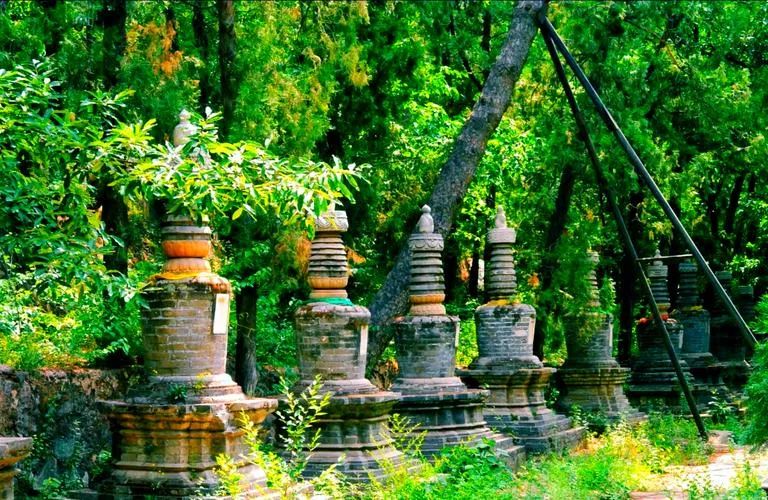
The Pagoda Forest in the Upper Pagoda Courtyard of Tanzhe Temple preserves over seventy pagodas of diverse forms from successive dynasties. The lower pagoda courtyard buries eminent monks from the Jin, Yuan, and Ming dynasties. The pagodas vary in shape and type, including stone sutra pillar-style pagodas, square single-tiered tiered pagodas, brick pagodas with overlapping eaves, and stone pagodas in the shape of inverted bowls. The earliest pagoda constructed at Tanzhe Temple is the Pagoda of Master Haiyun in the Lower Pagoda Courtyard, dating back over 800 years. This solid brick pagoda features a hexagonal base with a tiered roof structure, rising seven stories high. Its front face bears an inscribed plaque reading: “Pagoda of Master Haiyun, Whose Enlightenment Shines Like the Sun.” The tallest stupa in the Guanghui Tongli Zen Master Stupa Forest is the Guanghui Tongli Zen Master Stupa from the Jin Dynasty. Located at the center of the Lower Pagoda Courtyard, this nine-story solid brick pagoda also features a dense eave design. A stone offering table stands before it, flanked by two thousand-year-old shorea trees on either side.
Tan Zhe Temple Visitor Guide
Location: Tanzhe Temple Scenic Area, Tanzhe Town, Mentougou District, Beijing. Located over 30 kilometers from the city center.
Transportation Guide:
By Car: Set your navigation to “Tanzhe Temple.” Follow the map directions to arrive. Parking is available within the scenic area. Fees vary by vehicle type and duration, typically ranging from 10-20 RMB for small cars.
By Bus: Take the subway to Pingguoyuan Station. Exit via Exit A or B and transfer to Bus Route 931. Alight at Tanzhe Temple Station.
Ticket Information:
General admission is 50 RMB per person. Discounts apply for children, seniors, military personnel, and individuals with disabilities.
Opening Hours:
08:30-16:30 (last entry at 16:30)
Open daily from Monday to Sunday
Incense sticks are provided free of charge at the temple; no need to bring your own.