This summarizes our experience visiting the National Museum: This time we only explored the B1 and 4th floors; next time we'll make a reservation to see the 2nd and 3rd floors as well.
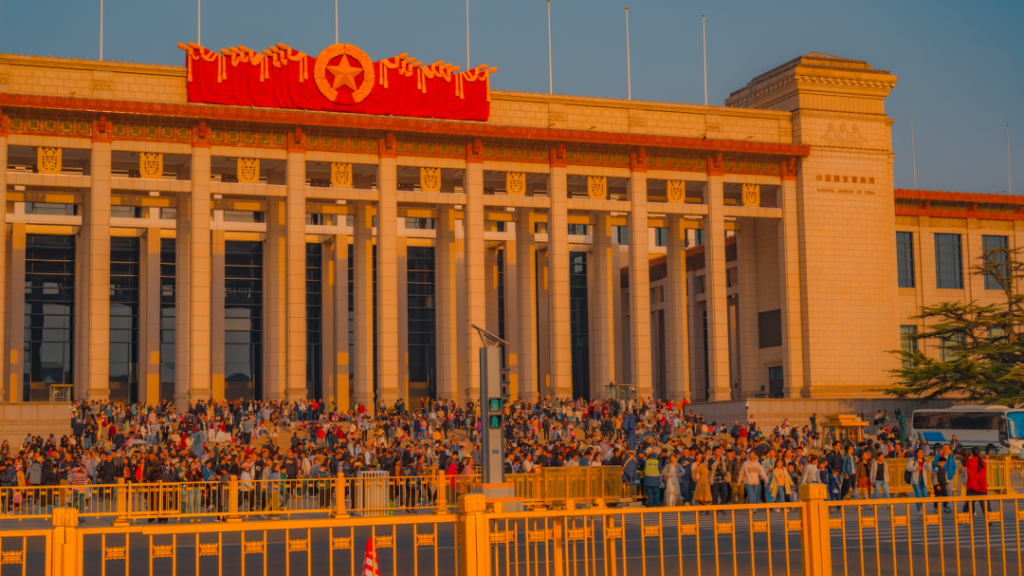
Located east of Tiananmen Square, the National Museum faces the Great Hall of the People across the plaza. After visiting the museum, you can cross the street directly to Tiananmen Square, skipping the security queues at the gate. If it's getting late, you can also head straight back to Exit D of Tiananmen Square Subway Station.
Closing at 5 PM coincides with sunset, bathing the area in warm orange hues. Many visitors choose to rest on the steps outside the museum entrance, snapping photos of the Great Hall of the People and the Monument to the People's Heroes across the square.
Opening Hours and Reservations
Opening Hours: 9:00 AM–5:00 PM (last admission at 4:00 PM). Closed Mondays (except national holidays). Extended hours until 5:30 PM from June 1 to October 31.
Reservation Method:
Reserve in advance via the National Museum of China official website or mini-program using real-name registration. Tickets are released daily at 5:00 PM. Each account is limited to one reservation per week (maximum 5 people).
Minors under 14 require adult booking. Seniors aged 60+, military personnel, etc., may use the priority lane with valid ID.
Transportation Guide
Subway: Exit C/D at Tian'anmen East Station (Line 1), 3-minute walk to North Gate
Bus: Routes 1, 2, 52, 82 to Tiananmen East Station, or Routes 20, 44 to Qianmen East Station
Driving: Park at Qianmen Street or Zhengyi Road parking lots (10-minute walk to the museum). Strict traffic restrictions around Tiananmen Square—public transportation recommended.
Queue for reservations at the museum entrance
Having long heard of the National Museum's reputation and knowing reservations are notoriously difficult to secure, I took a weekday off and booked the previous evening at 9 PM for the following day. According to online advice, failing to book a week in advance is common—but daily at 5 PM, a limited number of tickets become available for the next day, and booking within those minutes is feasible.
My reservation was for the day before Qingming Festival. Though not as crowded as holidays, it was still busy. My slot was 9:00-11:00 AM. After security check at 10:58, I learned weekdays allow a half-hour grace period for entry, but holidays and weekends enforce strict timings—latecomers are denied entry. Reservations after 11:00 AM prohibit entry before 11:00.
Exit from Exit D at Tiananmen East Station. Head back along the left intersection where people gather, then turn left and walk all the way around the circle to reach the spot where I took the photo below.
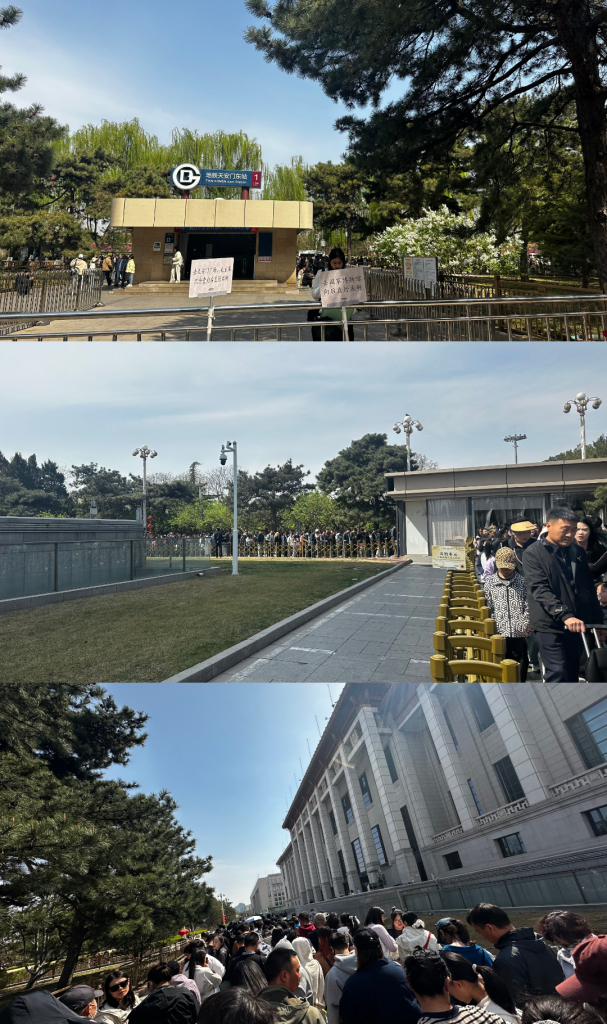
From Exit D of Tiananmen East Station, turn right to reach the security checkpoint for Tiananmen Square. Queue there to enter the Mao Zedong Memorial Hall and the square, but be prepared for exceptionally large crowds—even larger than those at the National Museum.
Looking at the security queue for Tiananmen Square from the National Museum, the crowd was sparse that day. In fact, if you head to the right side of the photo—before reaching the National Museum—you'll find the crowd thins out considerably.
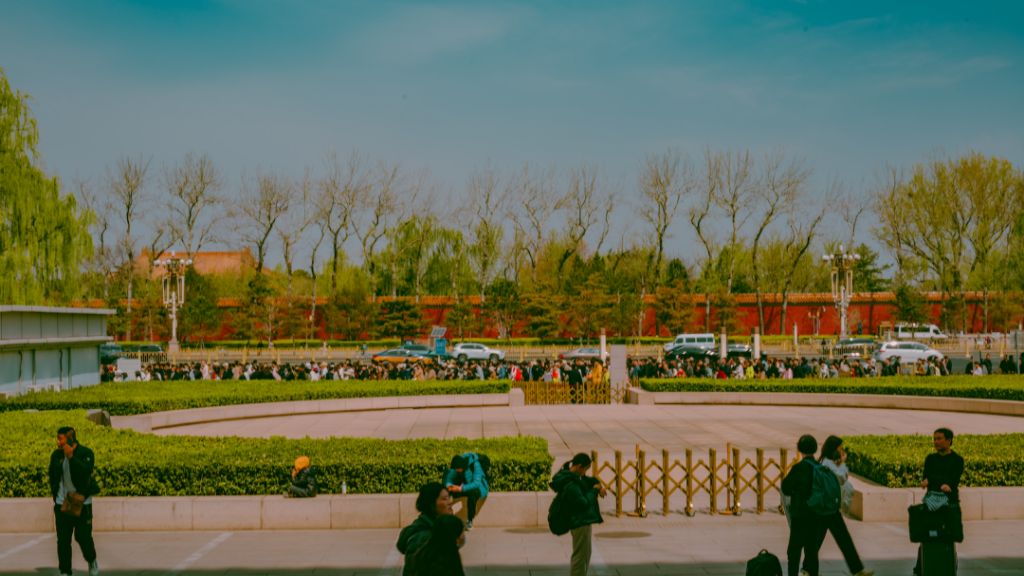
On the first day of the Qingming Festival holiday, I went again because I had booked a tour of the Mao Zedong Memorial Hall. But the line stretched all the way to Exit C of Tiananmen Square, so I decided to skip it and took the subway from Exit C instead.
In crowded areas
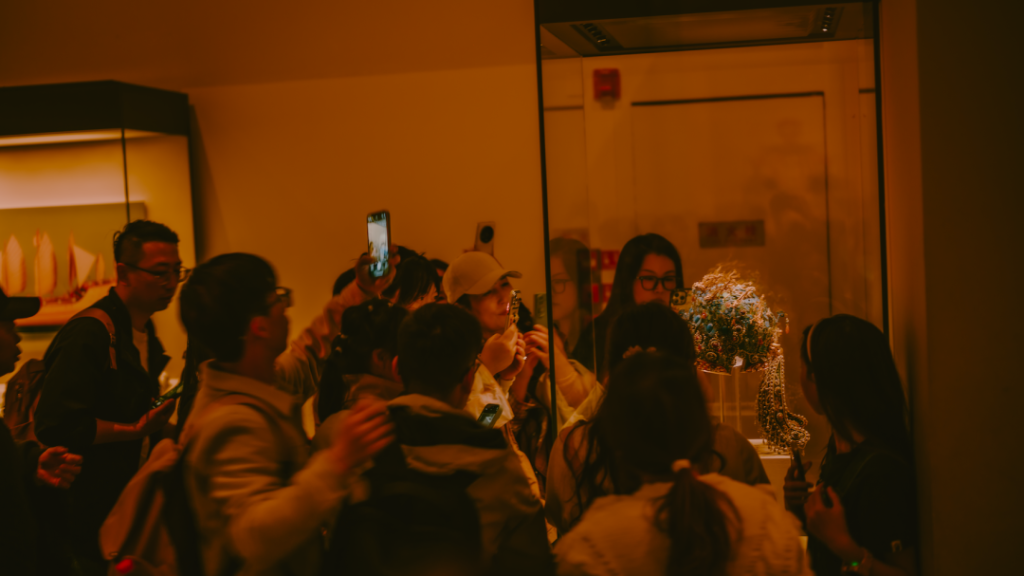
I waited in line for 15 minutes before entering—it wasn't too busy on a weekday. The only crowded spots in the entire museum were the entrance to the “Ancient China” exhibition on B1, the Shang-Zhou bronze section near the Si Mu Wu Ding cauldron, and the Ming-Qing section featuring Empress Xiaoduan's Nine Dragons and Nine Phoenixes Phoenix Crown at the very end. Everywhere else was relatively quiet. These two artifacts are also the most precious and famous. The phoenix crown especially attracts many young people lining up to take photos. In my opinion, the most valuable exhibits at the National Museum are still the various bronze vessels from the Shang and Zhou periods.
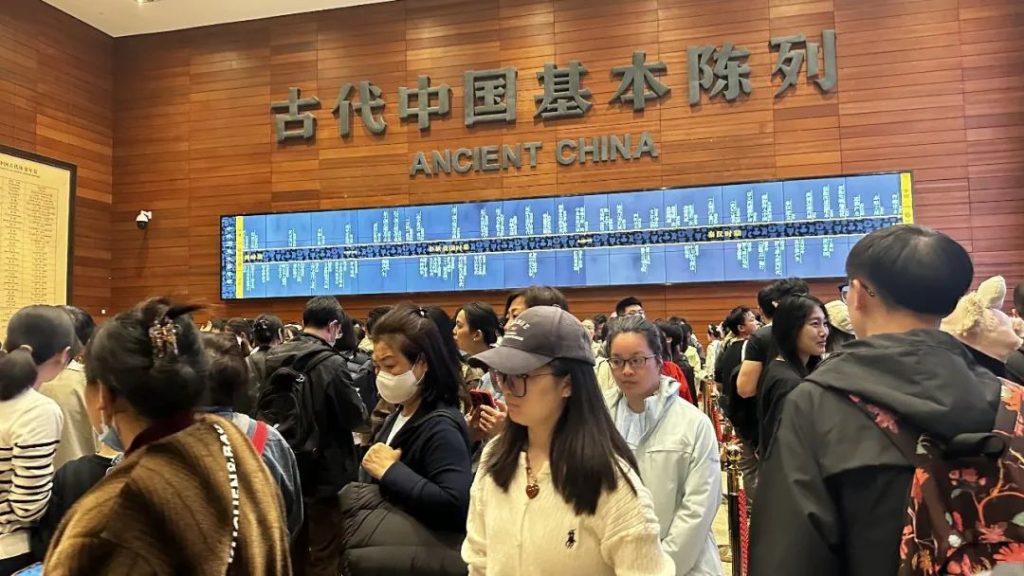
Ancient China is the core exhibition area of the National Museum. Even if you skip everything else, you must explore the entire B1 level. The finest artifacts in most museums are displayed on B1 because underground levels are less affected by external climate fluctuations, making it easier to maintain constant temperature and humidity (e.g., 20°C ±1, humidity 50% ±5). Additionally, ultraviolet light accelerates pigment fading and organic material deterioration, while underground levels allow precise control of light intensity through artificial illumination (typically below 50 lux).
The queue for the Phoenix Crown exhibit nearly matched the length of the museum's main entrance line. I walked straight to the front, stood on tiptoe over the crowd, raised my camera, and snapped a photo—whatever came out was fine. Surprisingly, it turned out quite well, capturing the crown's dazzling jewels and pearls.
The visitor flow design on Level B1 of the National Museum follows a chronological sequence from BC to AD, which is also the typical viewing route. Exit points are provided every few dynasties, allowing visitors who become too tired to continue to leave midway (many elderly visitors in wheelchairs also tour here). However, I couldn't locate the staircases for these intermediate exits this time. Once found, visitors could exit midway—say, starting from the Tang Dynasty—to avoid the crowded beginning and end points of the official route.
Numerous seating areas are available in the Wei-Jin period section. Those needing a rest can find seats beneath this replica of the Nine-Colored Deer.
Most visitors descend via the escalator beside the photo staircase.
Nearby storage lockers are available: free for the first hour, then ¥5 per hour thereafter.
B1 Floor: Notes on each dynasty's exhibits
4th Floor: Buddhist sculptures
Highlights from Ancient China that particularly intrigued me:
Pre-Qin Period
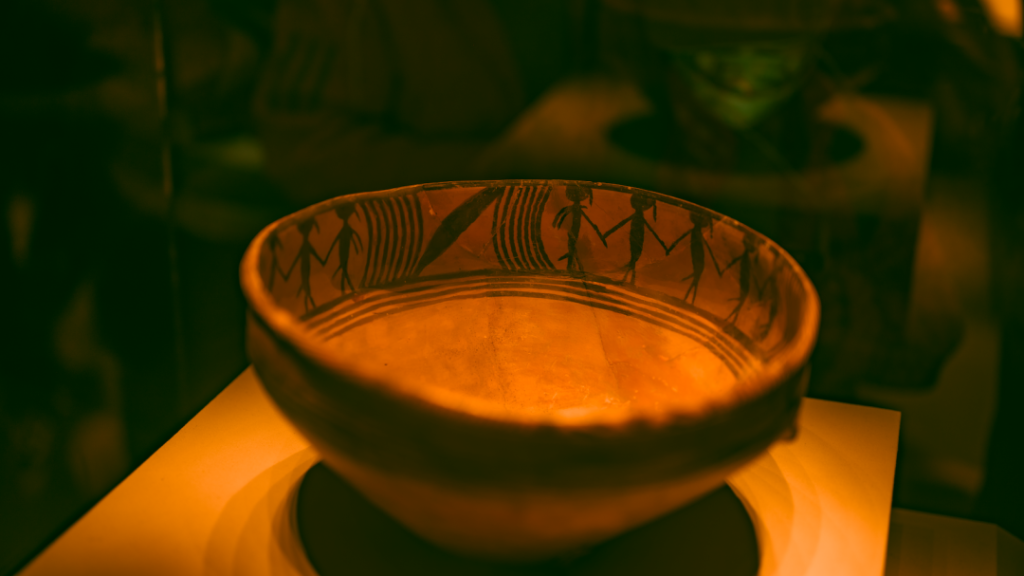
A painted pottery basin with dance motifs from the Majiayao Culture of the Neolithic period, dating back over 5,000 years. It bears some resemblance to ancient Greek pottery, though its patterns are simpler and more rustic. This was the first artifact I encountered, and compared to the Jade Dragon, it drew fewer photographers.
The Hongshan Culture jade dragon, with its simple, archaic form and early date, is considered the origin of dragon worship culture in China's Central Plains region.
Following this is the Shang-Zhou bronze cauldron section, which is extremely crowded—taking photos is nearly impossible. Represented by the Si Mu Wu Ding featured in history textbooks, it is the largest cauldron, solid and sturdy. Look at its base—it feels incredibly stable and reassuring. Walking through B1, I noticed that such authentic, solid artifacts all belong to the Shang and Zhou periods. From the Han and Tang dynasties onward, with the emergence of ironware and porcelain, the focus shifted toward refinement and compactness. The rugged, substantial feel of the feudal era is no longer present.
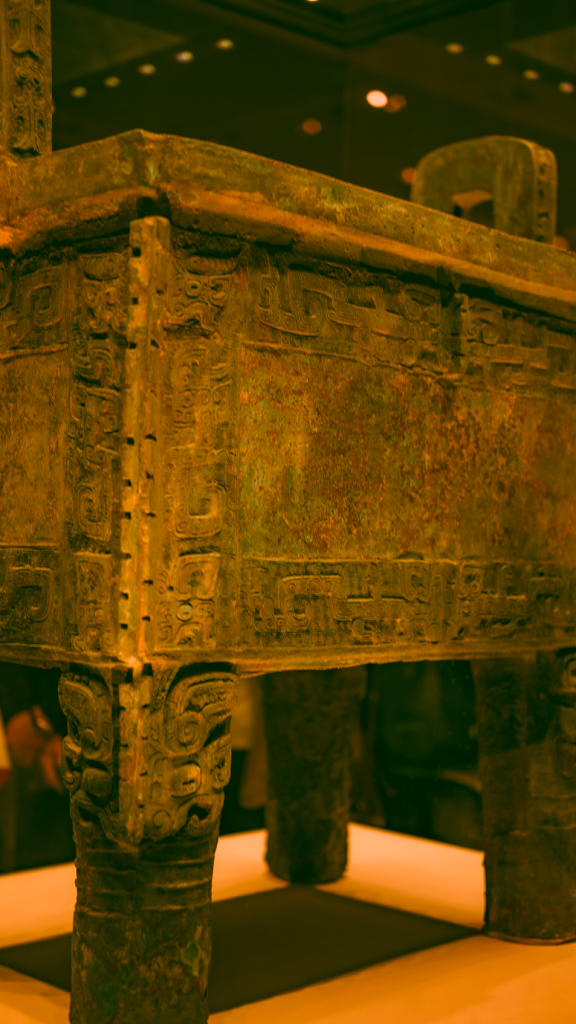
After waiting a long time, I finally found a gap. The poor lighting, crowded space, and nerves made it difficult to get a good shot. This tripod cauldron is truly worth photographing—exceptionally solid and heavy, a prized treasure of the National Museum.
Discovered in 1939 by Wu Peiwen, a villager from Wuguan Village, Anyang, Henan, Wu concealed the cauldron to prevent its looting by Japanese forces, even going so far as to deceive the Japanese with a replica. In 1946, the Nationalist government discovered the vessel, intending to present it as a birthday gift to Chiang Kai-shek in Nanjing. It was subsequently stored at the Nanjing Museum. During the Nationalist retreat to Taiwan in 1949, the vessel was abandoned at Nanjing Airport due to its immense weight. It was later recovered by the People's Liberation Army and returned to the Nanjing Museum. In 1959, following the completion of the Chinese History Museum (now the National Museum of China), the tripod was relocated to Beijing, becoming the museum's crown jewel.
Shang Dynasty bronze vessels like the Simuwu Tripod were not only symbols of power but also central ritual objects in shamanic ceremonies. The taotie motifs adorning these vessels were believed to possess the power to ward off evil spirits and communicate with the supernatural.
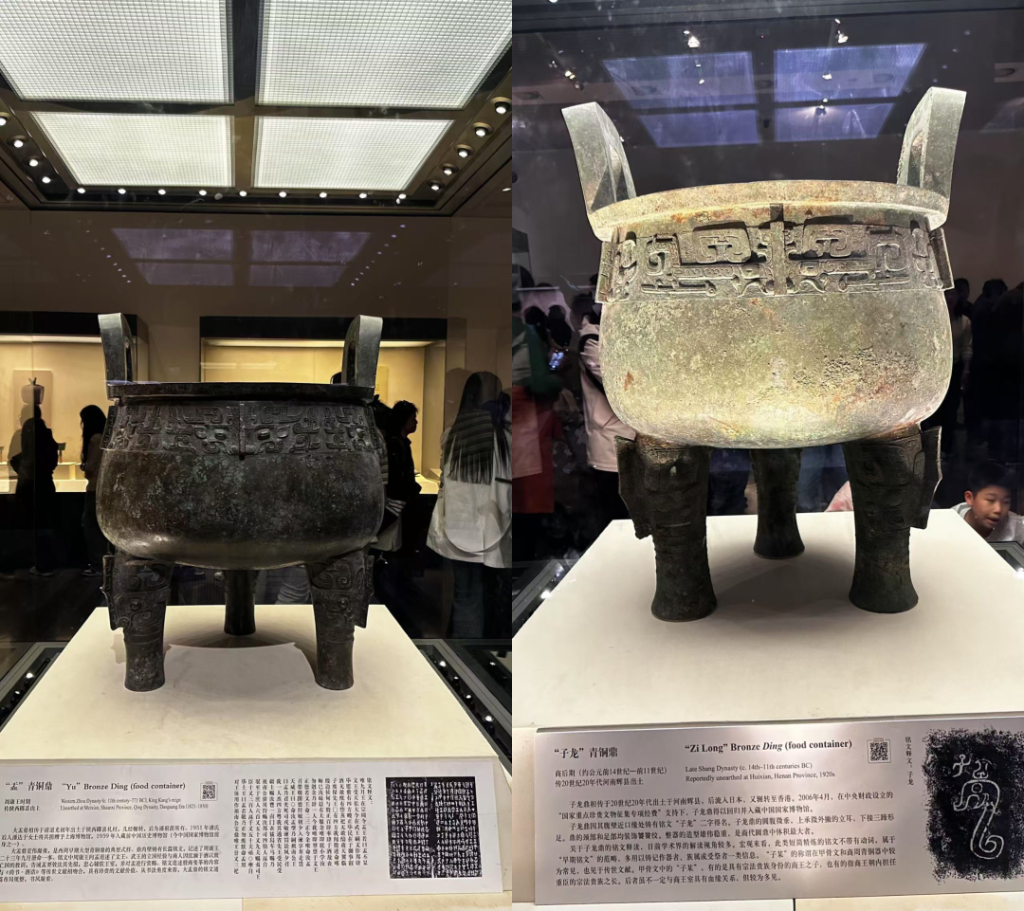
The other two renowned tripods are circular in shape and smaller in size.
Also displayed in this section is the Four-Goat Square Vase. Unfortunately, during wartime, Japanese bombing reduced it to over twenty fragments, which were later restored. Consequently, it lacks the unadorned simplicity and historical depth of the earlier tripods, appearing somewhat too new.
Moving to the next Late Western Zhou exhibition area, the centerpiece is the Guo Ji Zi Bai Pan, also a prized treasure of the National Museum of China. Its base bears an inscription of 111 characters in four-character rhyming verse, recording military exploits and rewards. As a vessel for the “ritual and musical system,” it embodies the Western Zhou aristocracy's tradition of “recording deeds to glorify achievements” and highlights bronze ware's function as a symbol of power.
Discovered around 1840 in Guo Chuan Si (present-day Chencang District), Baoji, Shaanxi, the dish was initially used by local farmers as a trough (we mistook it for a bathtub upon first sight—it is indeed enormous for a dish). Xu Xiejun, then magistrate of Meixian County, purchased it for “a hundred pieces of gold.” He brought it back to his hometown in Changzhou, Jiangsu Province. Later, it fell into the hands of Chen Kunshu, the Prince of Hu during the Taiping Heavenly Kingdom. In 1864, when Huai Army commander Liu Mingchuan captured the Prince of Hu's residence in Changzhou, he discovered the dish. Recognizing its value, he transported it to Liu Laowu in Feixi, Anhui Province, where he built a “Dish Pavilion” to secretly store it. During the late Qing and Republican eras, warlords and Japanese forces repeatedly attempted to seize it. The Liu family descendants buried it deep underground and even used replicas to deceive outsiders, preserving it through the turmoil of war. After Hefei's liberation in 1949, Liu Su, the fourth-generation descendant of Liu Mingchuan, presented the plate to the state. In 1950, it was transferred to the Chinese History Museum in Beijing (now the National Museum of China).
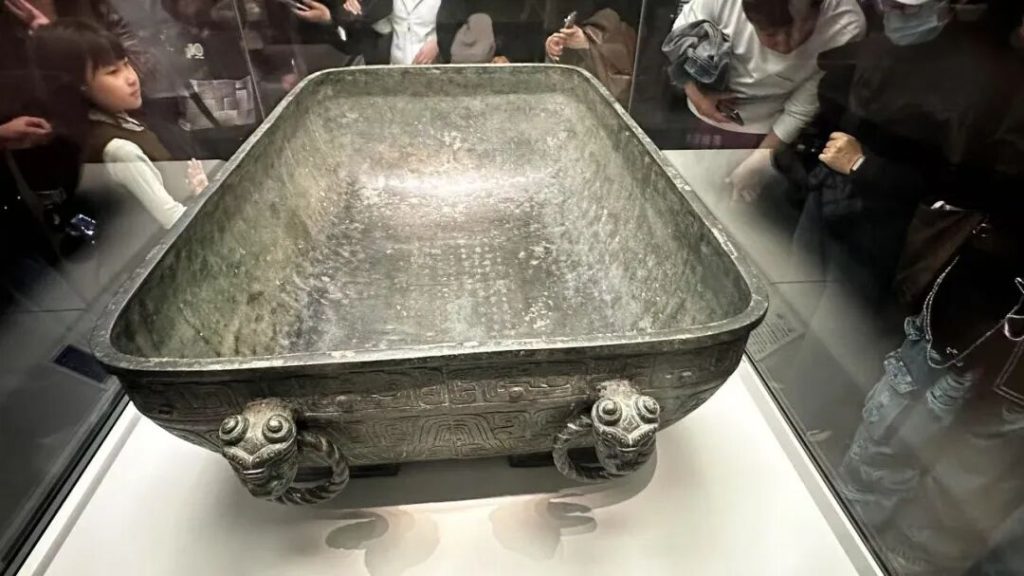
The Guo Ji Zi Bai Plate illustrates the evolution of Shang Dynasty taotie patterns into the late Western Zhou Dynasty's qiequ patterns. The abstract, simplified designs on the plate's sides represent these qiequ patterns, which became increasingly abstract and fluid by the Warring States period. Shang Dynasty motifs, featuring taotie beasts and large birds, leaned toward animal totems with sharper, more angular forms.
The plaques from the Shang and Zhou periods seen in the 4th-floor jade exhibition carry a distinct flavor of the Shang Dynasty's prevalent shamanic animistic practices. By the Zhou Dynasty, the ritual and music system flourished, reducing the role of witchcraft and sacrifices. Bronze ware increasingly served as symbols of ritual and musical hierarchy.
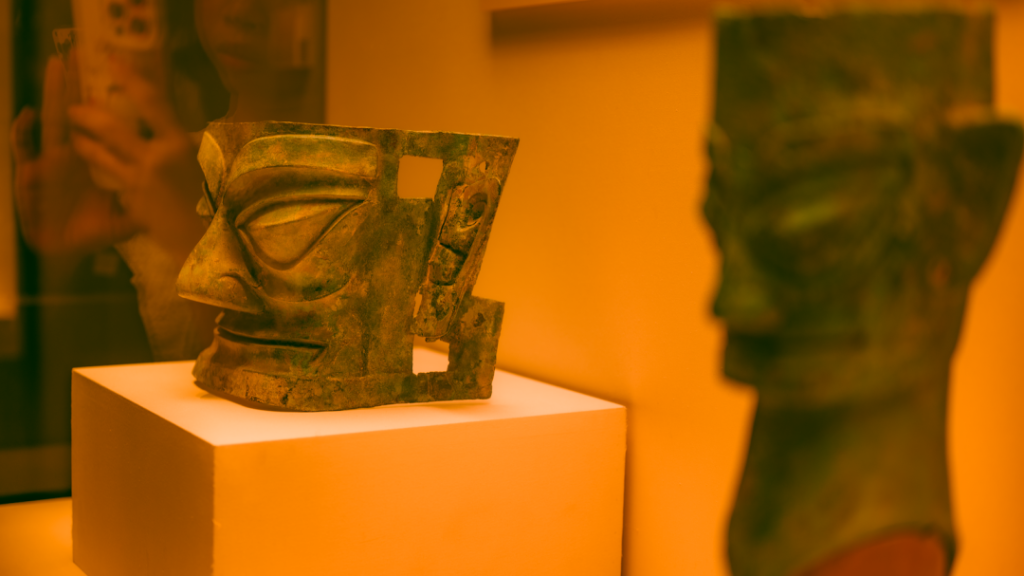
This bronze gallery also displays artifacts from Sanxingdui, markedly distinct from Central Plains Shang-Zhou bronzes. The broad figure on the left is interpreted as a “human,” while the slender one on the right represents a “deity.”
Qin and Han Dynasties
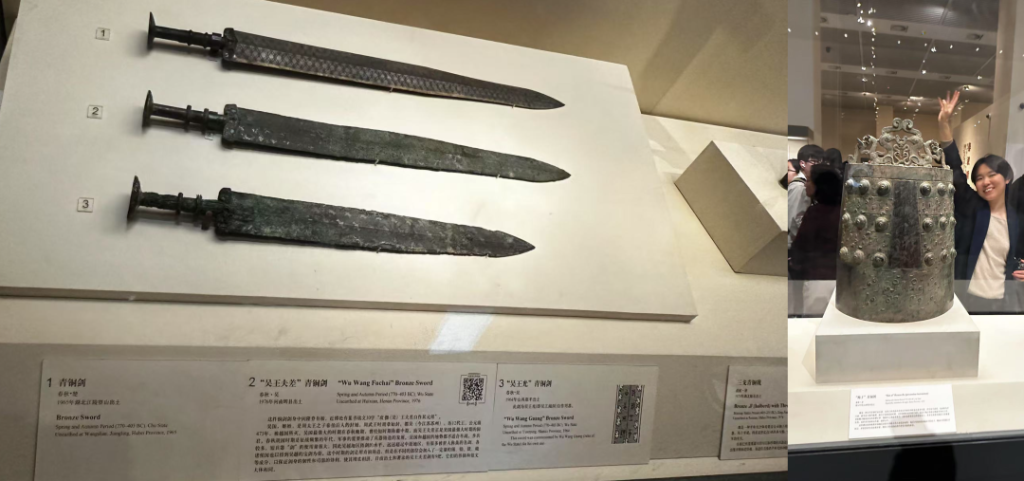
The Spring and Autumn and Warring States periods continued the ritual and musical traditions, with bronze chime bells being excavated. Due to the turmoil of war, numerous bronze swords have also been unearthed.
The Warring States period saw the rise of military systems and a glorification of warfare, culminating in the terracotta warriors of the Qin and Han dynasties. The National Museum truly knows how to select exhibits—choosing precisely the iconic terracotta warriors featured in history books, making them highly representative.
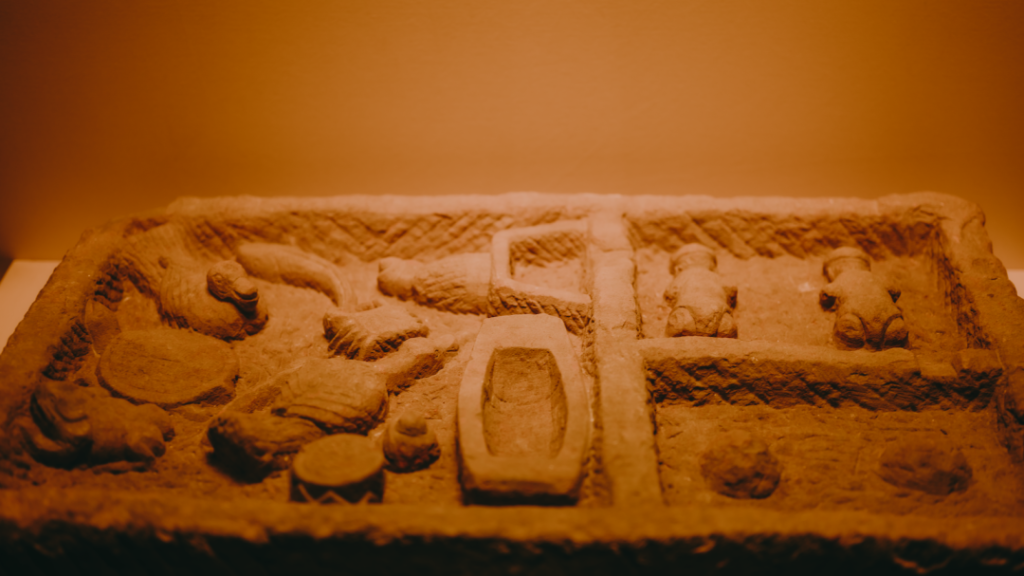
The small-scale farming economy of the Han Dynasty featured two people cultivating a plot: one field used for composting manure, another with snails, ducks, frogs, and boats—all shaped like cookie cutters. From the Han period onward, these crafts increasingly focused on daily life, featuring silk and beadwork instead of the imperial artifacts of the Shang, Zhou, and Qin eras. They also became more compact and exquisitely crafted.
Chariots used during the Han Dynasty
Fortresses of wealthy landowners in the Eastern Han Dynasty
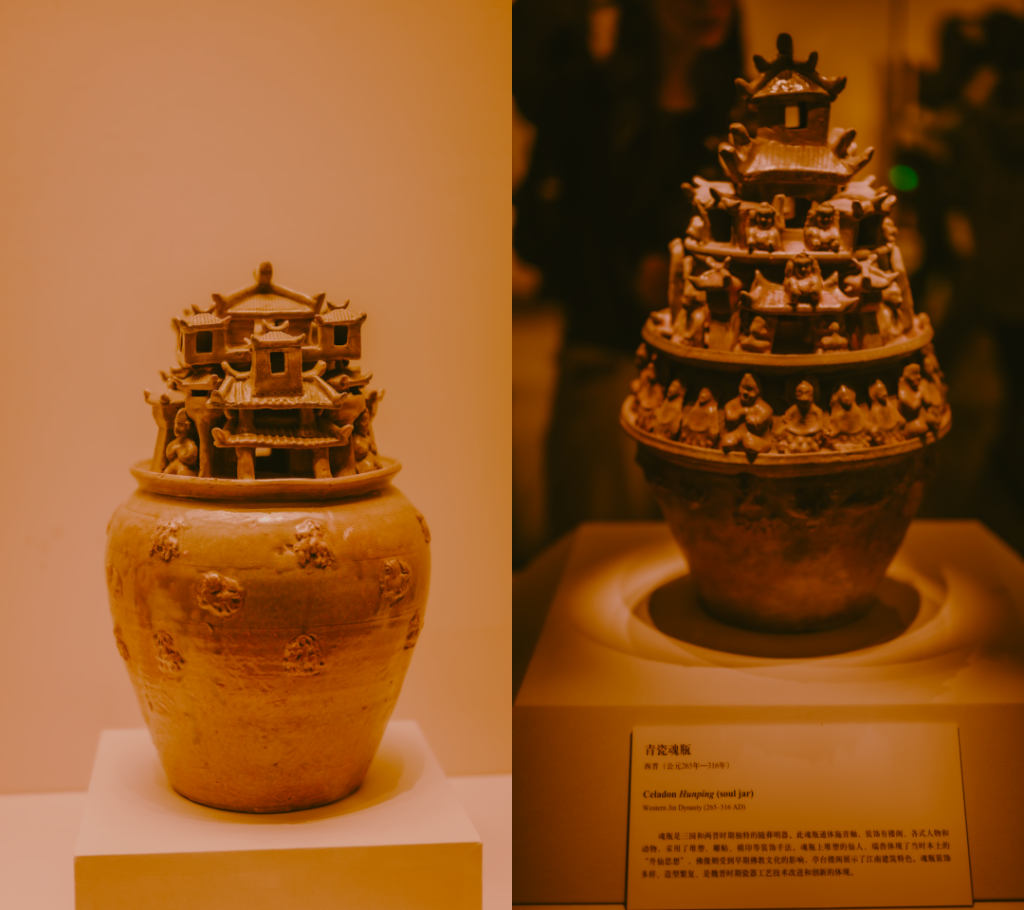
By the Wei and Jin periods, practices like cultivating immortality and Buddhism emerged, along with various soul vessels and the resurgence of theosophy. People sought to escape the turmoil of the times by attaining immortality or Buddhahood. Against this backdrop of social chaos, Tao Yuanming wrote the Peach Blossom Spring.
Various shell-storage vessels unearthed in Yunnan during the Han Dynasty bear depictions of sacrificial rituals, including human sacrifices. The most renowned example is the vessel depicting a curse-swearing ceremony.
The ancient Dian Kingdom, situated on the Yunnan Plateau far from the sea, utilized sea shells as rare commodities for currency (shell money), symbolizing wealth. These storage vessels served as containers for nobles to hoard large quantities of shell money.
Examine each figure and scene in detail: the bustling chaos of the marketplace. Nearby, crowds engage in market transactions—merchants balancing baskets on their heads, fish vendors hawking their wares, buyers collecting goods, and onlookers—all capturing the vibrant energy of everyday life.
Some lead horses, others slaughter cattle and sheep; naked criminals await punishment, while women carry goods. At the center of the stilted platform sits a chief priest, seated cross-legged with legs dangling. Tall and entirely gilded, his identity may be that of the King of Dian or a tribal chieftain. He is surrounded by sixteen bronze drums, symbolizing both secular power and divine authority.
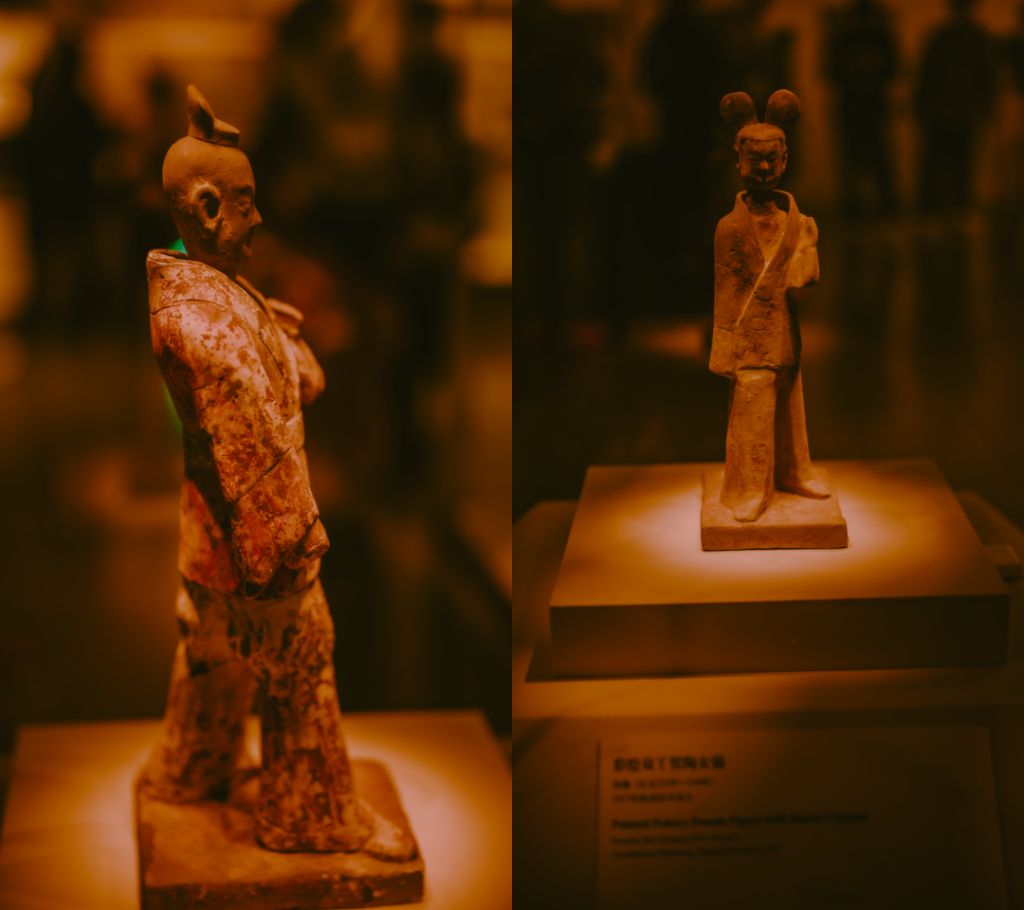
During the Wei and Jin dynasties, both men and women began wearing pants—similar to today's wide-leg trousers—and the cut was quite flattering.
Sui and Tang Dynasties
By this point in the tour, we're nearing the mid-to-late stages. Many visitors find themselves exhausted by the Wei and Jin period and struggle to continue.
The Sui Dynasty is represented only by this stone dragon sculpture at Zhaozhou Bridge. Folk dragons typically have three claws, while five-clawed dragons symbolize imperial authority—like the one previously mentioned at Beihai Park.
Our focus is primarily on the Tang Dynasty, after all, it was the pinnacle of ancient China. Tribute came from all nations, cultural influence spread far and wide, society and economy flourished, with sheng music and poetry recitals filling the air. Women's status also rose significantly.
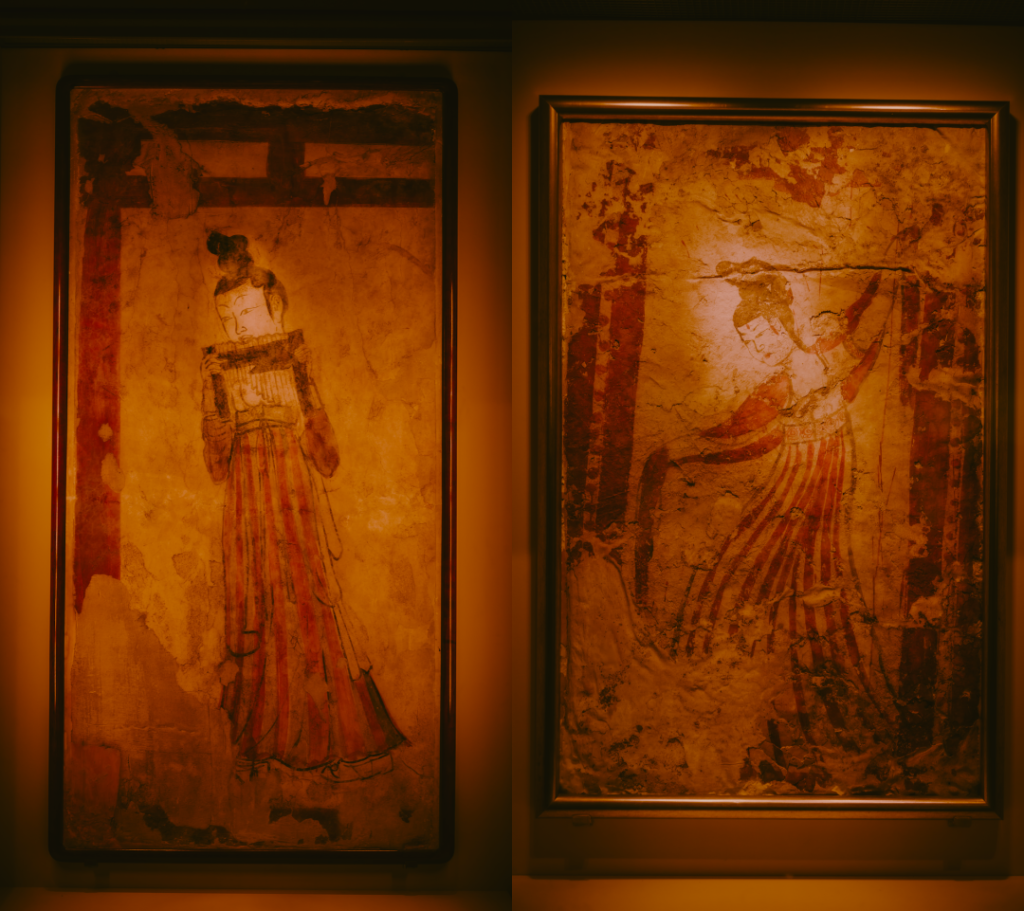
For the first time, I witnessed women riding horses in skirts and hats, with plumpness being the ideal for women—a sign of economic prosperity. In places where widespread affluence prevails, women hold higher status and greater cultural inclusivity toward other ethnic groups. With days free of worries and lives of ease, why bother with such concerns? Yet today's mainstream preference for the slender, model-like figures of internet celebrities paradoxically reflects economic oppression.
This reproduction of Empress Wu Zetian captures a dynamic, flowing grace absent in Ming and Qing dynasty depictions. After the Tang, such fluidity solidified—even during the Qing's apparent economic prosperity, art remained confined to jeweled imperial robes.
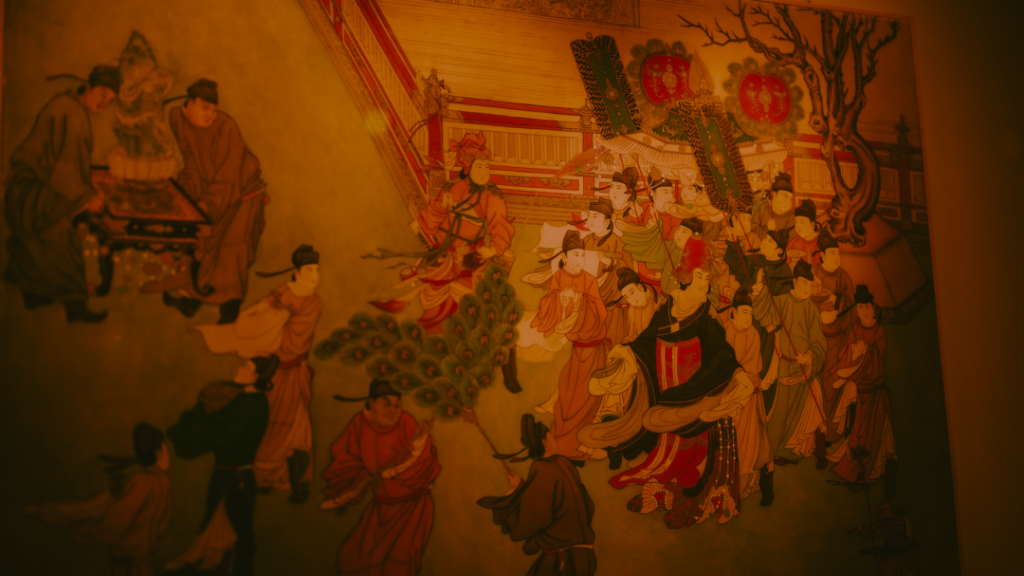
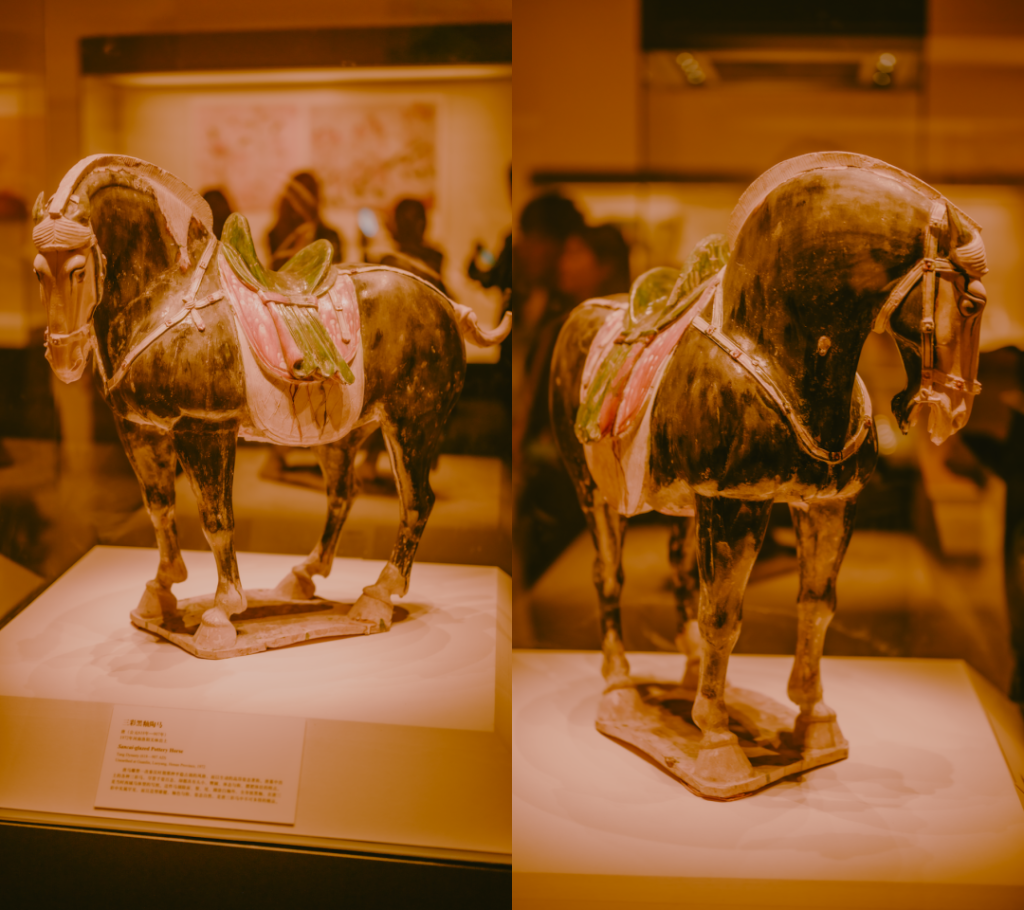
Tang Sancai pottery is vibrantly multicolored. Artworks from that era frequently depict camels and curly-haired Westerners, reflecting the Silk Road's flourishing period and signifying the openness of cultural exchange at the time.
This Tang Sancai piece on the left is also a prized treasure of the National Museum of China, one that many visitors will recognize.
Besides camels, Tang Sancai also features numerous Western horses. Western horses (such as Turkic horses) were characterized by “small heads, rounded hindquarters, long legs, and sturdy builds.” When lowered, their posture accentuates the muscular lines of their necks and balanced proportions. Their serene demeanor contrasts with their robust musculature, conveying the horses' docility and obedience (as seen in imperial breeding).
During the Tang Dynasty, lavish funerals were prevalent among the upper classes. Tomb guardians from the High Tang period were often crafted from kaolin clay and adorned with three-color glaze. The Buddhist guardian deity “Heavenly King” underwent localization, replacing earlier warrior figurines as a primary form of tomb guardians. Clad in armor, these guardians embodied both intimidating power and divine authority.
Tang people deeply believed in the immortality of the soul, requiring tomb guardians to ward off evil spirits and ensure the peace of the deceased. This concept, combined with Confucian filial piety, made elaborate funerals a crucial way to express devotion to one's parents.
Following the An Lushan Rebellion (755 AD), the Tang Dynasty's national strength waned, making elaborate funerals unsustainable. Tomb guardians gradually simplified or disappeared altogether. By the late Tang period, funeral practices shifted toward geomancy, with substitutes like iron oxen and iron pigs emerging.
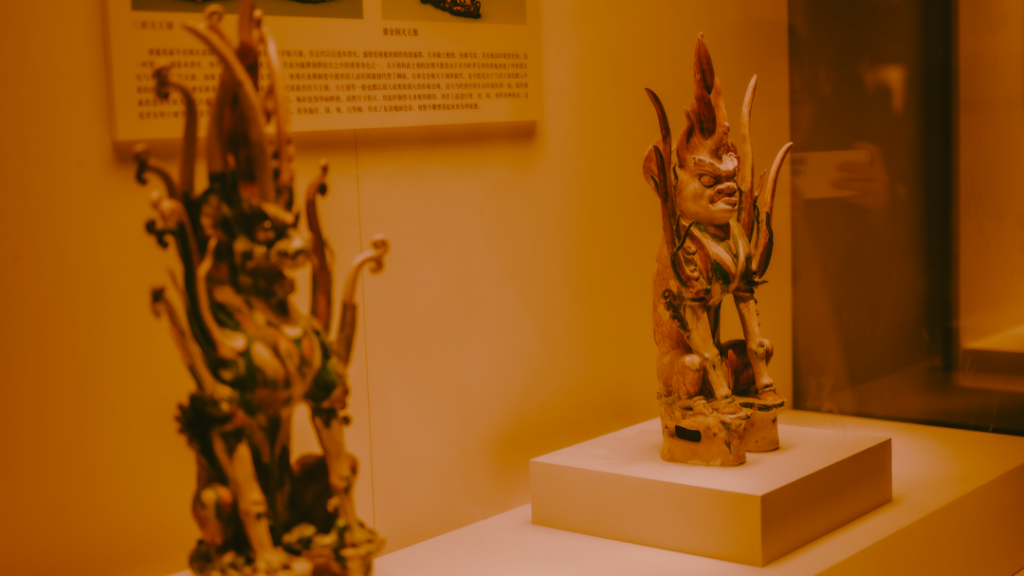
Isn't Zhong Kui, the celestial master, from the Tang Dynasty? The Tang era saw the fusion of Buddhism, Taoism, and Confucianism, all localized within China.
Comparing pottery from the Western Zhou period to Tang tri-color ware, you see improvements in refinement, smoothness, and color. This reflects advances in craftsmanship and social productivity.
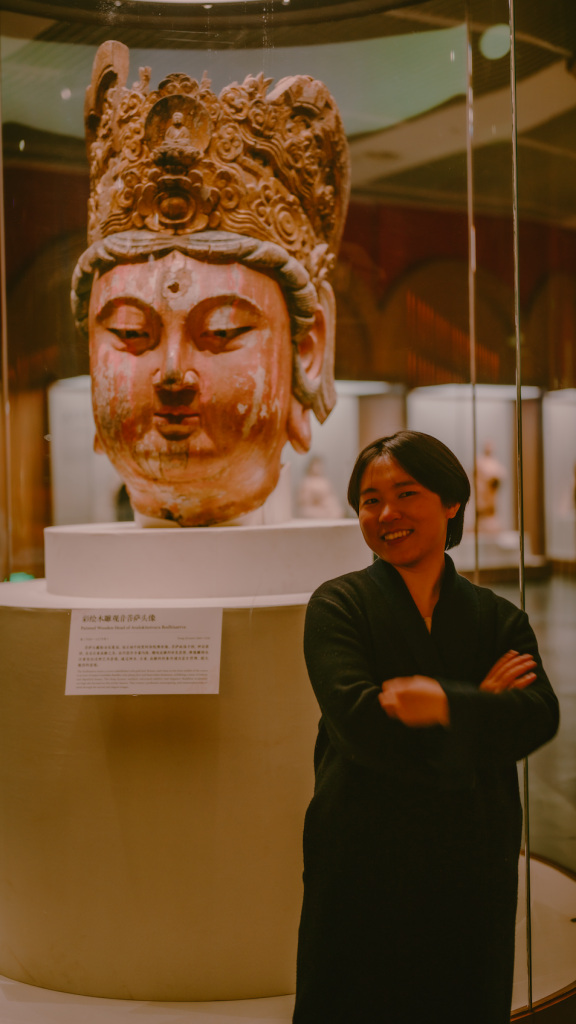
Tang and Song dynasty Buddhist statues are also quite beautiful, thanks to richer colors. The statues feature more vibrant hues and lean toward an aesthetic of opulence and richness, creating a sense of peace. But these statues are all on the 4th floor in the Ancient Chinese Buddhist Sculpture exhibition.
The most famous piece on the 14th floor is this painted wooden carving of Guanyin from the Song dynasty, placed right in the center of this exhibition.
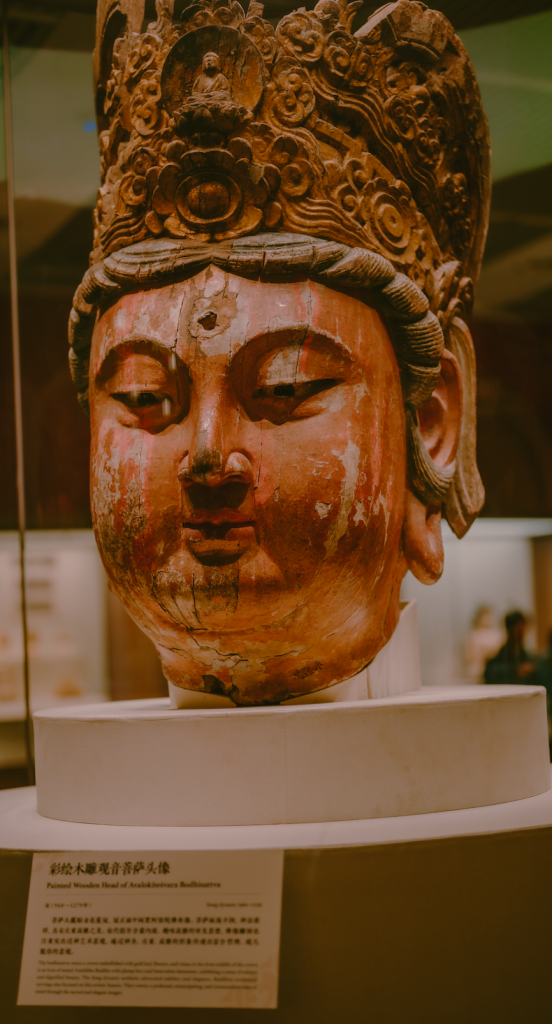
Tang and Song societies placed greater emphasis on human value, with Buddhist statues resembling real people.
Some of the painted lacquer has faded.
Exhibits from the Song, Yuan, Ming, and Qing dynasties after the Tang are scarce. Ming and Qing artifacts are displayed in other Beijing museums, so we only briefly passed through this section.
I took just one photo of the crowd beneath the phoenix crown and the raw silk, both radiating a natural luster.
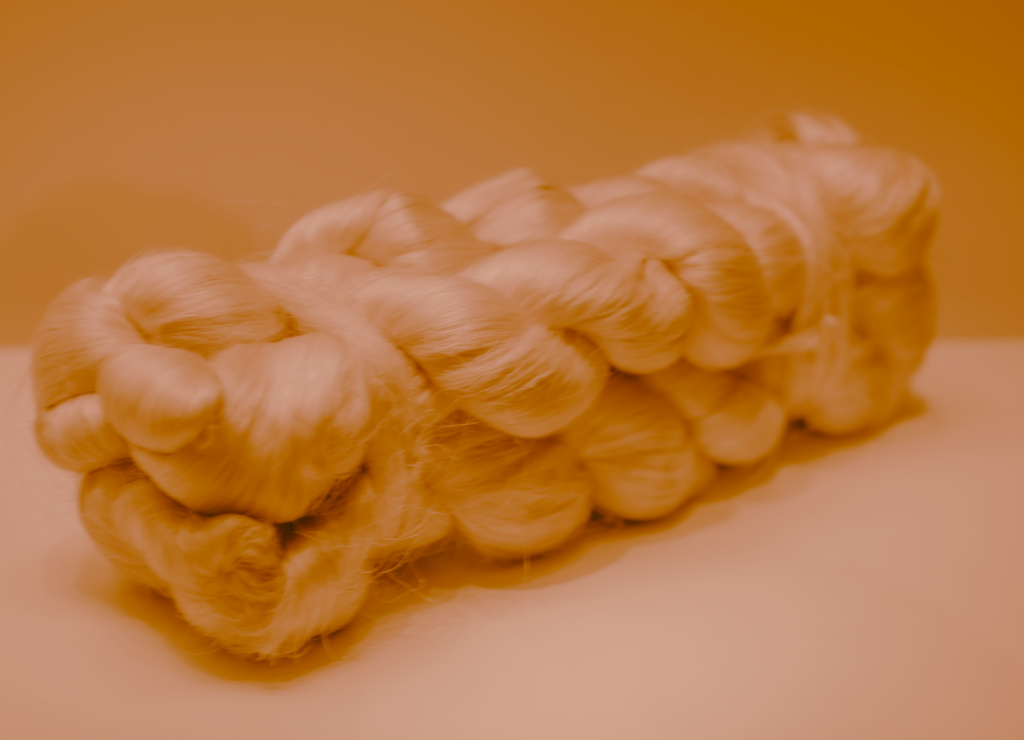
Throughout Chinese fashion history, silk has been favored because it was locally produced in the Jiangnan region. Cashmere, on the other hand, is more prevalent in ethnic minority areas like Tibet and Inner and Outer Mongolia.
4th Floor Jade Collection
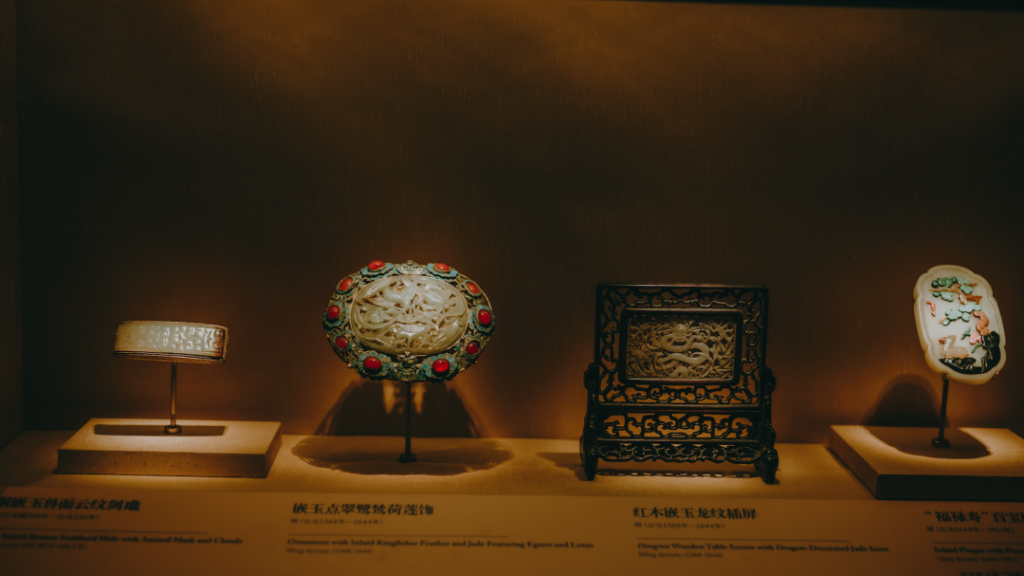
Briefly on the jade collection on the 4th floor—I find it more appealing than the porcelain. The same floor also hosts Chinese costume and technology exhibitions, which I found average. Jade enthusiasts might also visit the China Geological Museum, as many stone specimens here are labeled with its affiliation.
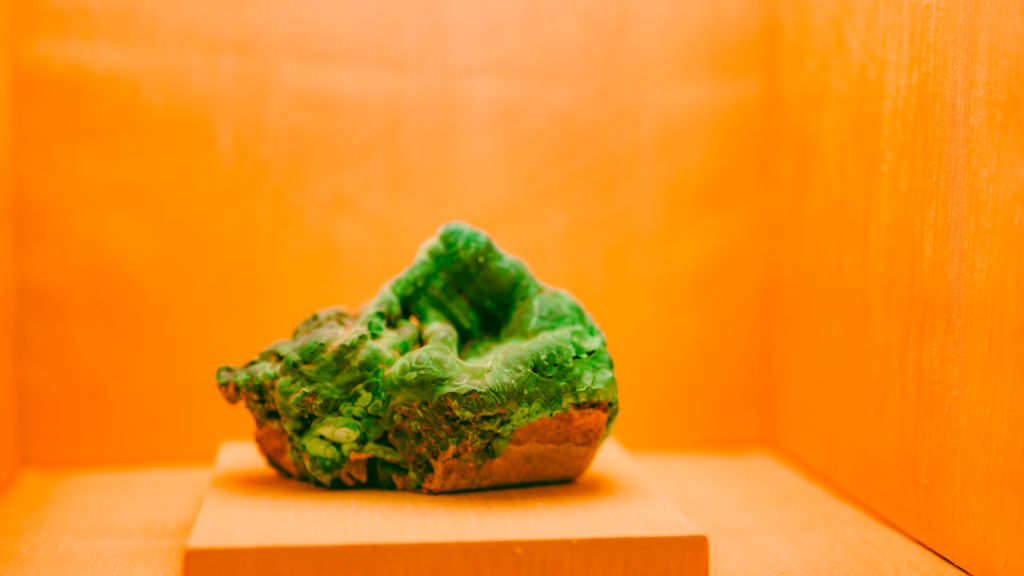
I spotted the frog preserved in amber from my childhood Chinese textbooks. Malachite resembled clusters of green coral, while jade incense burners, crystal-lidded bottles, and various jade ornaments were on display. The finest jade quality was found in the Tang Dynasty section on B1—a small wine cup crafted from Hetian jade and gold, its exceptional quality immediately apparent.
In ancient times, these jade pieces were primarily used as decorations for belts, belt hooks, and swords.
Visiting the B1 Ancient China permanent exhibition felt like revisiting Chinese history. I discovered that the National Museum's most extensive collection spans the Bronze Age of the Shang, Zhou, and Qin dynasties, along with the Tang Dynasty. Many of the museum's most prized artifacts are bronze vessels from the Shang and Zhou periods.
After leaving the National Museum, take a stroll around Tiananmen Square, then enter the subway station through the underground passage.