Hongya Cave was first built around 314 BC during the Warring States Period. Its original name was Hongya Gate, one of the ancient city gates of Chongqing. It underwent large-scale reconstruction during the Ming Dynasty and had already become the largest commercial port along the upper reaches of the Yangtze River at that time.
Over the long course of history, Hongya Gate itself has long since been destroyed, but Hongya Cave still preserves most of its historical relics, including the river defense battery, the Hongya city gate closure, the Paper and Salt Wharf, sections of Ming Dynasty city walls, and inscriptions from the 1911 Revolution. The “cave” of Hongya Cave refers to a large natural grotto. After “Hongya Gate” disappeared, this area came to be known by the cave instead, becoming what we now call “Hongya Cave.”
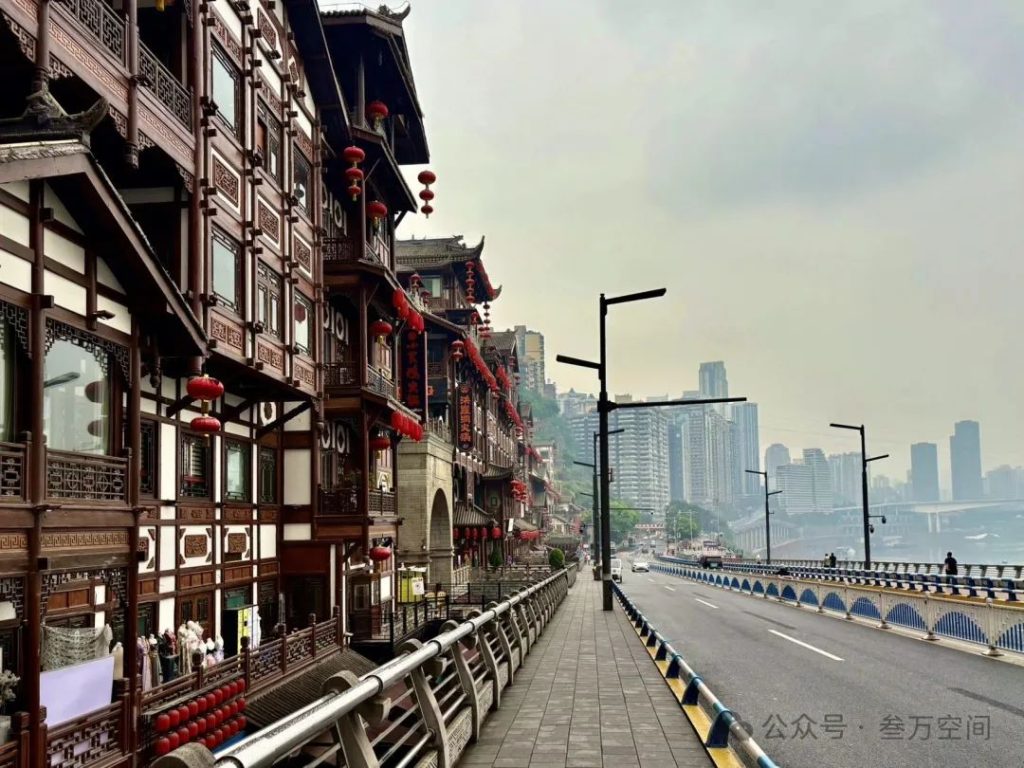
Travelogue of Chongqing's Hongyadong
At nine o'clock in the morning, under overcast skies with drizzling rain, I crossed the Qiansimen Bridge and entered the Hongyadong Folk Culture Zone (Gate 8) on the left side of Jiabin Road. Passing through the central hall of the Hongyadong Folk Culture Shopping Arcade, I ascended to the second-floor walkway. Most shops were still closed for business, and there were very few visitors—perfect conditions for me to stroll, admire the river views, and take photos.
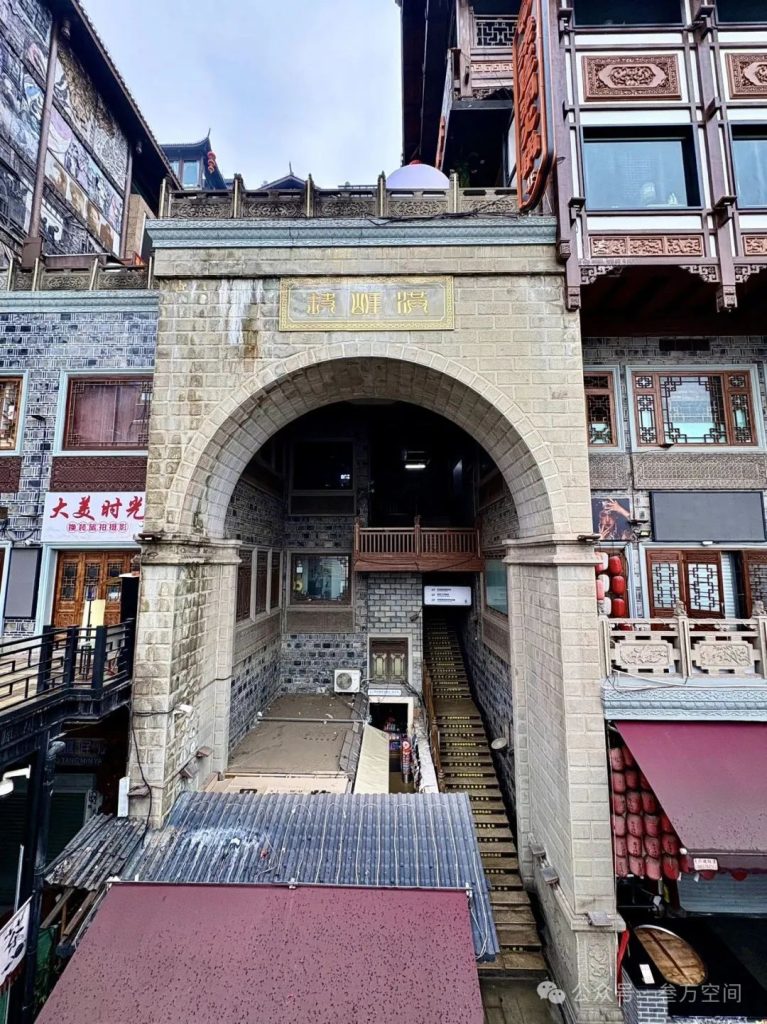
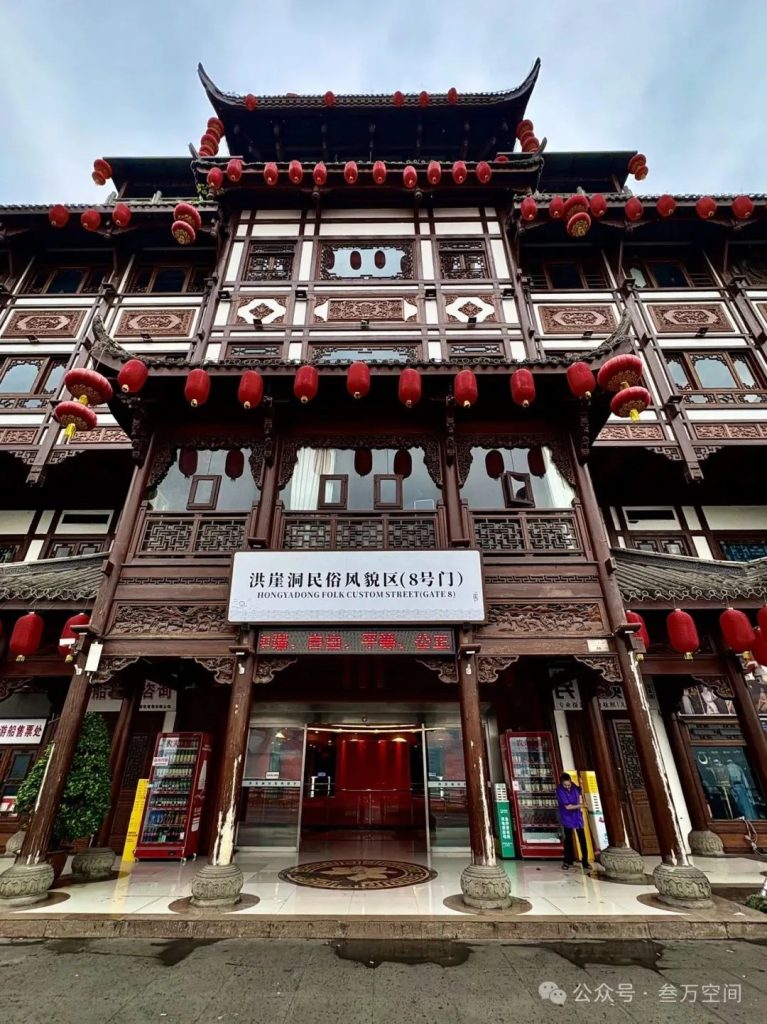
Hongyadong was originally a military stronghold constructed in 316 BC during the Qin conquest of the Ba Kingdom. During the fourth year of the Hongwu reign of the Ming Dynasty (1371), when Dai Ding constructed Chongqing City, seventeen gates were built following the principle of “nine open, eight closed.” Among these, “Hongya Gate” was designated as a closed gate due to its strategically vital location for military purposes. Chongqing residents traditionally referred to city gates as “caves,” hence Hongya Gate became known as “Hongya Cave,” a name that has persisted to this day.
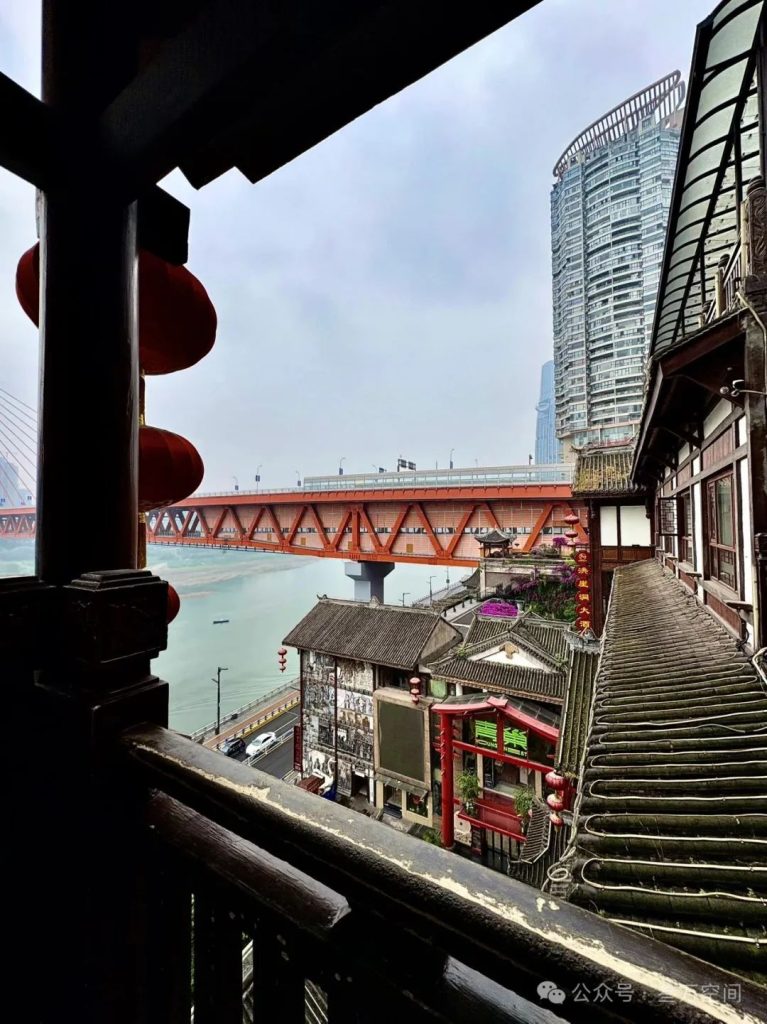
To the west lies the Qiansimen Bridge, offering a view of its eastern side. To the south, the scenery of the Jialing River unfolds (top and bottom):
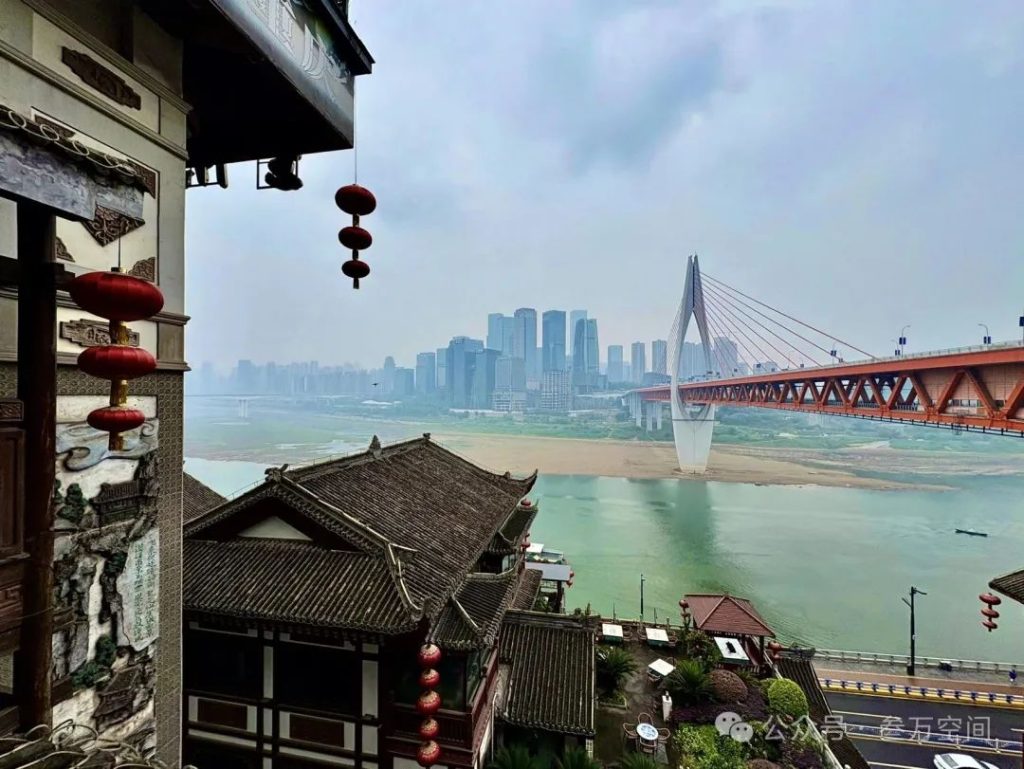
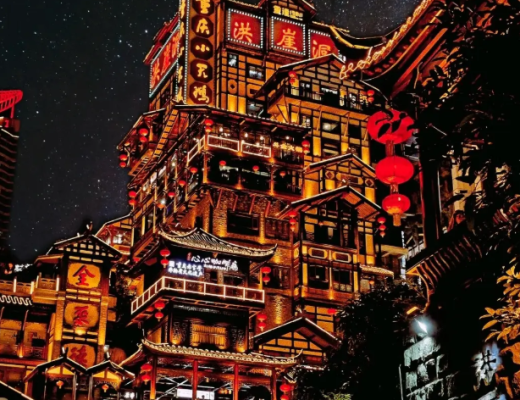
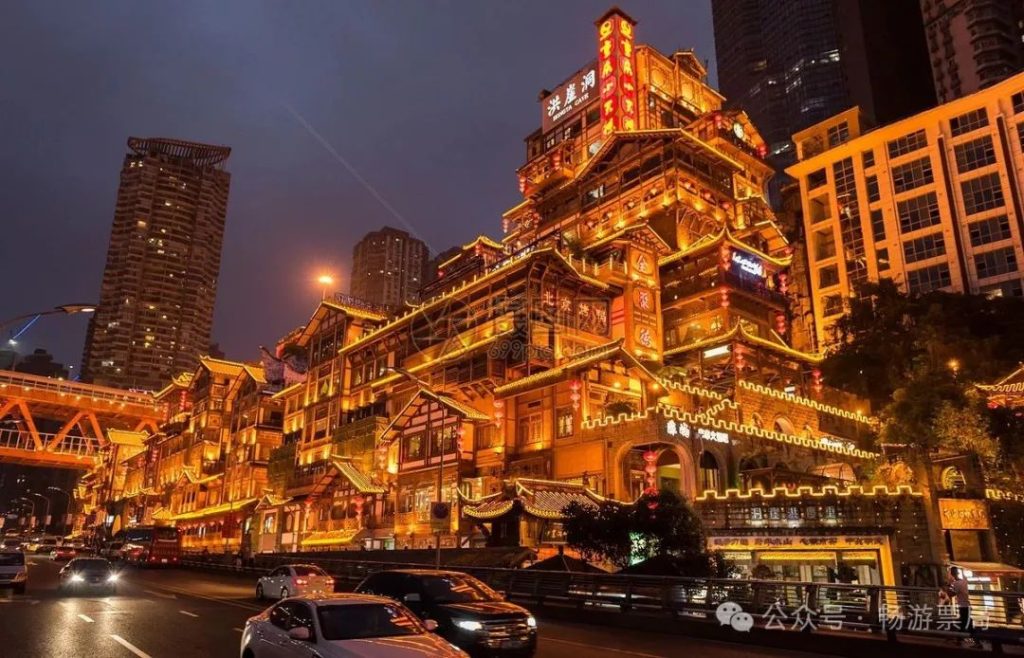
Hongyadong features stilted houses as its core architectural style, incorporating traditional elements such as cantilevered eaves, intricately carved pendants, wooden braces, and viewing corridors. Built along the mountainside and riverbank, it showcases classical dwellings with blue bricks, stone tiles, and flagstone paths, revealing the authentic charm of old Chongqing. Its stilted buildings complex has rewritten history by surpassing the traditional 5-6 story limit for such structures. Rising 13 stories high on sheer cliffs, it is hailed by the architectural community as “China's Cliffside City” and celebrated by global media as the “Sky City.”
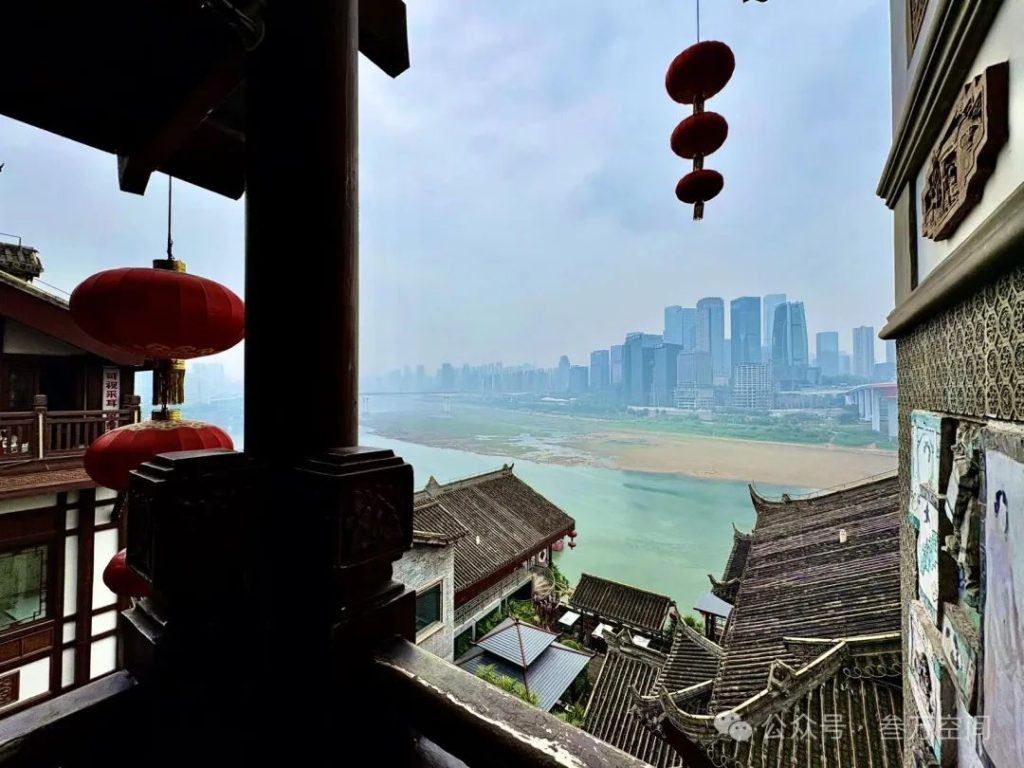
Looking southward, the Jialing River unfolds its scenery; to the east lie the Hongyadong buildings. I could only glimpse fragments of the exterior architecture through the gaps between the pavilions, facing south (top and bottom):
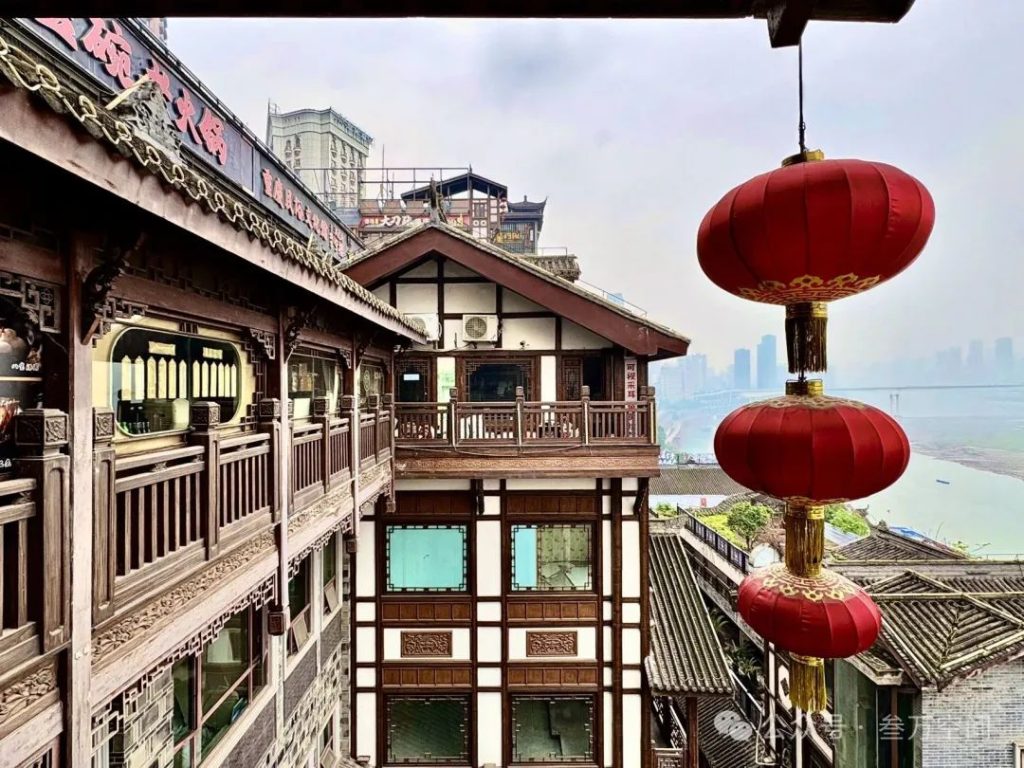
Walk east along the path, continuing eastward until you reach the staircase at the eastern end, where you can continue up the stairs.
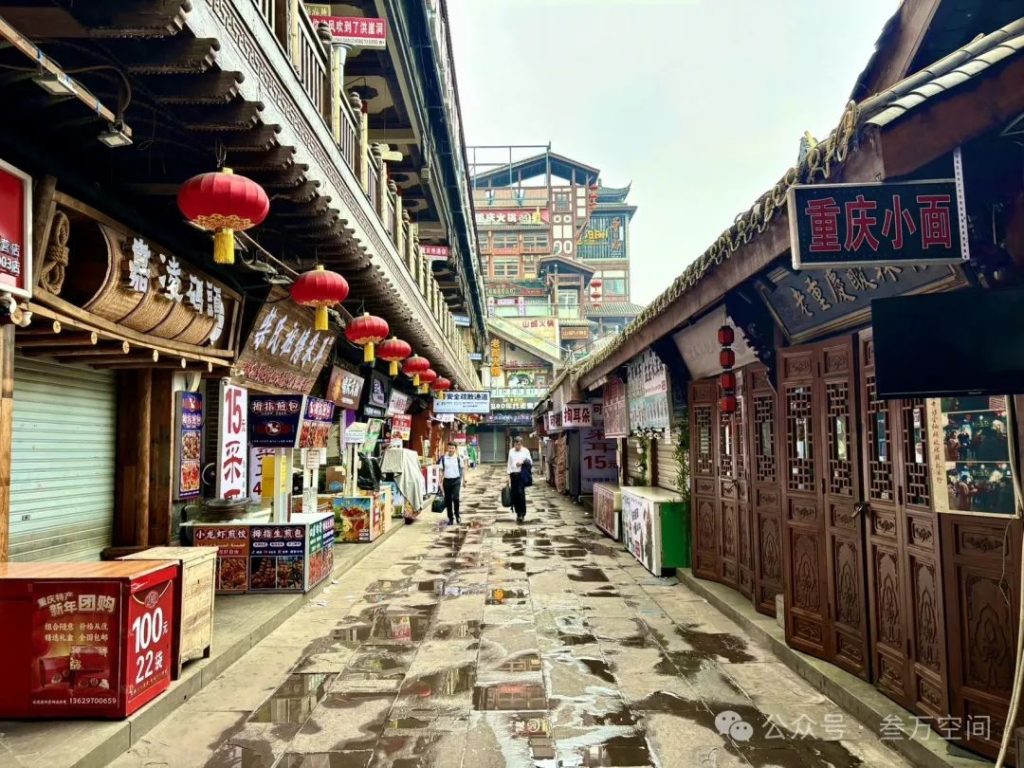
Occasionally, you might come across a very pretty shop along the way, or catch sight of a few tourists.
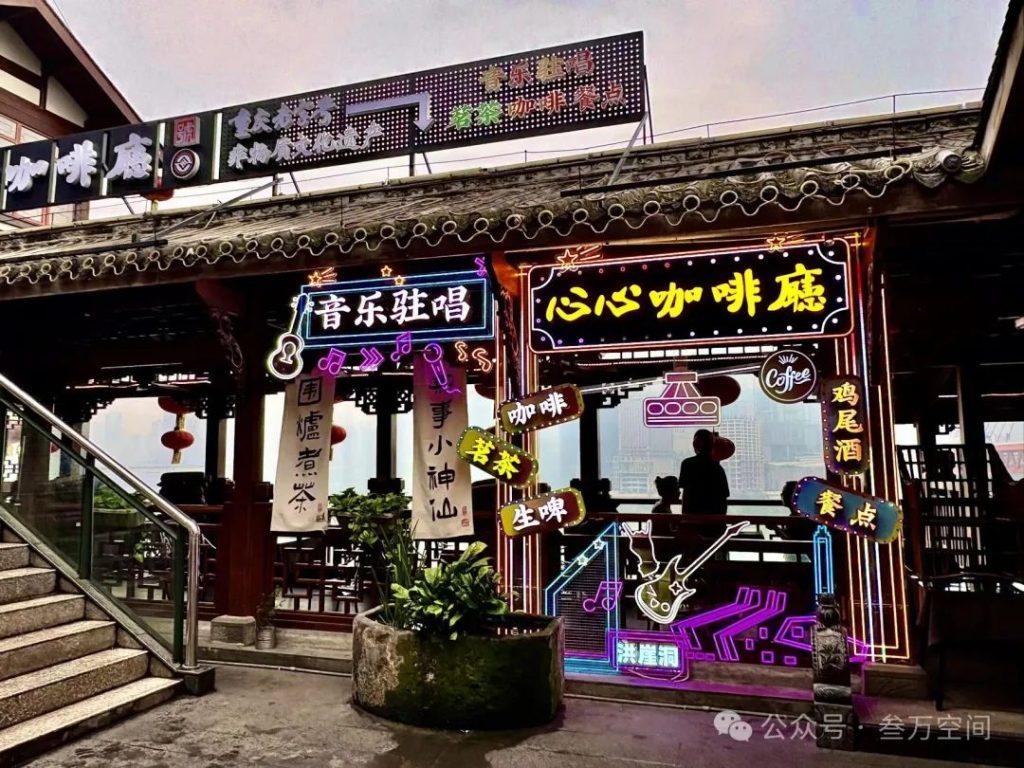
Keep moving forward, climb higher, and look out into the distance.
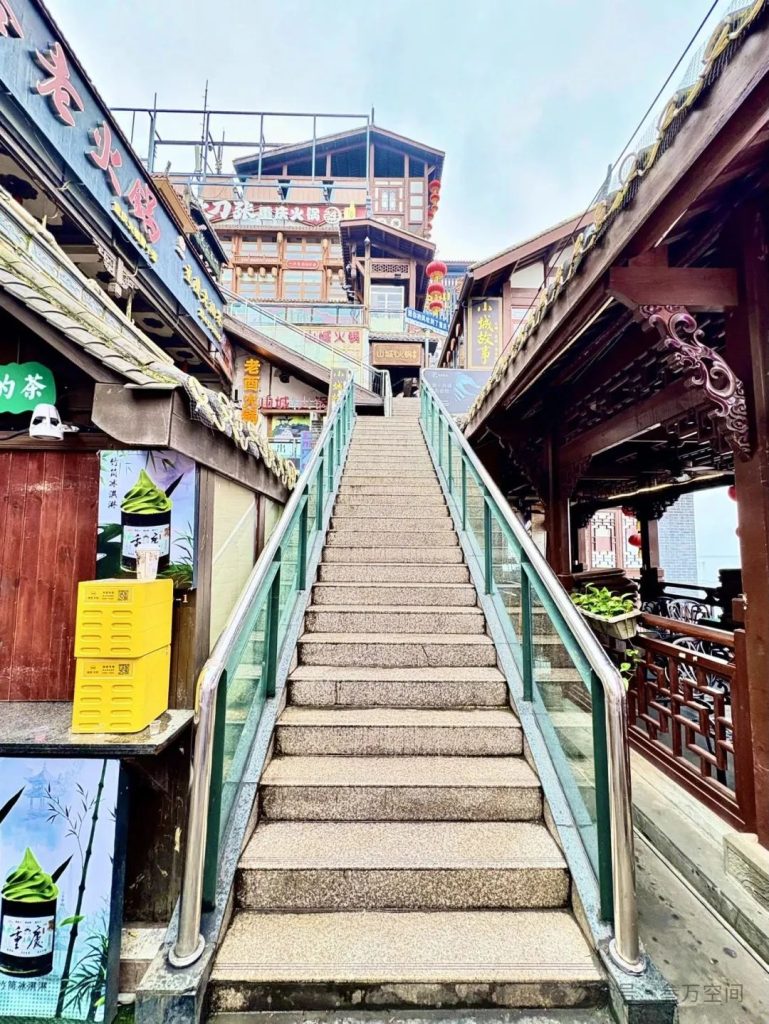
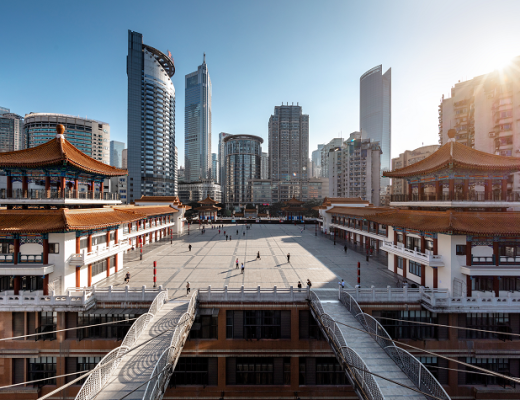
Continue ascending to reach the 11th-floor city terrace and main entrance plaza of Hongyadong Scenic Area. Cangbai Road lies to the north, and visitors may also take the sightseeing elevator to this level. The 11th-floor main entrance plaza of Hongyadong is level with the Jiefangbei business district, offering an open-air viewing platform that provides an excellent vantage point for panoramic views of Hongyadong. It serves as the connection point to Qiansimen Bridge, allowing direct access from the 11th floor to the bridge. At night, the lights on the bridge complement the illuminations of Hongyadong beautifully. Surrounding the area are cultural and creative shops and stamp stations where visitors can collect Hongyadong's exclusive commemorative stamps. This multifunctional space is well worth exploring.
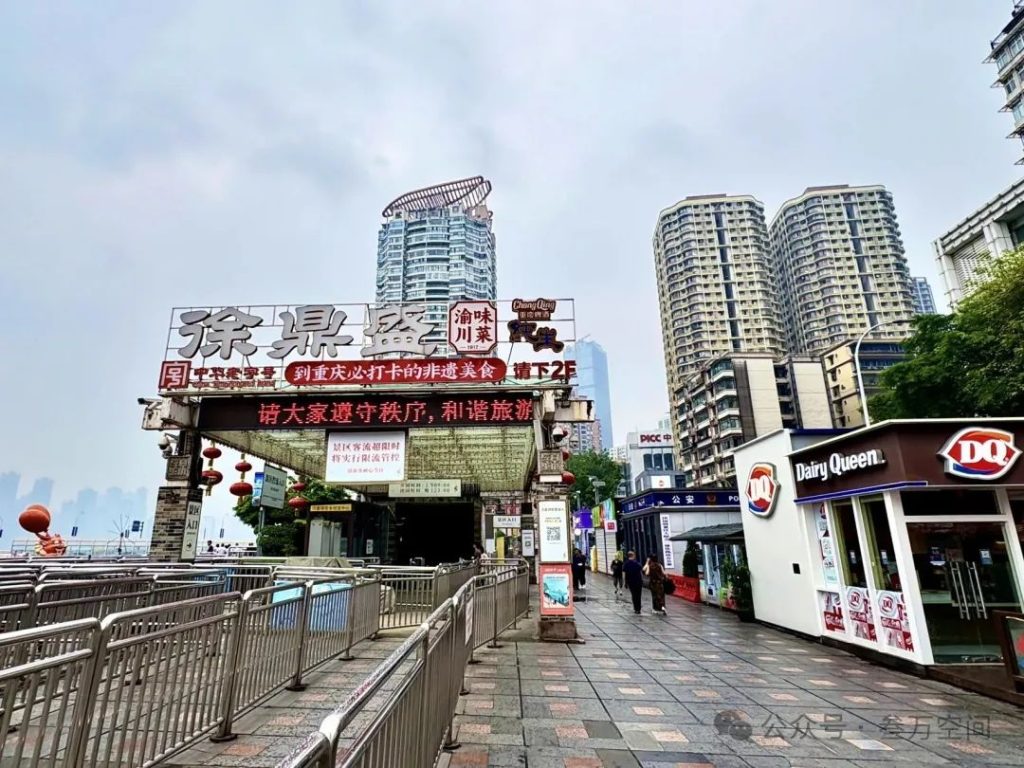
Main Entrance to Hongyadong Scenic Area (Upper and Lower):
The square was sparsely populated with visitors in the morning. Several sculptural installations caught my attention, drawing me closer to examine them. These sculptures reflect Chongqing's history and urban landscape from diverse perspectives.
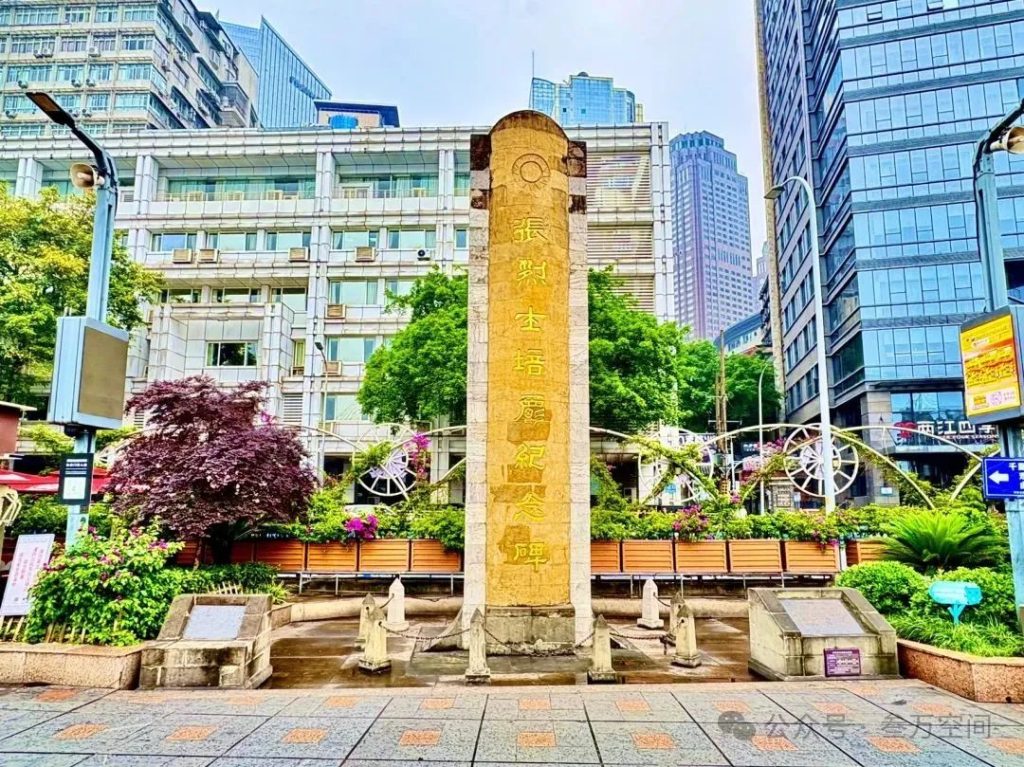
Xinhai Monument: Located on the 11th floor facing Lincangbai Road, this monument was erected in 1945 by the Nationalist Government to honor Zhang Peijue, the military governor of the Sichuan Army during the Xinhai Revolution period (1911-1912) in Chongqing. It stands alongside the Zou Rong Monument as a prominent historical landmark.
Sculpture “Memories of the Mountain City” Artist: Guo Xuanchang, sculptor based in the United States (Professor at Chongqing University)
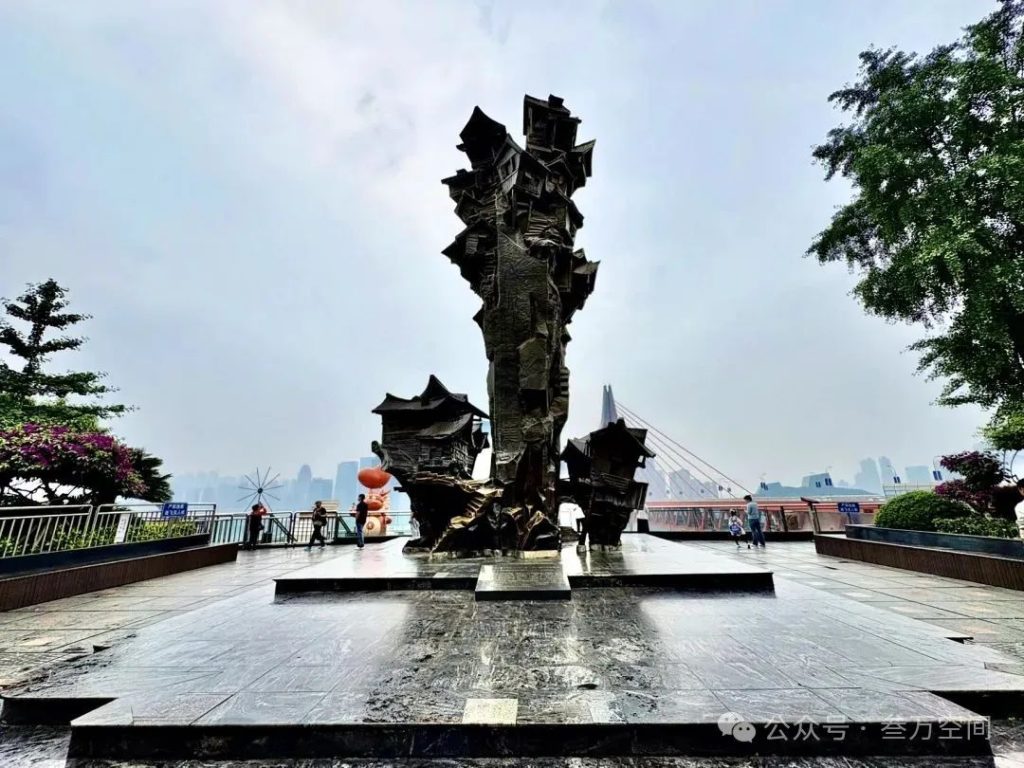
Memory Mountain City, a large-scale urban sculpture, serves as the core thematic piece of Chongqing's Hongyadong Folk Architecture and Lifestyle District. Positioned at the center of the district's Cangbai Road urban terrace, it stands as a significant iconic symbol not only for the district but for the mountain city of Chongqing itself. Standing 12.9 meters tall and 5 meters wide, the sculpture is crafted from brass and silver, with gold leaf outlining its contours to fully capture its spirit and grandeur.
The towering bronze sculpture resembles a colossal mountain, symbolizing the resilience of the mountain city's people: its tenacious and optimistic national spirit. As the crowning touch in the artist's overall design for the Hongyadong Folk Architecture District, it respects historical and regional culture while blending realism with romanticism. Artistically exaggerating the stilted-house architecture typical of mountain dwellings, it retains authenticity and individuality. The bold, rugged form captures the distinctive Ba-Yu folk essence of “city within mountains, mountains within city,” evoking the historical memory of old Chongqing's urban life. Hailed by Chinese and international visitors as a cultural masterpiece of Mountain City Chongqing, this work won the 2005 National Outstanding Urban Sculpture Award.
Sculpture: Solo Performance Artist: Guo Xuanchang (Professor at Chongqing University), sculptor based in the United States
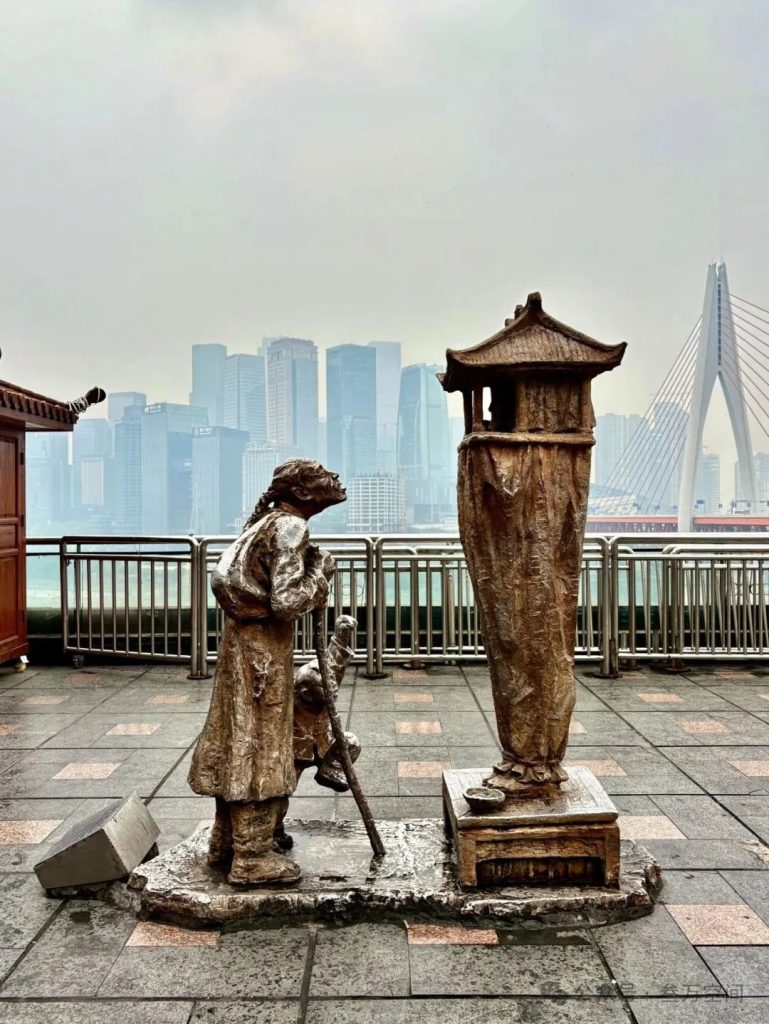
The group sculpture “One-Man Show” vividly recreates the arduous lives and masterful performances of folk artists who once thrived in the streets, alleys, and docks of Qing Dynasty Chongqing. These performers could simultaneously mimic the voices of two or more characters, executing a highly challenging one-man show by manipulating multiple theatrical figures through a head-mounted curtain, dance movements, and hand gestures. Their artistry captivated audiences of all ages.
Sculpture “Rickshaw” by Guo Xuanchang, sculptor based in the United States (Professor at Chongqing University)
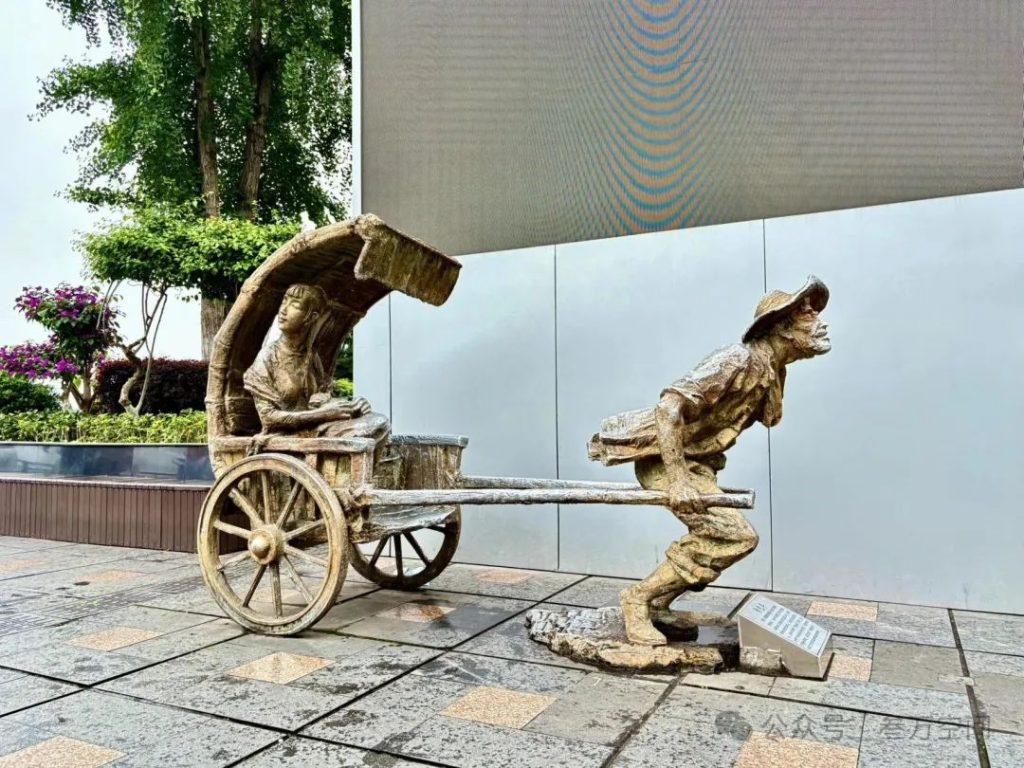
The Rickshaw vividly portrays the transportation of old Chongqing, a city built on steep slopes. Back then, only dignitaries and the wealthy could afford to ride in rickshaws. The city center was filled with rickshaws crisscrossing the streets, as fashionable as luxury cars are today. The sculpture of a lady seated with a cat in her arms, paired with the vacant “sculpture seat,” bridges the gap between past and present while inviting viewer participation.
After touring the main entrance plaza and the city balcony on the 11th floor of the Hongyadong Scenic Area, I took the sightseeing elevator back down to the 1st floor for further exploration, pausing briefly on the 6th floor. The 6th floor features leisure and entertainment activities such as Heart-Heart Café, Light and Shadow Art Scenes, Exploring Hongyadong, and Interactive Tech Experiences, though they were not yet open for business.
Arriving at the 1st floor of Hongyadong Scenic Area, I entered Dicui Plaza, where preparations were underway for new scenic area activities.
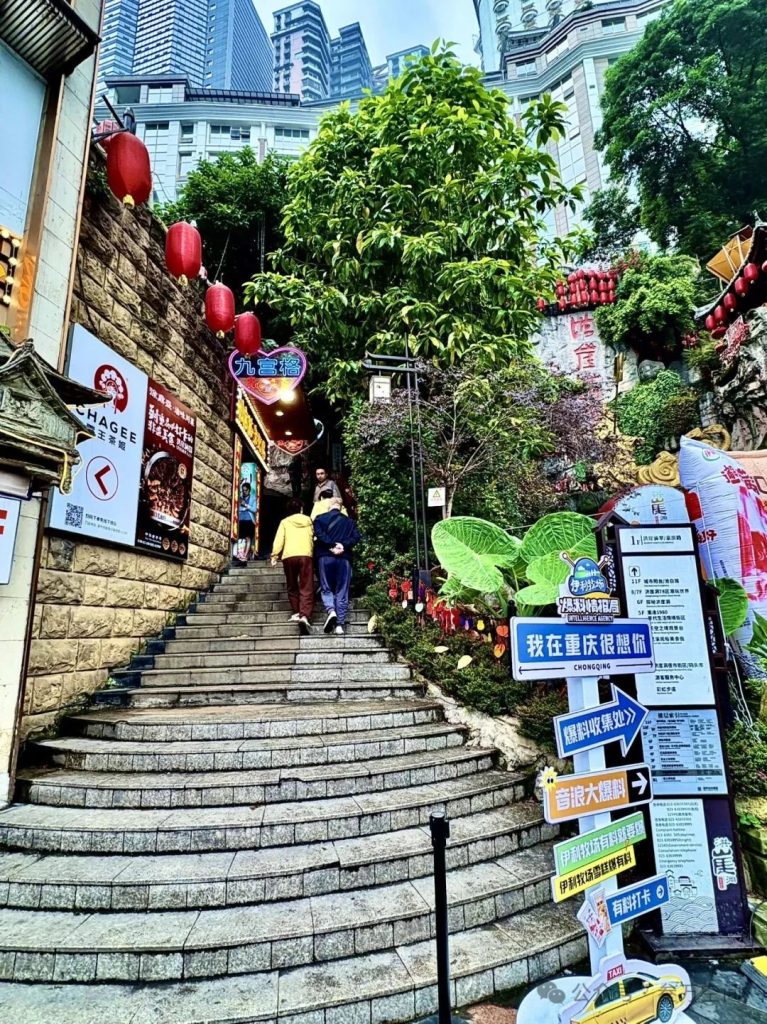
Hongya Drip-Green: Located on the first floor of Hongya Cave Scenic Area, it is one of the ancient Twelve Scenic Views of Bayu. Hongya Drip-Green derives its name from its historical natural landscape, where springs once dripped from the cliff walls in ancient times. This designation originated from the praise of literati and poets like the Northern Song Dynasty poet Huang Tingjian. The Hongya Drip-Green area was once lush with verdant forests, where streams seeped through the mountains, forming cascading waterfalls. Even during dry seasons, droplets would fall from the cliff's edge like emerald beads and jade pearls, sparkling with crystalline clarity under the sunlight—a breathtakingly beautiful sight.
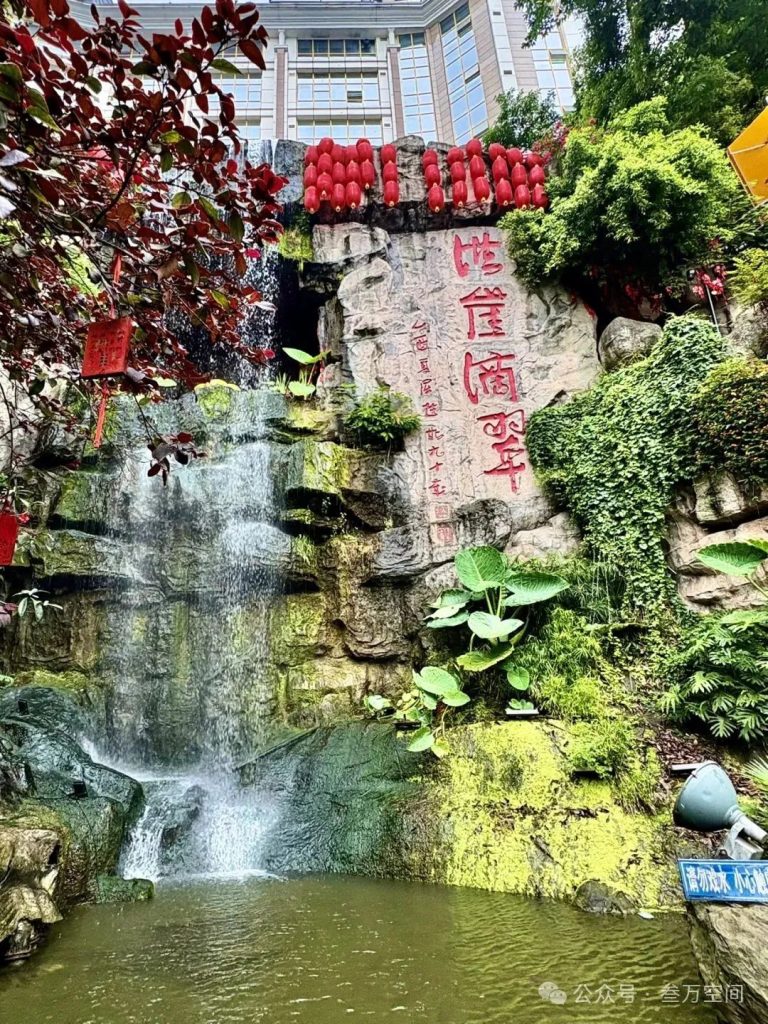
This scenic spot is not only famous for its natural beauty but also carries rich cultural history. For example, literary figures such as Huang Tingjian once left calligraphic works here praising the landscape. Visitors can enjoy the changing scenery throughout the four seasons, and especially during the gentle spring rains, the sight of the waterfall cascading like pearls and jade is truly unforgettable, attracting countless scholars and poets to visit and compose verses here.
I continued walking forward and arrived at the exit of the Hongya Cave Scenic Area (Gate 7), where I located Zhiyan River Street and the Daijia Lane Cliffside Footpath.
Hongya Han Que: Near the exit of the Hongya Cave Scenic Area (Gate 7), there is a stone-carved “Han Que” of Hongya Cave, modeled after cultural relics unearthed in Wushan within the Three Gorges Reservoir area. The original “Han Que” is now preserved in the Chongqing China Three Gorges Museum and is more than 2,000 years old. It is an important carrier of the mountain city culture inherited by Hongya Cave.
Near the exit of the Hongya Cave Scenic Area (Gate 7), there is a prominent landmark of the scenic area as well as a visitor rest area. Several long benches are set beside a large group of sculptures, and the entrance to Daijia Lane is located just to the northwest of this sculpture group.
The sculpture “The Legend of Zhiyan River”Artist: Guo Xuan-chang, a Chinese-American sculptor and professor at Chongqing University
The sculpture “The Legend of Zhiyan River” draws its inspiration from the Ming and Qing dynasties, when the area near Hongya Cave along the Jialing River served as an important logistics hub in eastern Sichuan. Over many years, a “paper wharf” and a “salt wharf” gradually formed here, leaving behind the historical place name “Zhiyan River Street.” Through the poetic image of a Bayu beauty playing the pipa and the echo of the melody, the artist evokes memories of the bustling Zhiyan River wharf in Chongqing’s past. When the Hongya Cave Folk Custom Scenic Area was completed in 2006 with investment from the Chongqing Little Swan Group, the lively scenes of the old wharf were restored. By reconstructing the traditional stilted houses built into the cliffs, it once again presented “stilted houses on the cliffs, the old Chongqing in memory,” making it one of the most important attractions in Hongya Cave.
On the cliff wall is engraved “The Reconstruction Record of Hongya Cave (Part I).”
Daijia Lane Cliffside Footpath:
I walked to the vicinity of Daijia Lane and directly entered the Daijia Lane Cliffside Footpath. Walking along the path, about halfway through you will encounter two routes: the main tunnel and a side tunnel. The side tunnel is called the “Time-Travel Tunnel.” After exiting from the side tunnel, turn right and continue along the footpath. When you exit the main tunnel, the Jialing River is directly in front of you. Continue to the right for a few more minutes and you will arrive at Hongya Cave.
Halfway up the cliff, there is a sign along the path indicating the climbing directions toward “Daijia Lane · Discover the Mountain City” and the “Sky Mirror Viewing Platform.”
Century-Old Blessing Cave:
Located on the sheer cliff of Chongqing’s Hongya Cave, this is a very distinctive tourist attraction. The Blessing Cave is a narrow cave that can only accommodate two people passing through sideways. Three sides of the cave (above, below, and one side) are open, allowing visitors to clearly see the river view. The interior is also filled with wooden blessing plaques and souvenirs, adding a sense of mystery and a wish-making atmosphere.
This cave offers a truly unique experience, allowing visitors to feel close to both nature and history while exploring the hidden cliffs of Hongya Cave. At the same time, the Blessing Cave provides a special vantage point for appreciating Chongqing’s magnificent scenery—especially at night, when the lights reflect beautifully on the river. With its naturally open space, unique geographic location, and meaningful blessing culture, the Century-Old Blessing Cave has become an indispensable attraction in any visit to Hongya Cave in Chongqing.
Wish Pavilion: Ascending the cliffside path from the east side of Tangjia Lane, passing through the century-old prayer cave, the descent begins on the west side. Midway down this western slope stands a four-cornered pavilion—this is the “Wish Pavilion.” Perched on the sheer cliff face of Hongyadong, the Wish Pavilion stands as a distinctive site for prayers and blessings. Open on one side, its compact interior features two back-to-back benches, offering visitors a place to rest or gaze out over the river views. A small path connects the pavilion to the trail, its railings and nearby branches adorned with red prayer plaques. Blending natural scenery with cultural elements of prayer, the pavilion offers a unique perspective to experience Hongyadong and the river views of Chongqing.
After exploring the Wish Pavilion, I descended along the western path of Hongyadicui. Soon, I arrived at Dicui Square on the first floor of Hongyadong, completing my daytime tour of the scenic area. My visit began around 9:00 AM and concluded by approximately 10:30 AM.
Having explored the main attractions of Hongyadong, I gained a comprehensive understanding of the site. Hongyadong is built atop a naturally formed cave, nestled into the steep cliffs along the Jialing River. Hongyadong is not merely a tourist attraction but a comprehensive destination showcasing Chongqing's urban charm and blending history with modernity. From its vantage point, the magnificent river views and cityscape unfold before you, with the Qiansimen Bridge arching like a rainbow across the Jialing River. Exploring the Hongyadong Scenic Area truly stands as one of the most valuable experiences of any Chongqing journey.
Hongyadong Transportation Guide
Public Transportation: Take Metro Lines 1 or 6 to Xiaoshizi Station. Exit via Exits 6 or 9 and walk to the destination. Alternatively, take Metro Line 2 to Linjiangmen Station and walk 500 meters northeast. Bus routes 111 or 112 (outer loop) also stop at Hongyadong Station.
Driving: Parking lots are available nearby, but spaces are limited during holiday peak periods. Plan ahead.
Hongyadong Tour Route
Daytime Tour: Enter via the 11th-floor street-level entrance. Explore in sequence: - 11th-floor city observation deck - 78 Zone Trend Play City (floors 7-9) - Hongyadong Secret Realm Exploration (6th floor) - 1980s Retro Lifestyle District (5th floor) - Hongyadong Diciui Scenery & Local Snack/Specialty Shops (4th floor) - Diciui Plaza (1st floor)
Evening Tour: First head to the riverside near Jiangbei Grand Theatre to photograph Hongyadong's night views. Then cross Qiansimen Bridge to admire Hongyadong from different angles. Finally, return to Hongyadong and capture close-up shots from across the street on the 1st floor.
Hongyadong Photo Spots
- Dai Jia Alley Cliffside Walkway: Capture Hongyadong's side profile and surrounding street scenes.
- Qiansimen Bridge: Captures panoramic views of Hongyadong and the riverfront with excellent photo quality.
- Riverside Park opposite the Grand Theater: Allows combined shots of Qiansimen Bridge and Hongyadong, though closed during flood season.
- Across the street from Hongyadong's 1st floor: Ideal for close-up shots of Hongyadong.
- Liangjiang River Cruise: Capture the full panorama of Hongyadong from the river and experience its dazzling night views.
Important Notes
- Avoid Peak Hours: Weekends and holidays attract large crowds. Visit on weekdays to avoid congestion.
- Safety Precautions: Most structures at Hongyadong are wooden. Smoking and open flames are strictly prohibited. Watch your step when walking at night.
- Scam Alert: Do not trust touts offering “shortcuts” or “express lanes”—these are scams.