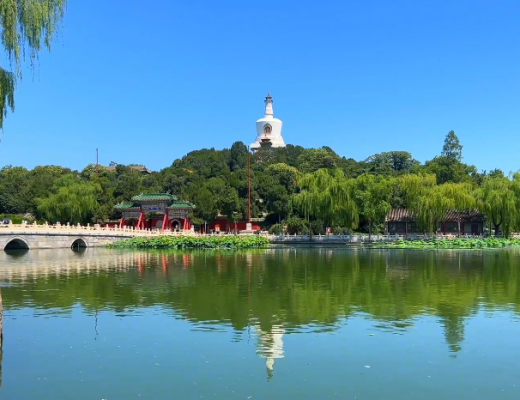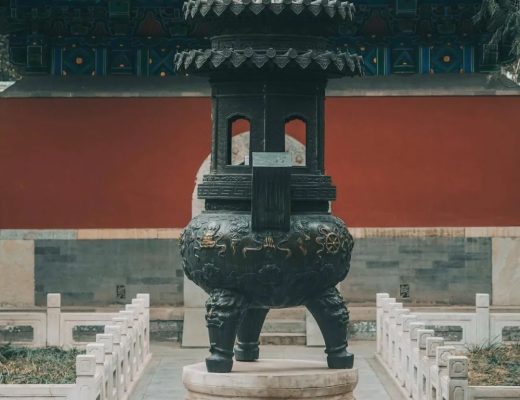
The Temple of Heaven Park is located at No. 1 Tiantan East Road in Beijing’s Dongcheng District. It was once the sacred site where emperors of the Ming and Qing dynasties held ceremonies to worship Heaven and pray for good harvests. It is the largest existing complex of buildings dedicated to Heaven worship. Construction began in the 4th year of the Yongle reign (the era name of Emperor Yongle, Zhu Di of the Ming Dynasty) and continued until the 18th year, built simultaneously with the Forbidden City. It took 14 years to complete and now has a history of more than 600 years.
Covering 273 hectares, it is 3.7 times the size of the 72-hectare Forbidden City. The northern part of the altar complex is circular, and the southern part is square, symbolizing the ancient Chinese concept of “a round Heaven and a square Earth.” The term “Temple of Heaven” is a general name—there are actually two separate altars: the Circular Mound Altar in the south and the Altar of Prayer for Good Harvests in the north.
Emperors of both the Ming and Qing dynasties attached great importance to these Heaven-worship ceremonies and personally visited the Temple of Heaven each year to perform the rituals. On January 1, 1918, the Temple of Heaven was designated as a public park and opened to the public, allowing ordinary people to enter what had once been a strictly guarded imperial sanctuary.
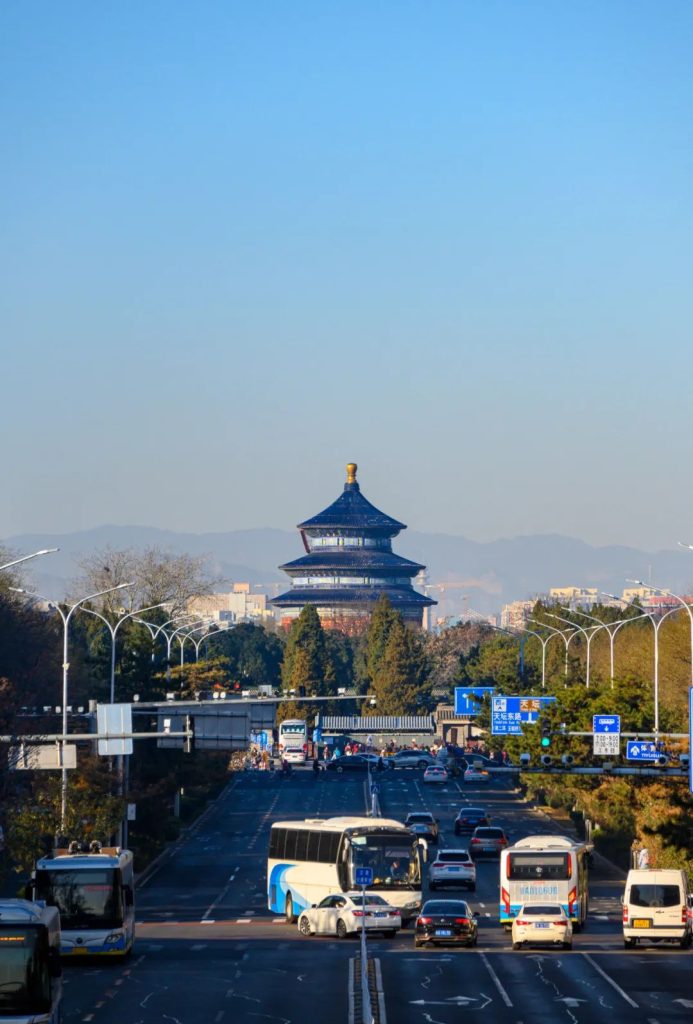
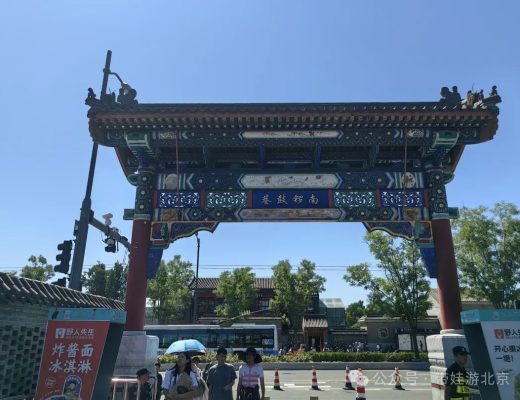
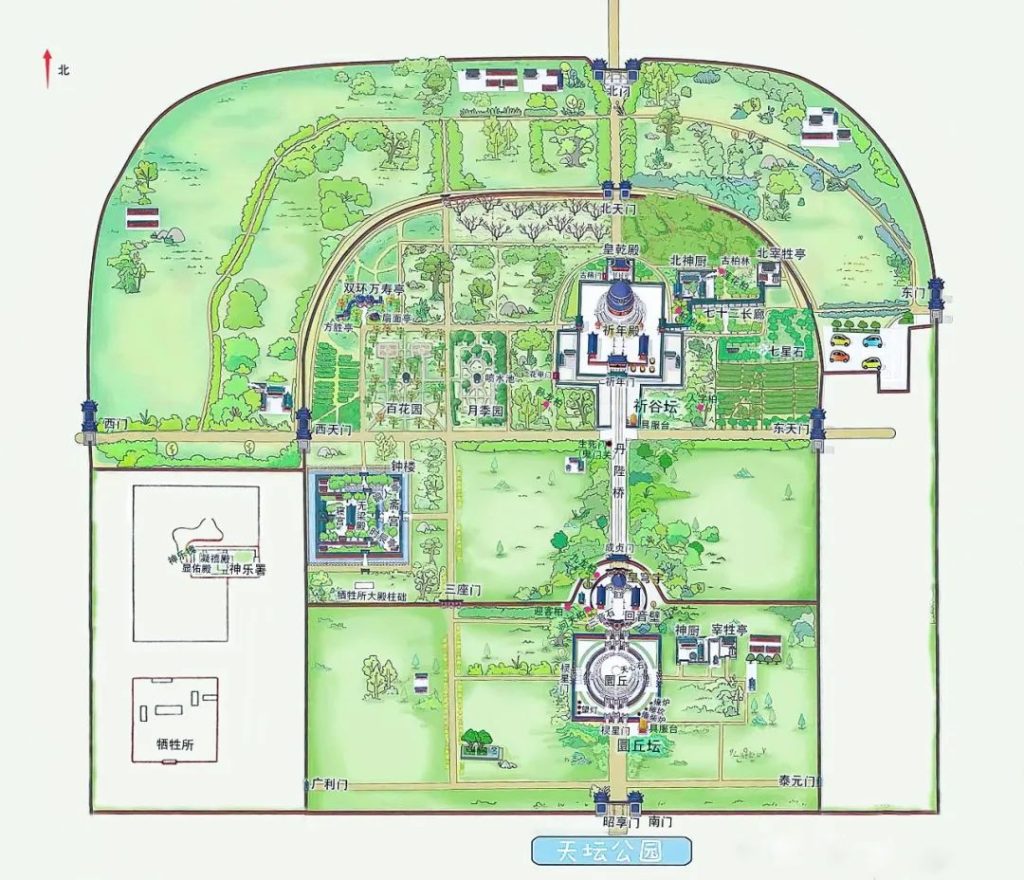
Tiantan Park has four entrances and exits: the East Gate, South Gate, West Gate, and North Gate. This article follows the tour route from the East Gate to the West Gate, introducing the attractions along the way. Major sites include: North Sacrificial Pavilion—Seven-Star Stone—Seventy-Two-Pillar Corridor—North Kitchen—Cypress-Hugging Locust Tree—Hall of Prayer for Good Harvests —Danbi Bridge—Nine-Dragon Cypress—Echo Wall (Imperial Dome)—Circular Mound Altar—Vegetarian Palace—Sacred Music Office—Double-Ringed Pavilion of Longevity. If you are not following the above tour sequence, you may read the corresponding attraction descriptions in this text upon reaching each site.
Temple of Heaven Park Attractions
Northern Sacrificial Animal Pavilion
After purchasing tickets and swiping your card at the East Gate of the Temple of Heaven, walk about 200 meters to enter the Inner Precinct. The park's main attractions are concentrated within this area. Passing through the Inner Precinct wall and turning right, you will reach the first attraction: the Northern Sacrificial Animal Pavilion.
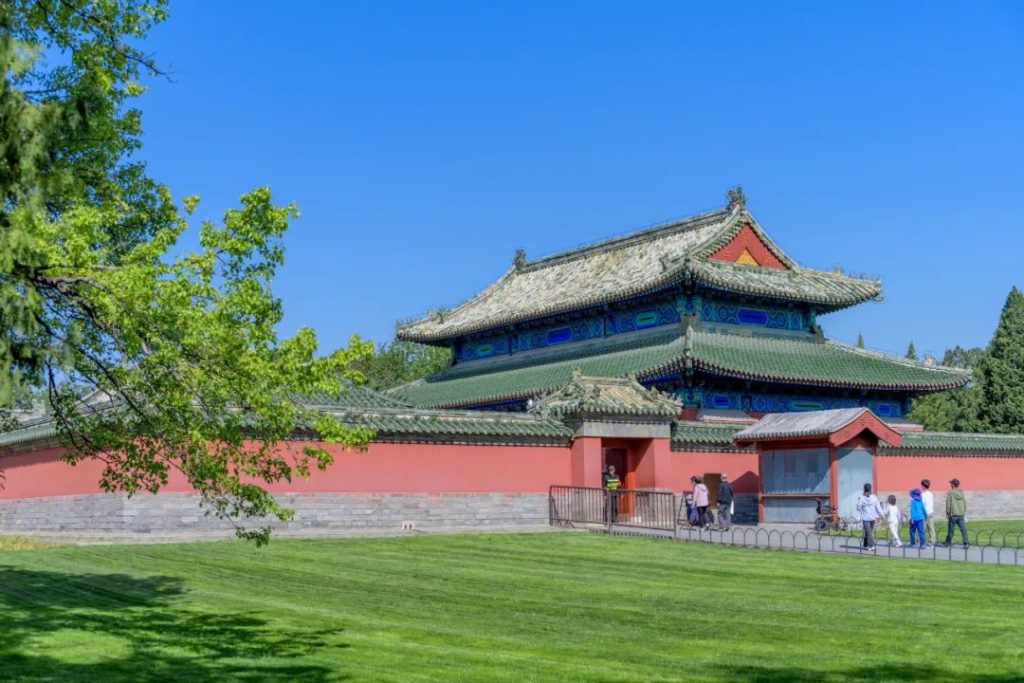
The Northern Sacrificial Pavilion (the Sacrificial Pavilions comprise the Northern and Southern Sacrificial Pavilions) is situated east of the Altar of Prayer for Good Harvests, adjacent to the Northern Divine Kitchen. Its western side borders the structure of the Northern Divine Kitchen. The Northern Sacrificial Pavilion consists of a mountain gate and a sacrificial hall, featuring two stories topped with green glazed tiles. The floor within the hall is paved with blue bricks.
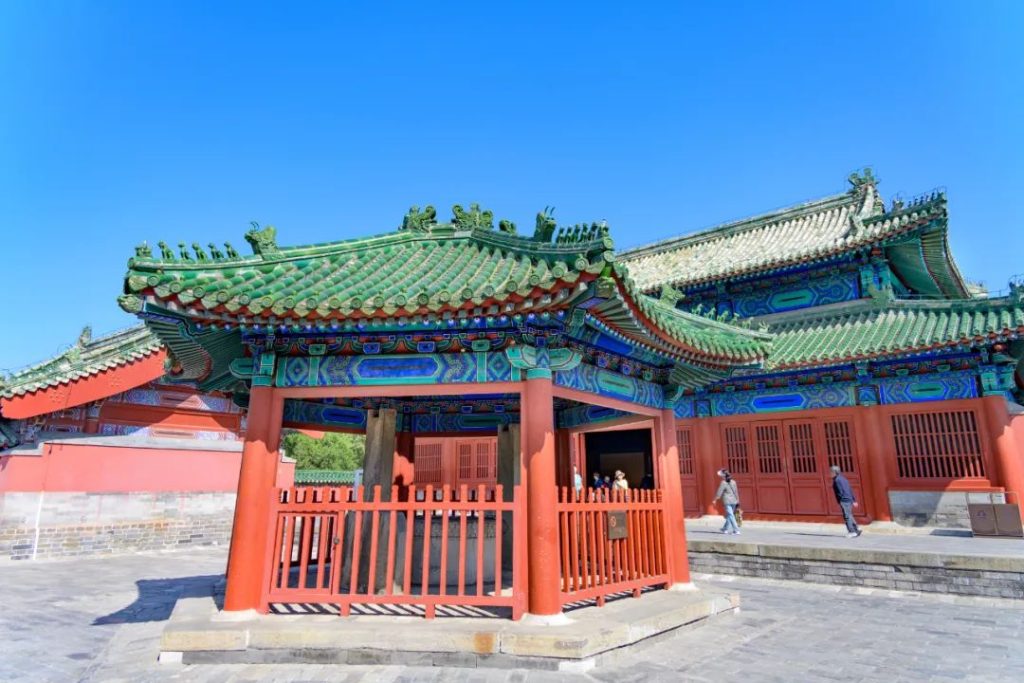
The Northern Sacrificial Animal Slaughter Pavilion served as the imperial site for slaughtering livestock prior to sacrificial rites. During Heaven Worship ceremonies, to ensure the animals remained intact, they were killed by striking their heads with large wooden mallets. After slaughter, preliminary processing took place at locations within the hall, such as the stove and the sacrificial animal soaking pool. The processed animals were then transported through a long corridor to the Divine Kitchen for further preparation.
The exhibition hall of the Northern Sacrificial Slaughter Pavilion spans 280 square meters, with the archaeological site occupying 90 square meters. It primarily displays large artifacts such as nanmu timber beams and stone inscriptions, alongside historical relics including sacrificial cauldrons, stoves, and the animal-washing pool used during the slaughter rituals.
Seven Star Stones
After touring the Northern Sacrificial Pavilion, retrace your steps back to the starting point. Proceed southwest for 100 meters, then turn left to reach the second attraction: Seven Star Stones.
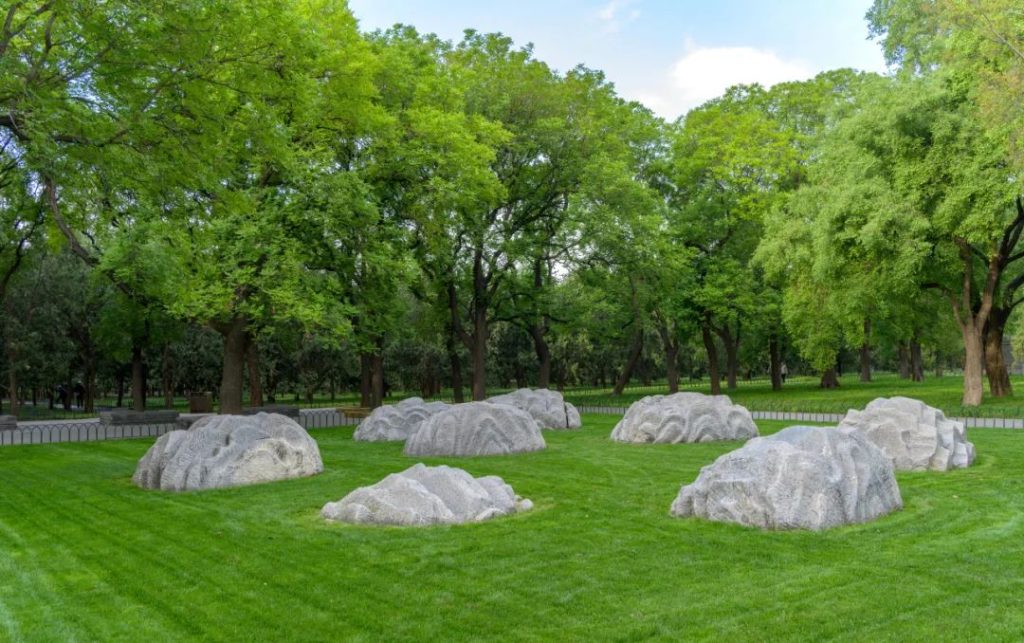
The Seven Star Stones of the Temple of Heaven are a renowned attraction within the Temple of Heaven Park. Comprising seven massive stones and one smaller stone, they are arranged according to the constellation of the Big Dipper. These stones were originally placed by Emperor Jiajing of the Ming Dynasty to suppress unfavorable feng shui, thereby safeguarding the imperial throne and the emperor's longevity. Emperor Jiajing believed the area southeast of the Hall of Prayer for Good Harvests was too open and unfavorable for feng shui, so he positioned the seven large stones to counteract this. During the reign of Emperor Qianlong of the Qing Dynasty, a small stone was added to the northeast corner to symbolize the concept of “One Family of China,” forming the current arrangement of eight stones. These stones not only serve to stabilize feng shui but also symbolize the Seven Stars of the Big Dipper, carrying profound cultural significance. The Seven Star Stones are of excellent quality, featuring precise carvings and beautiful natural patterns. For centuries, these stones have remained undisturbed here, showing no signs of weathering. Though seemingly ordinary, they hold a significant place in the history and culture of the Temple of Heaven, making them one of the must-see attractions for visitors to the site.
Seventy-Two Corridors
Ninety meters north of the Seven Star Stones lies the Seventy-Two Corridors, connecting the Northern Sacrificial Pavilion, the Divine Kitchen, and the Altar of Prayer for Good Harvests.
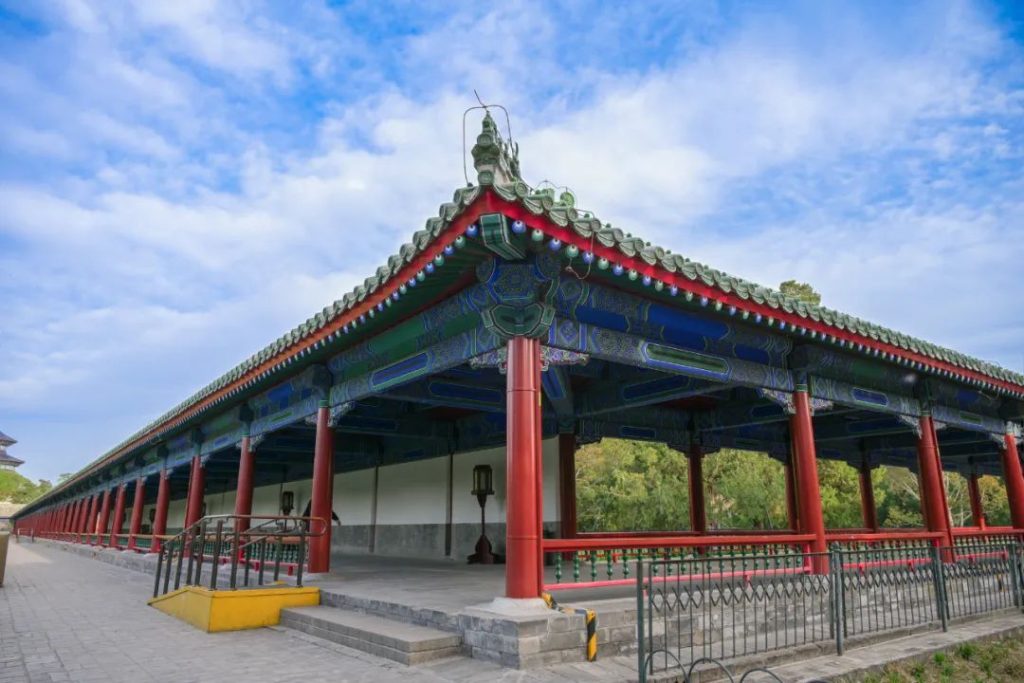
The Seventy-Two Corridors measure 5 meters wide and 295 meters long, comprising 72 interconnected chambers with front windows and rear walls, featuring continuous eaves and ridges. They served as an enclosed passageway connecting the Sacrificial Animal Pavilion, Divine Kitchen, and Divine Storehouse to the Altar of Prayer for Good Harvests. On the eve of sacrifices, all ceremonial offerings—including jade, silk, sacrificial animals, wine, grain offerings, and assorted tribute items—were transported along these corridors to the altar.
Today, visitors see one side of the corridor lined with walls and the other with benches for resting. However, during the Ming and Qing dynasties, this space was quite different and was not called the Seventy-Two Corridor but rather the “Seventy-Two Connected Rooms.” Originally designed and built for transporting sacrificial offerings for the Grand Ceremony of Praying for Good Harvests, it was commonly known as the “Offering Corridor.” To keep the offerings clean and free from contamination by wind, sand, rain, or snow, one side of this “offering corridor” featured latticed windows while the other was solid walls. Although there were no partitions in the middle and it remained unobstructed, it functioned entirely as a closed corridor complex.
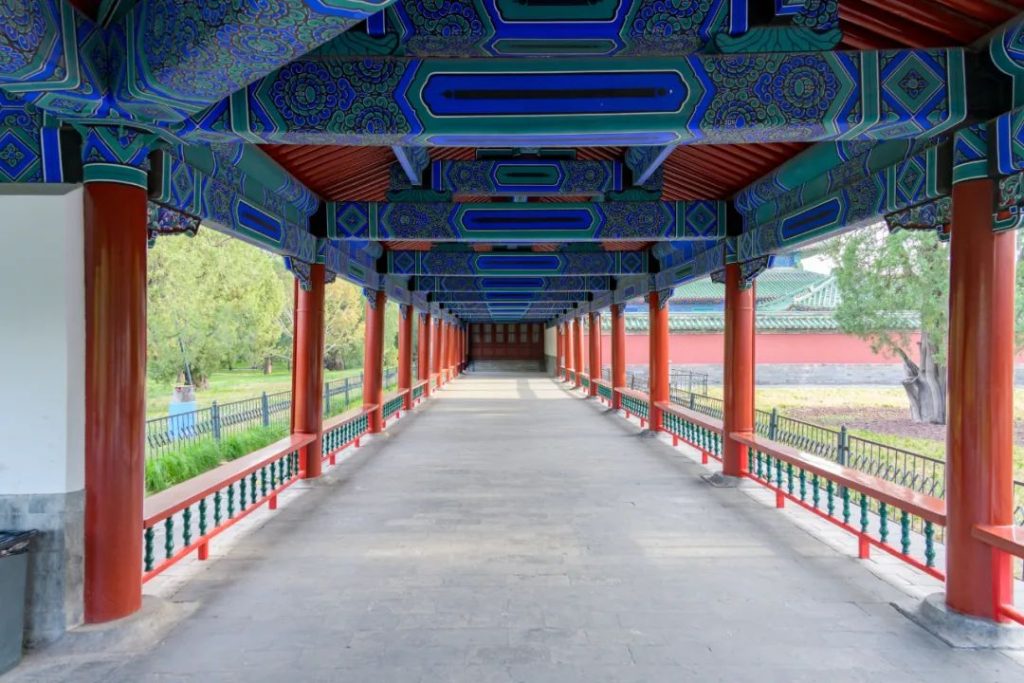
During the major renovation of the Temple of Heaven in 1935, the lattice windows and surrounding walls were removed, transforming the enclosed corridor rooms into an open-air gallery.
Sacred Kitchen
Walking westward along the corridor, one passes the Sacred Kitchen, a site used for storing divine statues and preparing sacrificial offerings.
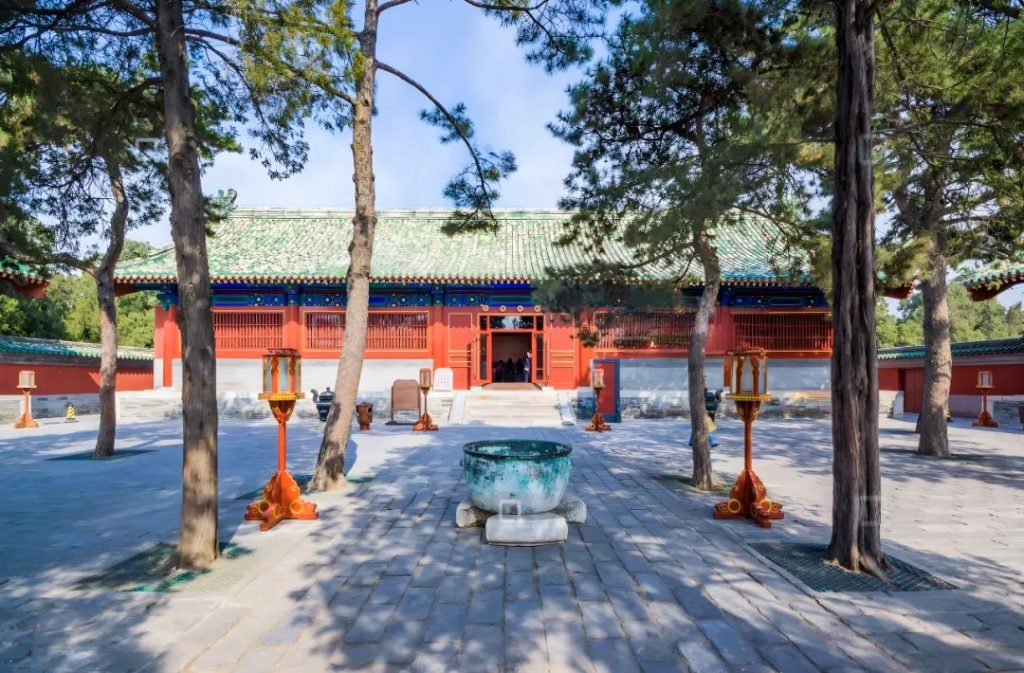
Within the Temple of Heaven Park lie two Divine Kitchens: the Divine Kitchen of the Altar of Prayer for Good Harvests (Northern Divine Kitchen) and the Divine Kitchen of the Altar of Heaven (Southern Divine Kitchen). The Northern Divine Kitchen was constructed in the 18th year of the Yongle reign of the Ming Dynasty (1420). Situated east of the Altar of Prayer for Good Harvests, it connects to the altar via a long corridor. Entering the courtyard of the Northern Divine Kitchen reveals the main hall serving as the Divine Storehouse, with the eastern hall designated as the Left Divine Kitchen and the western hall as the Right Divine Kitchen.
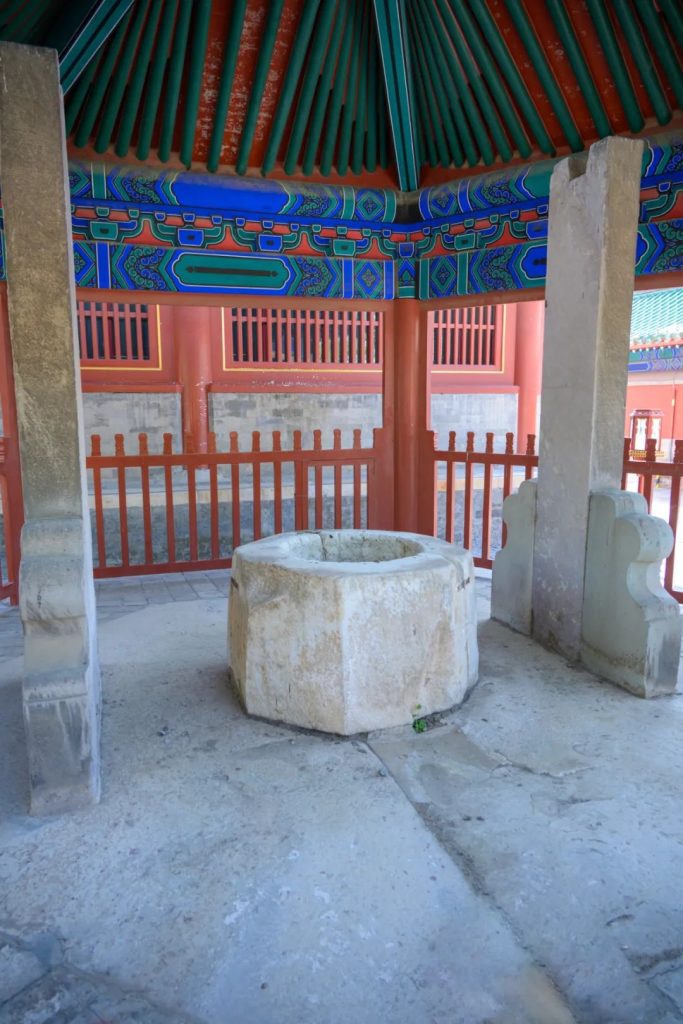
In front of the eastern hall stands a pavilion with a dome-shaped roof. Inside this pavilion lies a well known as the “Sweet Spring Well.”
In the past, the Imperial Storehouse would set up a sacrificial offering table within the temple. On the day before the ritual, the emperor would personally attend or dispatch officials to conduct the inspection of the offerings, verifying that all sacrificial items were properly prepared. The Divine Kitchen served as the specialized kitchen for preparing sacrificial offerings such as sacrificial animals, wine, and grain for the Grand Ceremony of Praying for Good Harvests. It processed ingredients like livestock delivered from the Slaughter Pavilion into various sacrificial items for the rites.
The Northern Divine Kitchen is now arranged as the “Temple of Heaven Cultural Relics Exhibition.” Centered on the theme of “Heaven, Earth, Humanity, and Harmony,” the exhibition showcases the Temple of Heaven's collection of ritual vessels, Zhonghe Shao music instruments, ceremonial attire, and precious artifacts such as the furnishings and utensils used during the emperor's fasting period.
Cypress Enveloping the Locust Tree
Between the Divine Kitchen and the Altar of Prayer for Grain, stands a cypress tree over 590 years old. From within its trunk, a locust tree has grown, forming the scenic spot known as the Cypress Enveloping the Locust Tree.
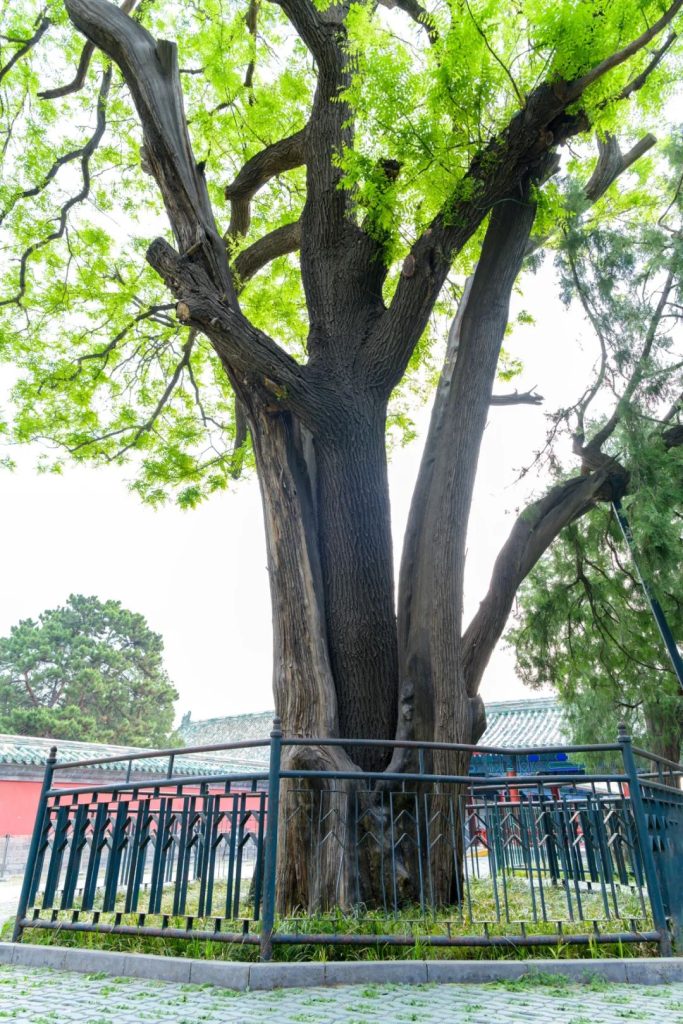
The cypress tree was planted during the Yongle era of the Ming Dynasty and is one of the original cypresses at the Temple of Heaven. Its trunk branches out from a height of 1 meter, forming multiple trunks with numerous branches that soar majestically upward. The locust tree parasitizes at the point where the main trunk branches, also over a century old with a diameter of 70 centimeters. Its canopy resembles an umbrella, with dense branches casting deep shade. This unique fusion of locust and cypress trees, known as the “locust-cypress embrace,” is a renowned sight at the Temple of Heaven. Both the Chinese scholar tree and the Chinese juniper happen to be Beijing's municipal trees, making this embrace a symbol of coexisting and thriving brother trees.
Hall of Prayer for Good Harvests
Entering the Long Corridor southward from the Cypress-Encircling-Locust Tree and turning right leads directly to the Hall of Prayer for Good Harvests, the core attraction of Tiantan Park. The Hall has three entrances: east, south, and west. The site opens daily at 8:00 AM.
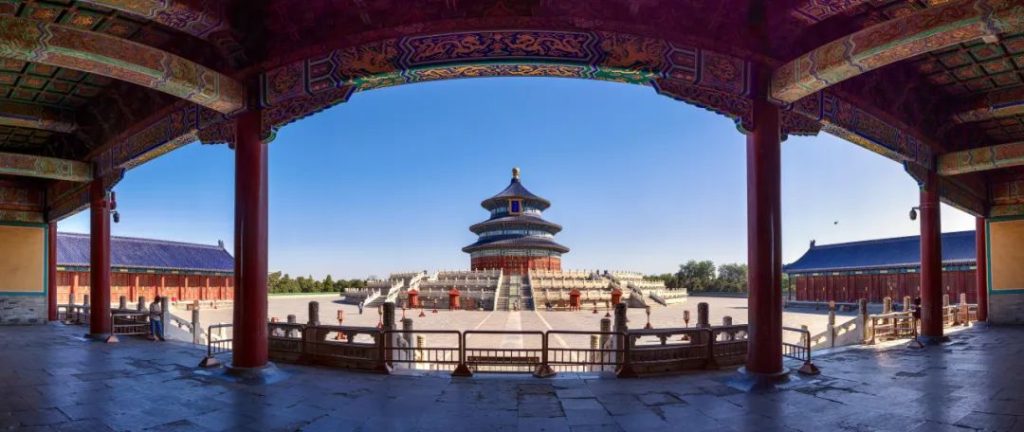
The Hall of Prayer for Good Harvests was constructed in the 18th year of the Yongle reign (1420), originally named the “Hall of Great Sacrifice.” It was a rectangular hall used for the joint worship of Heaven and Earth. In the 24th year of the Jiajing reign (1545), it was transformed into a circular hall with triple eaves. The roof was covered with glazed tiles in three colors—blue on top, yellow in the middle, and green at the bottom—symbolizing Heaven, Earth, and all things. It was also renamed the “Hall of Great Sacrifice.” In the sixteenth year of the Qianlong reign (1751), the multicolored tiles were replaced with a unified blue-tiled roof with a gold finial, and the hall was officially named the Hall of Prayer for Good Harvests. It became the dedicated structure for the spring grain-praying ceremony held in the first lunar month.
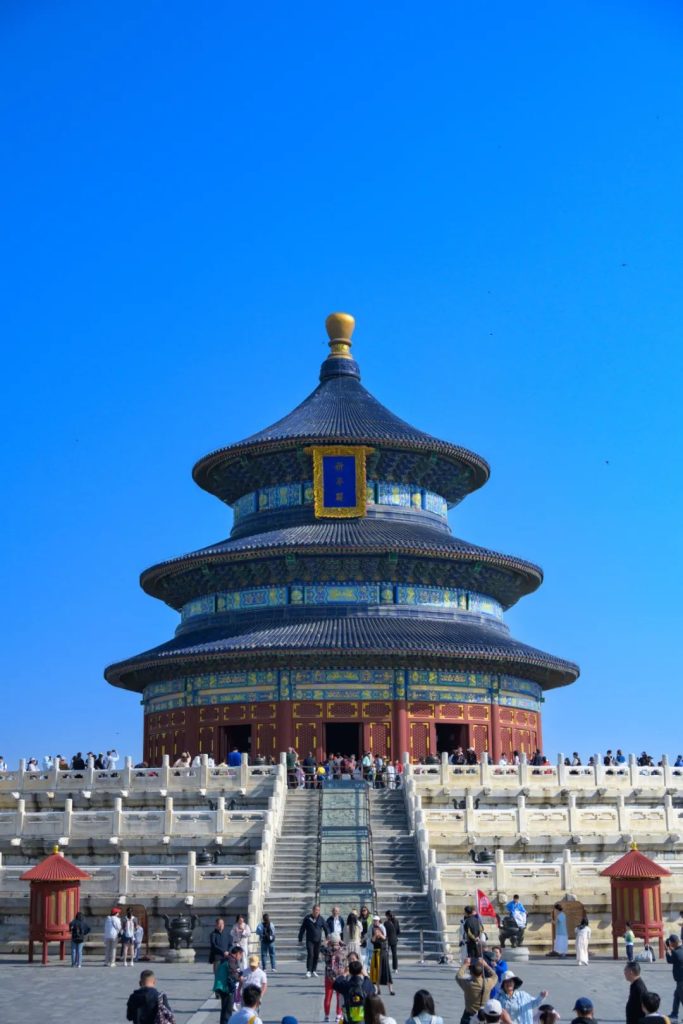
The Hall of Prayer for Good Harvests stands 38.2 meters tall with a diameter of 24.2 meters. Its interior bays symbolize the four seasons, twelve months, twelve hours, and the constellations of the celestial sphere.
The Hall of Prayer for Good Harvests rests upon a three-tiered circular stone base. The front three tiers of stone steps are adorned with massive relief carvings known as the Danbi Stone Carvings before the Hall. From bottom to top, these depict Auspicious Clouds and Mountains/Seas, Twin Phoenixes and Mountains/Seas, and Twin Dragons and Mountains/Seas. The patterns on the drainage holes of each tier correspond to the reliefs' themes. The Hall's circular triple-eaved pyramidal roof tapers upward in layers, entirely covered in blue glazed tiles symbolizing the heavens. The apex features a gilded finial, and looking up reveals the dragon-phoenix caisson ceiling, centered with an auspicious dragon-phoenix motif.
The Hall of Prayer for Good Harvests' massive triple-tiered roof is supported by 28 floor-to-ceiling columns within the hall. The four central columns, called Dragon Well Pillars, represent the four cardinal directions—east, south, west, and north—symbolizing spring, summer, autumn, and winter respectively. The 12 red-lacquered, gold-plated columns surrounding the Dragon Well Pillars divide the space into 12 bays, representing the 12 months of the year. The outer two rings of 24 bays represent the 24 solar terms of the year. simultaneously, these 28 great pillars also represent the 28 constellations in the heavens.
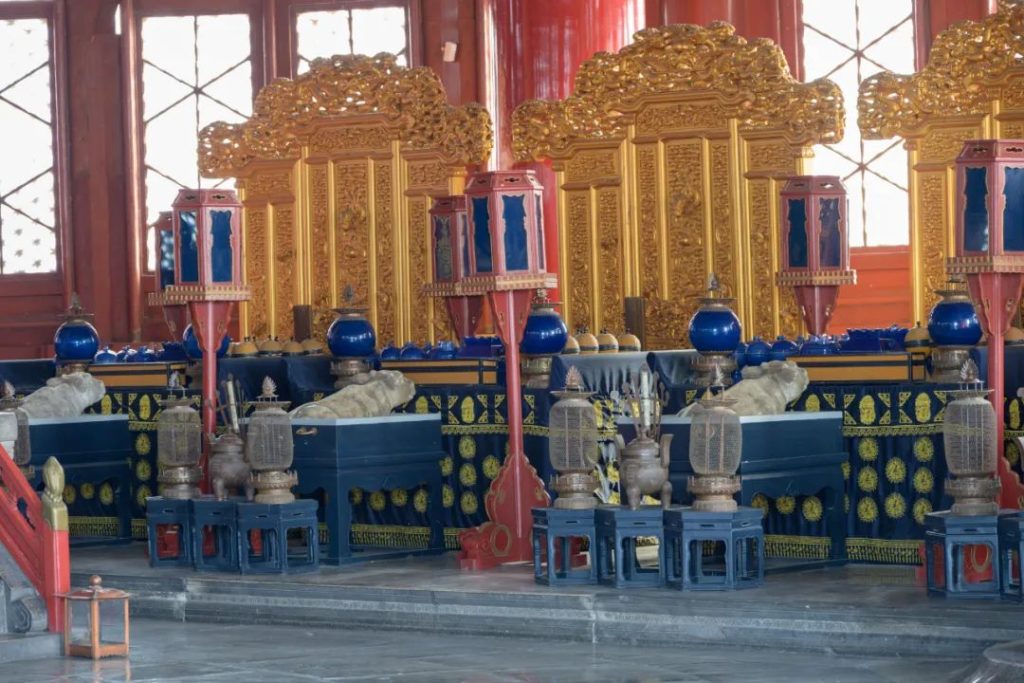
The current interior arrangement of the hall has been restored to its original state during the Xianfeng period of the Qing Dynasty. The dragon-carved throne at the front enshrines a tablet of the Heavenly Emperor, a fusion of Manchu and Han traditions. On the stone platforms to the left and right are the tablets of the first eight emperors of the Qing Dynasty.
Like the annual Heaven Worship ceremony, this place is used for praying for a bountiful harvest. On the day of the ceremony, musicians performed on the moon platform outside the hall. The emperor, dressed in ceremonial robes, solemnly entered the sanctuary, performed grand rites before the spirit tablets, and prayed to the heavens. He then sent the offerings to the sacrificial pyre and the incense burner east of the Gate of Prayer for the Harvest, where they were burned and sent to the celestial palace. The rites for praying for a bountiful harvest were similar to those for the Heavenly Sacrifice.
Hall of Imperial Heaven
North of the Hall of Prayer for Good Harvests stands another auxiliary structure, serving a function similar to the Imperial Altar of Heaven. It too houses the spirit tablets for the sacrificial rites at the Altar of Prayer for Good Harvests. This is the Hall of Imperial Heaven.
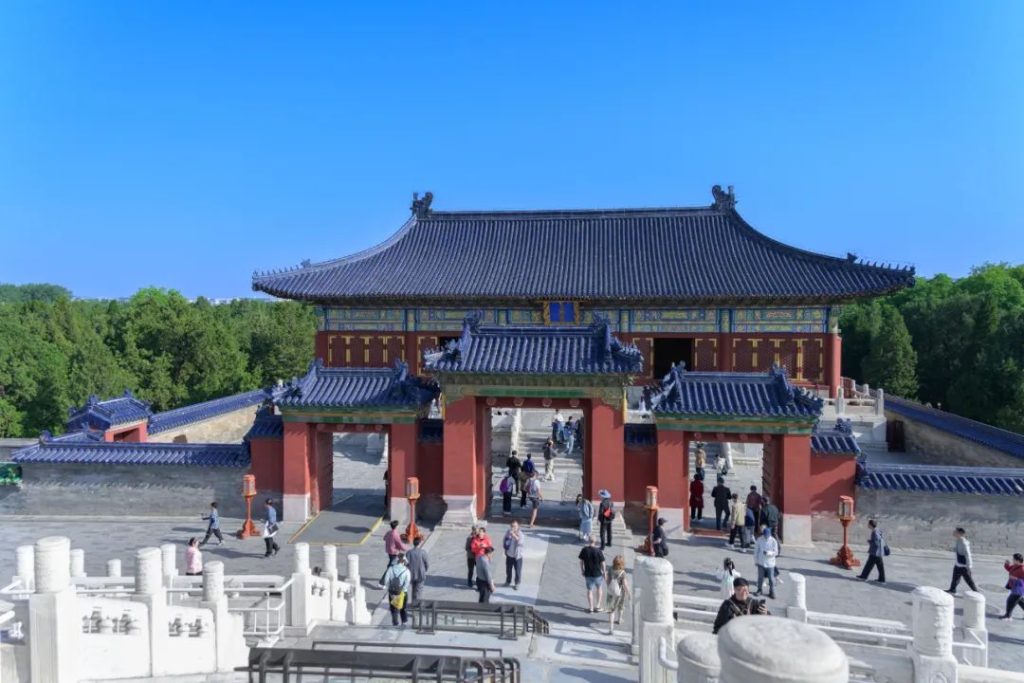
The Imperial Hall of Heaven serves as the “celestial repository” of the Altar of Heaven. The divine tablets of the “Supreme Heavenly Emperor” and the emperor's ancestral deities, which are enshrined in the Hall of Prayer for Good Harvests during grand ceremonies, are normally venerated within this hall. On the day preceding the Grand Ceremony of Prayer for Good Harvests, the emperor personally offers incense and performs the ritual of inviting the deities. Only then do officials of the Ministry of Rites solemnly transport the divine tablets in dragon-adorned palanquins to the Hall of Prayer for Good Harvests for placement. Constructed in the 18th year of the Yongle reign (1420), this hall features a five-bay hall roof covered with blue glazed tiles. At the northern and southern ends of the western enclosure wall of the Hall of Prayer for Good Harvests stand two sets of gates. From south to north, these are the Gate of the Sixty-Year Cycle and the Gate of the Seventy-Year Cycle.
The emperor was required to walk from the main approach (the Danbi Bridge) to the altar for all grain-praying ceremonies. In the 37th year of the Qianlong reign (1772), having reached the age of sixty, Emperor Qianlong felt his strength waning. He therefore specially opened this gate to reduce the emperor's walking distance, naming it the “Sixty-Year Gate.”
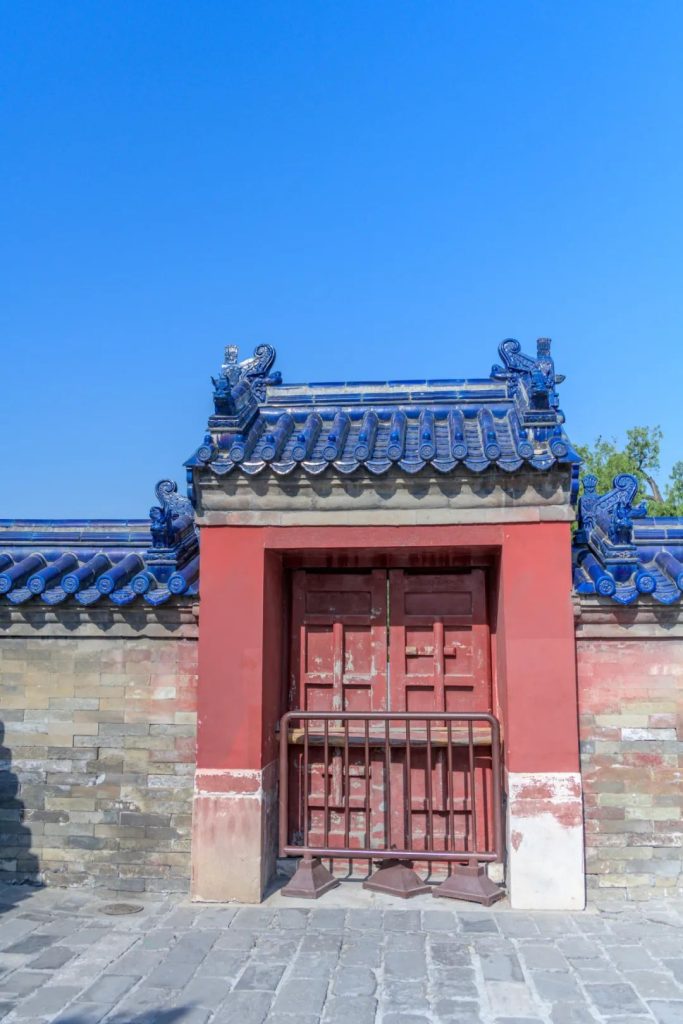
In the forty-sixth year of the Qianlong reign (1781), Emperor Qianlong reached the age of seventy. Officials proposed constructing a small side gate on the west side of the Imperial Hall of Heavenly Purity to facilitate the Emperor's ceremonial processions and reduce his walking distance. Qianlong readily accepted the suggestion. However, fearing that future descendants might use this gate out of laziness or disrespect, he issued an edict stipulating that “only descendants who reach the age of seventy may use this gate.” Thus, it became known as the “Gate of the Rare Age.” Yet, after Qianlong, no subsequent Qing emperor lived to such a ripe old age. In fact, the only emperor to ever use this gate was Emperor Qianlong himself.
Danbi Bridge
After touring the Hall of Prayer for Good Harvests, exiting through the south gate and heading south leads one onto the Danbi Bridge, which connects the Hall of Prayer for Good Harvests to the Circular Mound Altar.
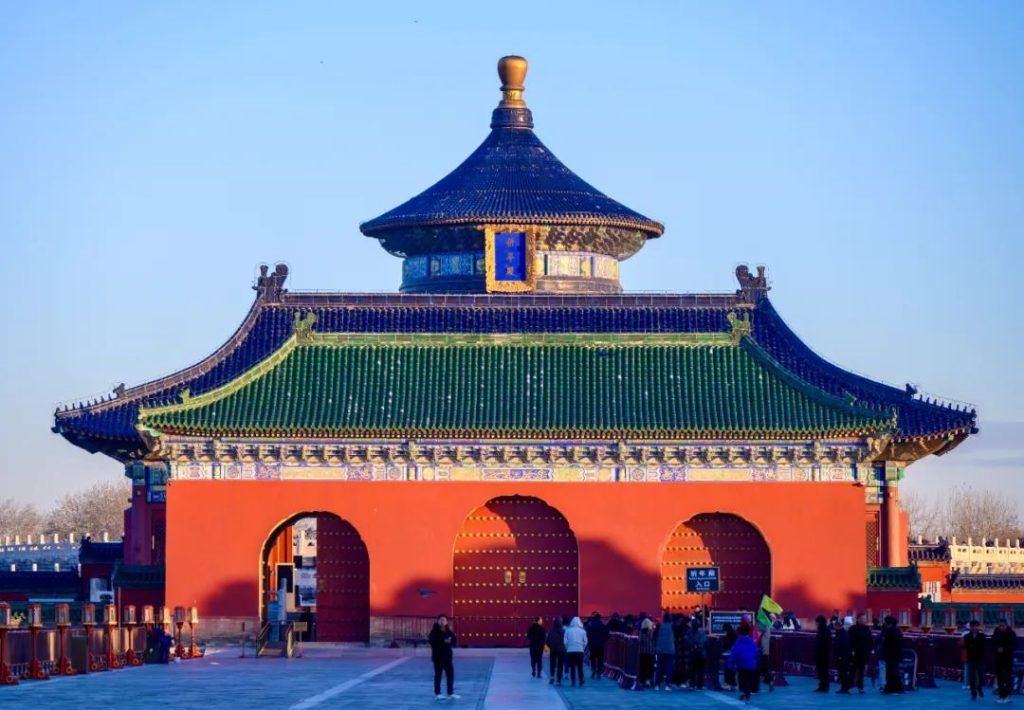
The Danbi Bridge, 360 meters long, is a 4-meter-high causeway connecting the Altar of Prayer for Good Harvests and the Circular Mound Altar. Beneath its central section lies an east-west vaulted passageway, hence its name “bridge.” The bridge deck spans 30 meters wide, featuring a central stone roadway known as the “Divine Path,” reserved exclusively for the Heavenly Emperor. The eastern brick-paved roadway, termed the “Imperial Path,” was reserved for the Emperor alone. Attending princes and ministers could only walk on the western “Prince's Path,” with strict hierarchical distinctions governing ascent, descent, and movement. The Danbi Bridge slopes upward from north to south, creating an ascent that evokes the sensation of approaching the heavenly court.
Why is this passageway called a bridge? Two interpretations exist: one suggests the north-to-south elevation resembles a bridge connecting to the heavens, while another notes the presence of an animal-sacrifice gate beneath the roadway, resembling an overpass structure. Regarding the sacrificial animal gate: before rituals, cattle and sheep were driven through an arched passage beneath the bridge to a slaughterhouse 500 meters away. There they were butchered to become sacrificial offerings. This passage was thus also called the “Gates of Death,” for once animals entered, there was no return from death.
Nine-Dragon Cypress
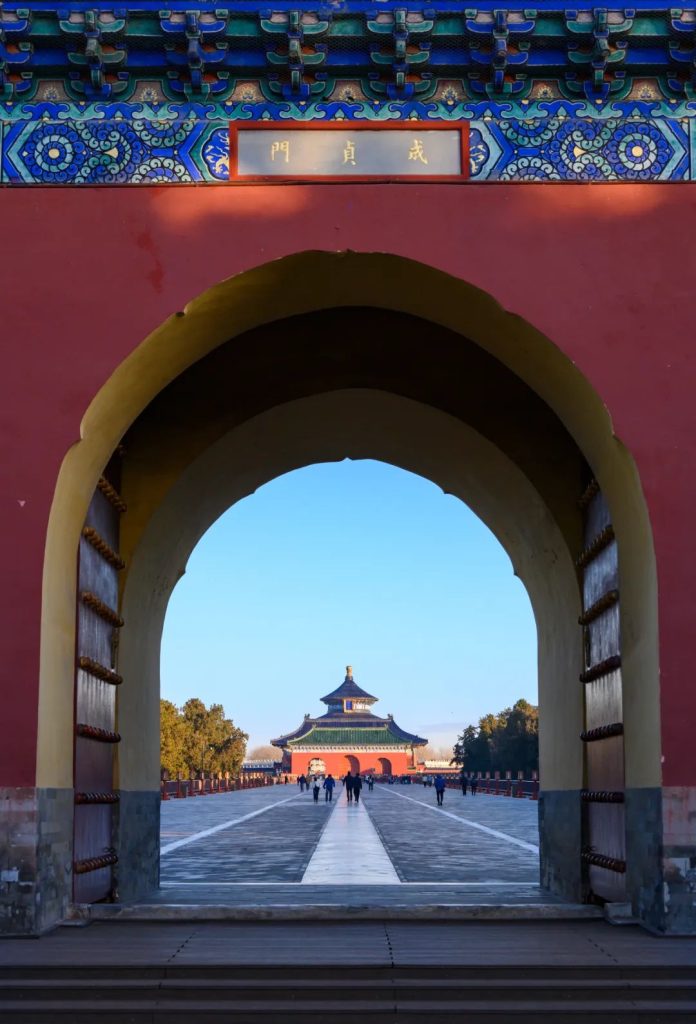
After crossing the Danbi Bridge and passing through the Chengzhen Gate, you will find the Echo Wall and the Imperial Vault of Heaven directly opposite. At the northwest corner outside the Echo Wall stands an ancient tree 8.5 meters tall—this is the Nine-Dragon Cypress.
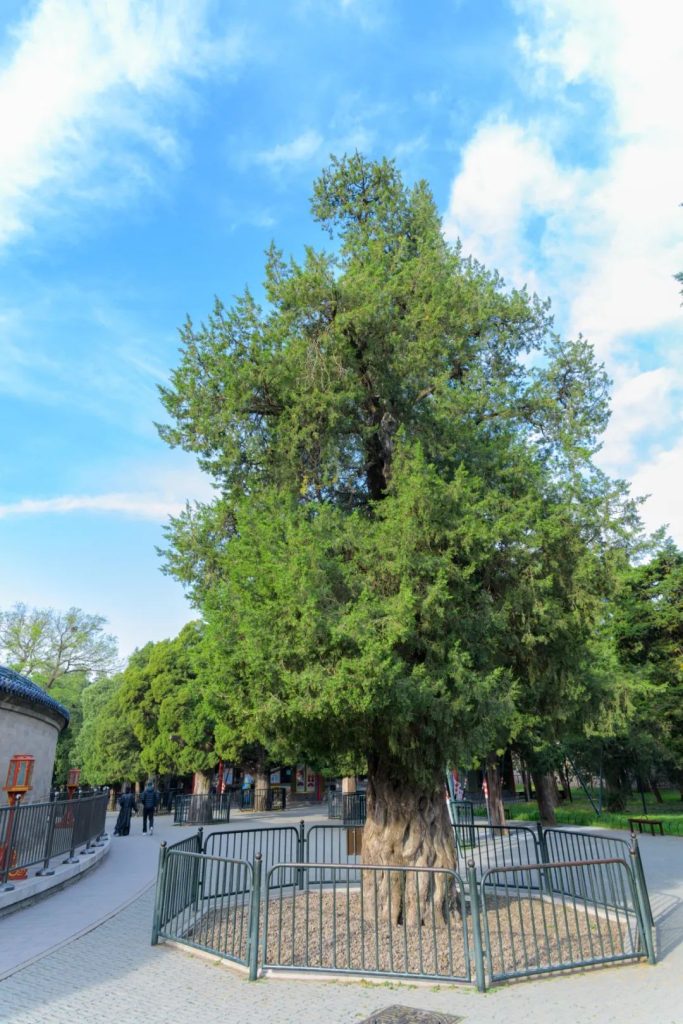
The Nine-Dragon Cypress is a juniper cypress over 600 years old. Its trunk features remarkably unique grain patterns, covered in grooves and twists, resembling nine coiled dragons playfully intertwined—thus the name “Nine-Dragon Cypress” is entirely fitting. The Nine-Dragon Cypress boasts evergreen needles and lush foliage, exuding an ancient, rugged vitality. Vertical fissures divide its trunk into several twisted branches that coil upward, resembling nine coiled dragons ascending in a dynamic, almost animated display.
Two legends surround the Nine-Dragon Cypress. One tells of Emperor Qianlong inspecting the Imperial Vault of Heaven before sacrificing at the Temple of Heaven. In the haze, he heard sounds behind the western hall. Following the noise, he discovered nine snakes paying homage. The Emperor watched as the serpents glided beyond the altar walls and vanished. Looking up, he was startled to see the Nine-Dragon Cypress standing tall and proud. He instantly realized this cypress was the transformed form of the divine serpents, sent by Heaven to guard the sacred tablets of the Heavenly Altar. Another legend recounts that during the early construction of the altar in the Ming Dynasty, before the Circular Mound Altar was built, this site was beside the road outside the South Heavenly Gate of the Altar of Heaven and Earth. When the emperor performed rituals at the altar, he would dismount his palanquin not far west of the Nine-Dragon Cypress. Standing precisely before the gate to greet him by the roadside, it is thus also called the “Nine Dragons Welcoming the Sacred.”
The Imperial Vault of Heaven and the Echo Wall
Proceeding southward from the side of the Nine-Dragon Cypress brings one to the Imperial Vault of Heaven and the Echo Wall.
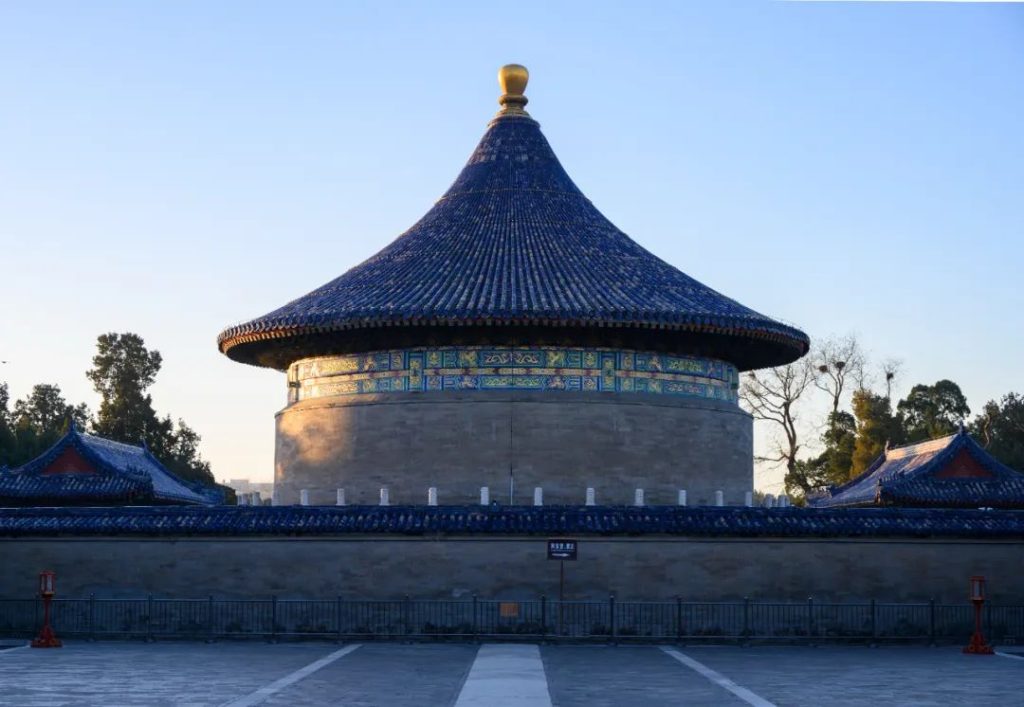
The Imperial Altar of Heaven was constructed in the ninth year of the Jiajing reign (1530). Originally a circular structure with double eaves, it served as the main hall of the Heavenly Treasury at the Circular Mound Altar. This hall housed the divine tablets venerated during the grand ceremonies of heavenly worship. In the seventeenth year of Jiajing (1538), it was renamed the “Imperial Altar of Heaven.” In the seventeenth year of Qianlong (1752), it was rebuilt into its present form.
The Imperial Altar of Heaven boasts over four centuries of history. Standing 19.5 meters tall with a base diameter of 15.6 meters, this timber-and-brick structure is supported by eight eave pillars. Its roof lacks horizontal beams, instead relying on multiple tiers of bracket sets stacked upward. The ceiling features concentric layers that taper inward, forming a magnificent dome-shaped caisson ceiling. The central stone platform within the hall holds the tablet of the Supreme Heavenly Emperor. The stone platforms to the left and right of this throne house the ancestral tablets of the emperors' forebears. The eastern and western side halls outside the main structure are dedicated to enshrining the tablets of the deities of the sun, moon, stars, clouds, rain, wind, and thunder.
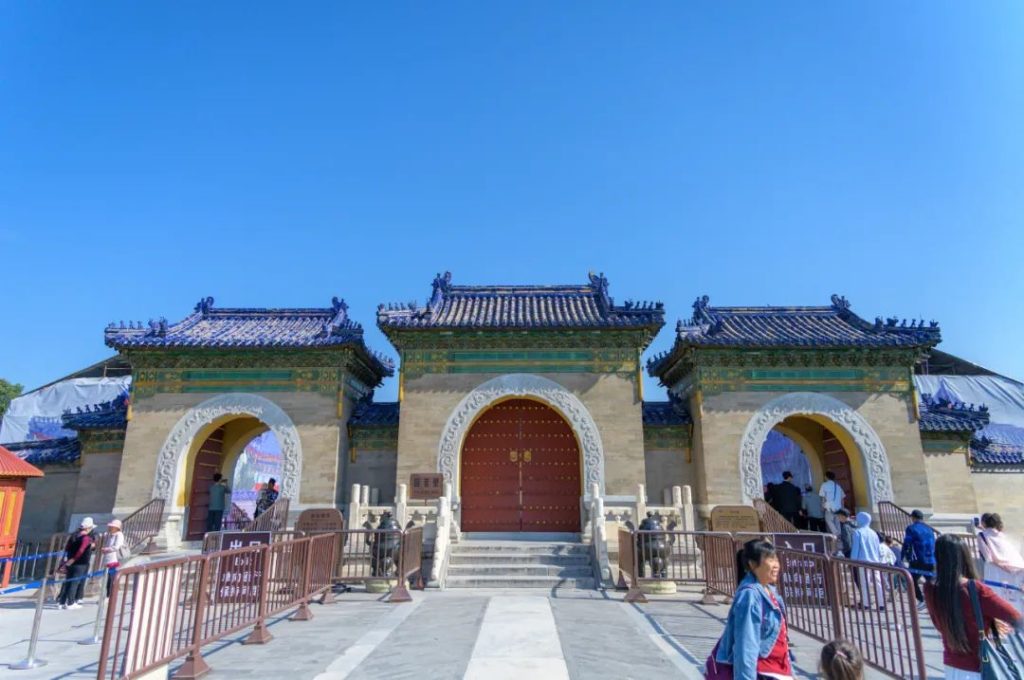
The circular wall encircling the Imperial Dome is the renowned Echo Wall. With a circumference of 193.2 meters, a diameter of 61.5 meters, a height of 3.72 meters, and a thickness of 0.9 meters, its uniqueness lies not in its appearance but in its remarkable acoustic phenomenon. If two people stand at the base of the wall behind the eastern and western side halls within the courtyard, facing north and speaking softly toward the wall, they can converse with each other as if talking on the phone—an utterly marvelous and fascinating experience. This is how the Echo Wall earned its name.
Circular Mound Altar
South of the Echo Wall lies the Circular Mound Altar, where emperors of old performed the annual Winter Solstice Heaven Worship Ceremony. Commonly known as the Altar of Heaven, it served as the imperial site for sacrificial rites to the heavens.
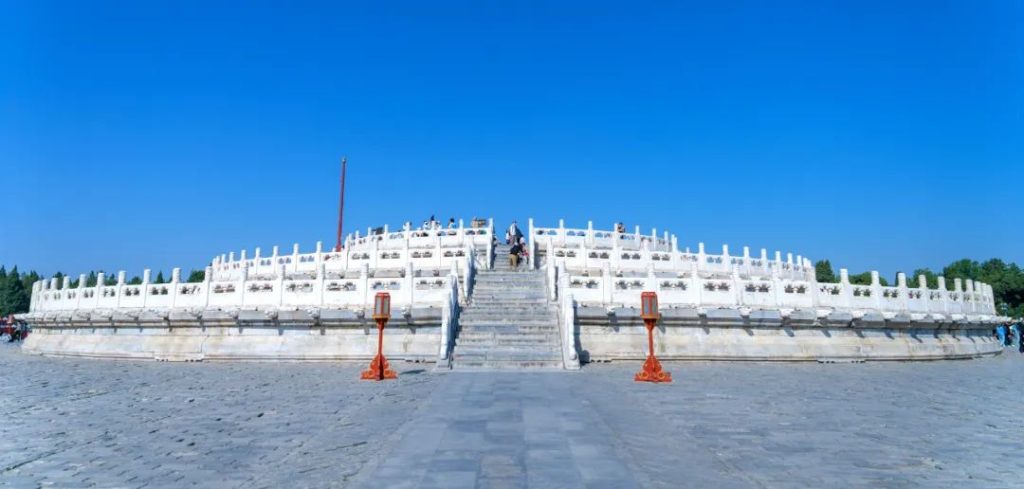
The Circular Mound Altar was constructed in the ninth year of the Jiajing reign (1530). The “Great Ceremony of Sacrifice to Heaven” was held annually on the platform during the winter solstice, commonly known as the Altar of Heaven. Originally a circular platform with blue glazed tiles, it was expanded in the fourteenth year of the Qianlong reign (1749). During this expansion, the blue glazed tiles were replaced with white marble balustrades, and the platform surface was changed to green stone with mugwort-patterned carvings. The number of stone steps, tiered platforms, and balustrades at the Circular Mound Altar all adhere to multiples of “nine.” Ascending each tier requires climbing nine steps, symbolizing the “Nine Heavens.” This repeated use of the number nine emphasizes Heaven's supreme status.
At the center of the Altar of Heaven stands a prominent circular stone known as the Heavenly Heart Stone. Surrounding it, the first ring consists of nine massive fan-shaped stone slabs, the second ring has eighteen slabs, and so on, culminating in the outermost ninth ring with exactly eighty-one slabs. Meanwhile, the guardrails visible overhead are divided into four sections by the surrounding steps, each section containing nine slabs. The middle guardrail has eighteen slabs, and the lower guardrail has twenty-seven slabs. Could all these be mere coincidences? Certainly not. According to the principles of Yin-Yang and the Five Elements, nine represents the ultimate yang number. Thus, ancient craftsmen employed this number to imbue the Circular Mound Altar with a profound sense of sacred grandeur.
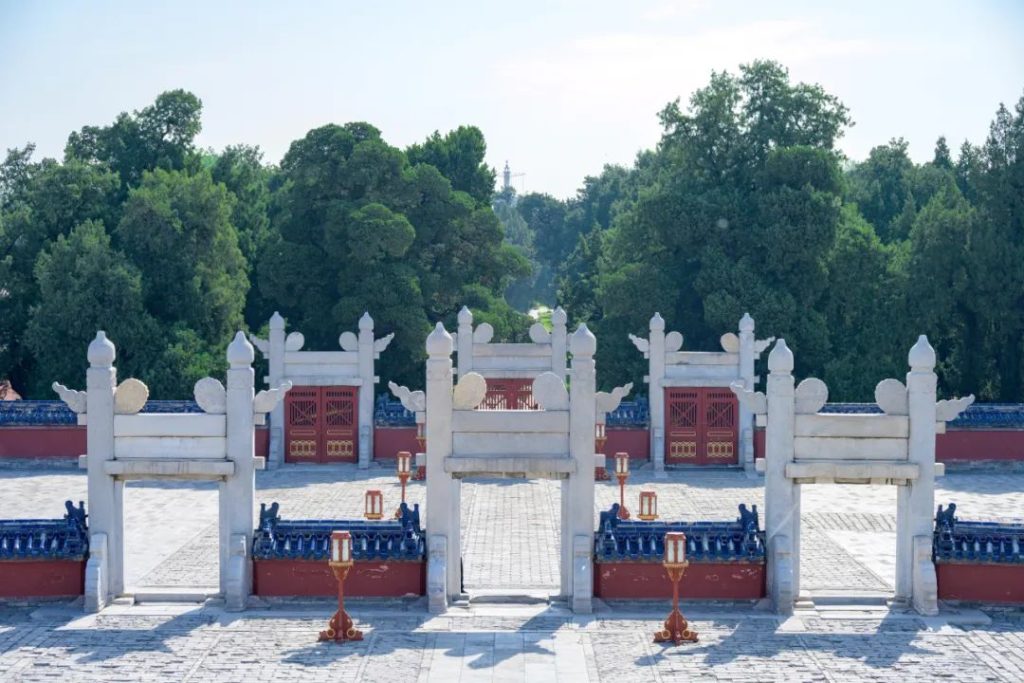
The Circular Mound Altar features two concentric walls, forming an outer square and inner circle to embody the ancient belief that heaven is round and earth is square. Each wall has four sets of Lingxing Gates: from east to west, Taiyuan, Zhaoheng, Guangli, and Chengzhen. Each set contains three gates, totaling 24 gates known as the “Jade Cloud Gates Standing Tall.” The size of the Lingxing Gates varied. The central gate, reserved exclusively for the deities, was tall and imposing. The emperor could only enter through the left gate, while other officials had to pass through the smallest gate on the right.
At the southwest corner of the Altar stood a tall wooden pole called the Lantern Pole, used to hang lanterns during the Heaven Worship ceremony. Why were lanterns hung for this ritual? Because the ceremony took place not during daylight, but at the seventh watch before sunrise—4:15 AM. In the pitch-black winter night, while commoners slept soundly in their beds, the emperor came to worship Heaven. It was truly arduous work. Was it unreasonable to hang lanterns for illumination? However, the emperor's illumination was no ordinary affair—it had to be the “auspicious lamp shining brightly.” The pole stood nine zhang, nine chi, and nine cun tall. Not only was the pole extraordinary, but the lantern itself was remarkable too: two meters tall with a diameter of two meters and sixty centimeters. Yet the most extraordinary element was undoubtedly the coiled dragon-adorned, night-piercing treasure wax within the lantern. measuring 1.3 meters long with a diameter of 30 centimeters. This sacred wax, exclusively used by emperors for celestial sacrifices, could burn continuously for twelve hours without requiring trimming or dripping wax. Originally, there were three lantern poles, but only one has been restored today. The other two retain only their stone pedestals.
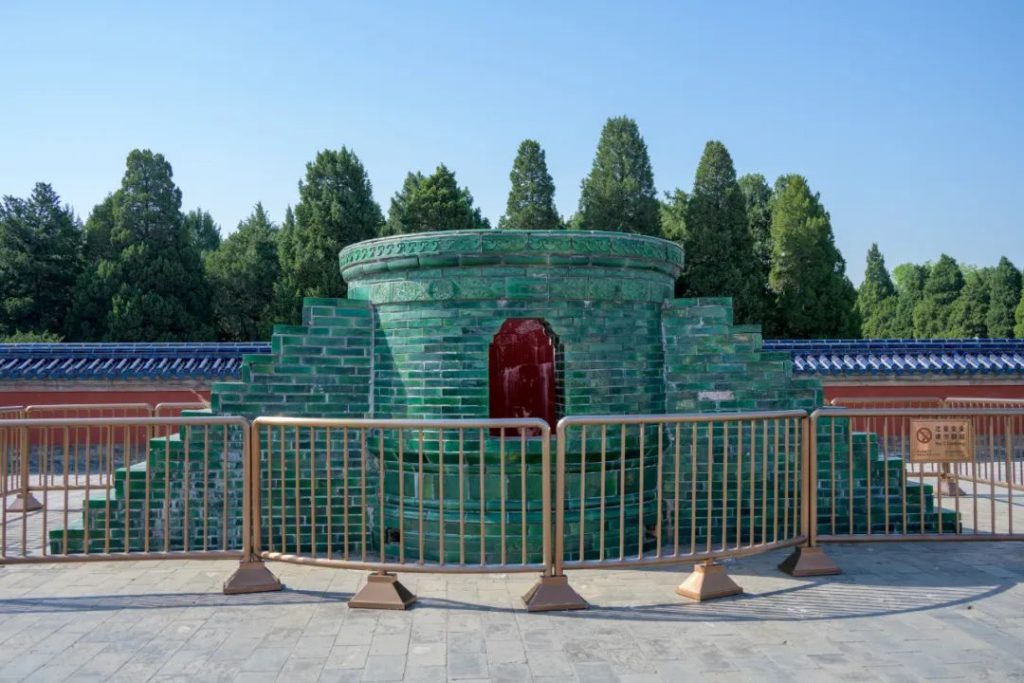
At the southeast corner of the Circular Mound Altar stands a green structure known as the Burning Wood Furnace. The Burning Wood Furnace is a massive circular brick furnace constructed with green glazed tiles, flanked by nine steps on each side. At the commencement of the Heaven Worship Ceremony, a ritually purified calf was placed atop the furnace. Pine branches and reeds were then set ablaze to welcome the Heavenly Deity, a ritual known as “Burning Wood to Welcome the Emperor Deity.”
The Burning Altars are iron furnaces used for incinerating offerings. Eight such altars exist within the Temple of Heaven, each designated for burning offerings before the spirit tablets of the Eight Ancestral Emperors of the Qing Dynasty.
The Hall of Abstinence
Proceeding approximately 320 meters west from the Circular Mound Altar, then north through three gates, and walking another 200 meters westward leads to the Hall of Abstinence.
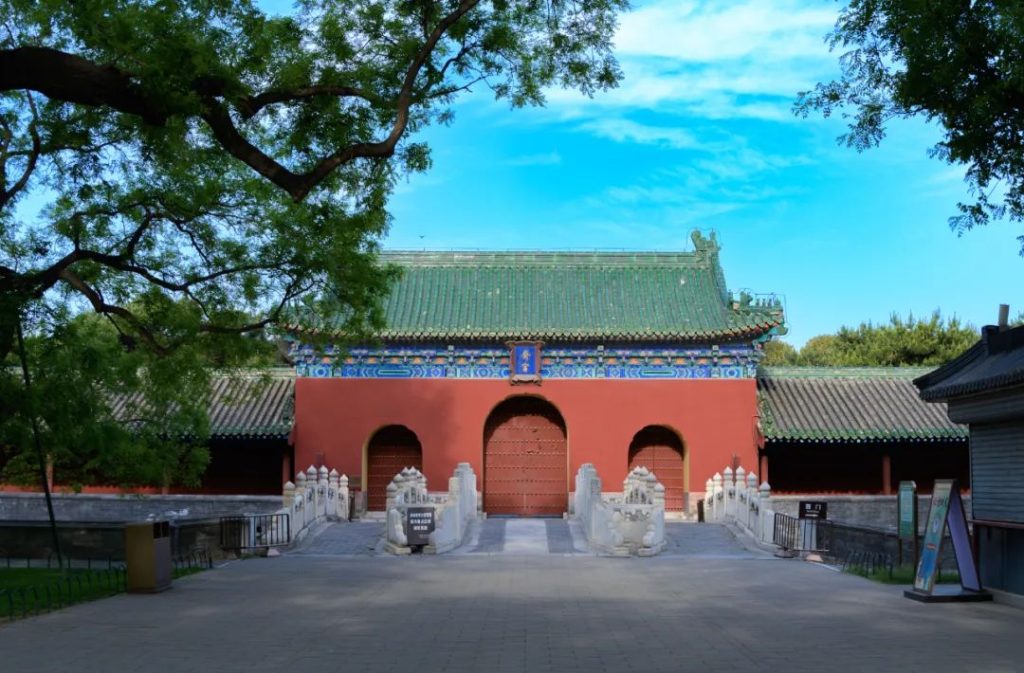
The Palace of Abstinence was constructed in the 18th year of the Yongle reign (1420) as the imperial residence for the emperor's period of abstinence and purification. Before sacrificing to previous emperors, the reigning emperor was required to enter the Zhaigong Palace three days in advance to observe a period of abstinence. This involved refraining from eating meat, drinking alcohol, listening to music, entering the inner chambers, handling criminal cases, or inquiring about illnesses or condolences. This practice of maintaining purity and self-discipline demonstrated reverence and sincerity. Located in the southwest corner of the Altar of Prayer for Good Harvests, the Zhaigong Palace faced east. Its green tiles symbolized the emperor's submission to Heaven and embodied reverence, solemnity, humility, and modesty. The Fasting Palace featured a square layout covering nearly 40,000 square meters. Its complex included ceremonial, residential, service, and guard structures such as the Beamless Hall, the Bedchamber, the Bronze Man Stone Pavilion, the Bell Tower, guard quarters, and patrol corridors. Its layout was meticulously organized within an elegant setting, protected by two layers of palace walls and two imperial moats.
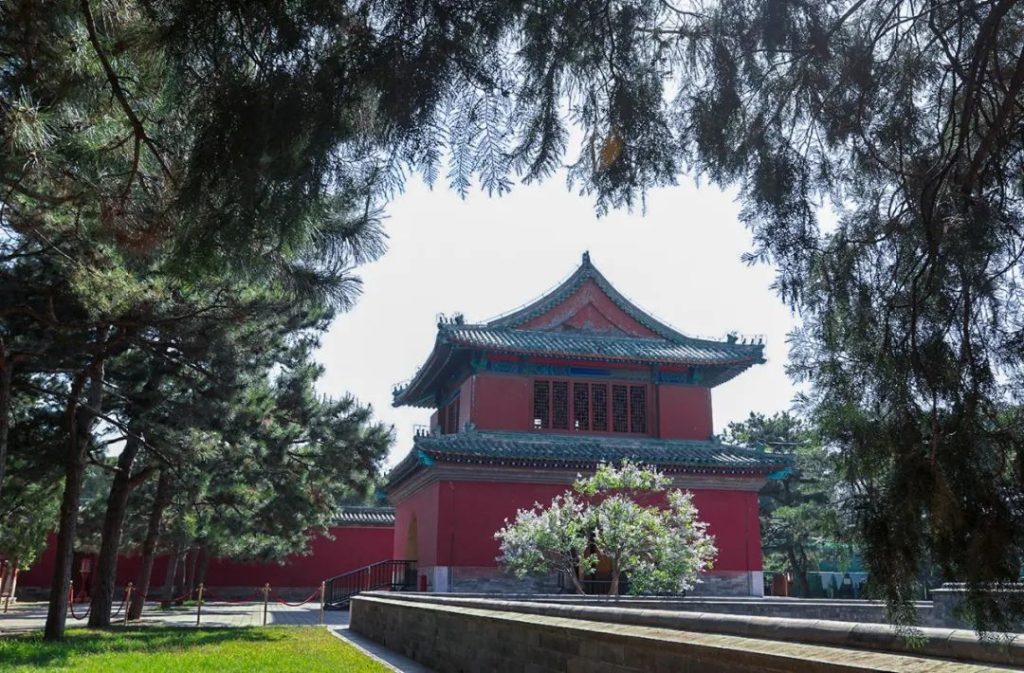
The Bell Tower stands at the northeast corner of the Ceremonial Palace. During the Ming Dynasty, a wooden frame was erected here to suspend a bronze bell. It was rung to welcome and see off the emperor whenever he entered or departed the palace. In the eighth year of the Qianlong reign (1743), a two-story bell tower with double eaves and a hip-and-gable roof was constructed. Inside hung a plain-faced large bell cast during the Yongle era, named the “Taihe Bell.” The bell's massive body produced a deep, resonant tone. Before grand ceremonies, the bell would begin ringing as the emperor departed the Palace of Abstinence, ceasing only upon his arrival at the altar.
Office of Divine Music
Exiting the east gate of the Palace of Abstinence, proceed south for 100 meters, then turn west and walk 300 meters to reach the Office of Divine Music.
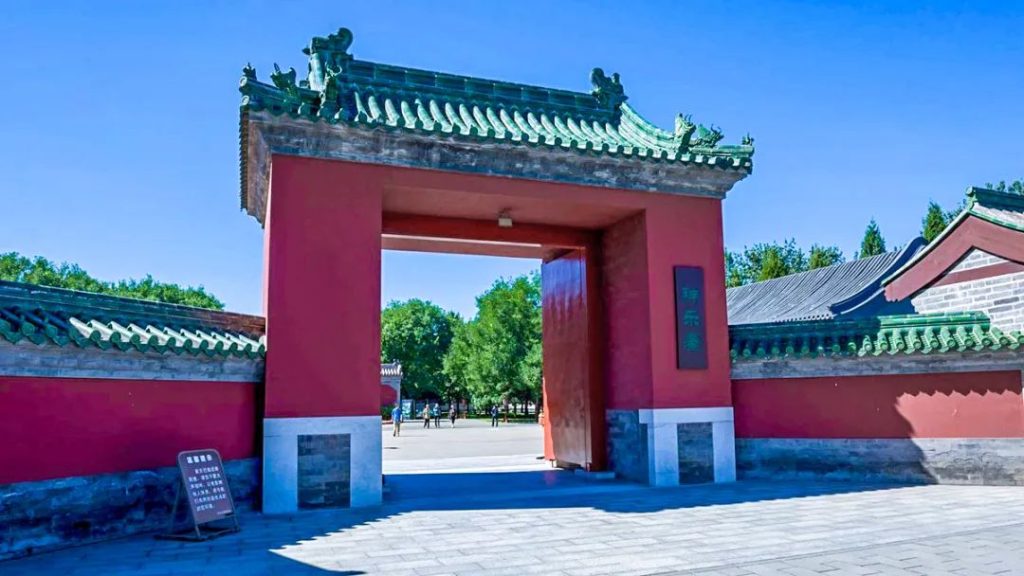
The Temple of Music was one of the structures within the Temple of Heaven complex, situated on the outer western precinct. During the Ming and Qing dynasties, it served as a venue for rehearsing ritual music and was renowned as the highest institution of ritual music studies in those eras. First established in the 18th year of the Yongle reign (1420) of the Ming Dynasty, it was initially named the Temple of Divine Music. Its grounds featured numerous halls and pavilions set in picturesque surroundings, complete with tea houses and herbal pharmacies, earning it the alternative name of the Taoist Temple of Heaven. In the 8th year of the Qianlong reign (1743), the name was changed from Shengyue Guan to Shengyue Suo. By the 19th year of Qianlong (1754), it was formally designated as Shengyue Shu. The Shengyue Shu complex is rectangular in shape, situated in the southwest outer precinct, oriented west to east. Its main structures include the Ning Hall and Xianyou Hall, connected by surrounding corridors. Gates are positioned on the east, north, and south sides of the encircling corridors, with a plaza laid out before the Ningxi Hall.
The Shengyue Office is an additional paid attraction within the Temple of Heaven Park. Its admission ticket is not included in the park's combined ticket and must be purchased separately for 10 yuan. Inside the Shengyue Office, numerous historical exhibition rooms display musical instruments and costumes of musicians and dancers from the Ming and Qing dynasties, reflecting the cultural and historical context of the era. Additionally, the Ningxi Hall within the Music Bureau hosts performances of the Zhonghe Shao Music every Saturday and Sunday.
Double-Ringed Wan Shou Pavilion
Heading north from the Music Bureau, visitors traverse one of the most scenic paths in the Temple of Heaven. Continuing north for about 200 meters brings one to the Double-Ringed Wan Shou Pavilion.
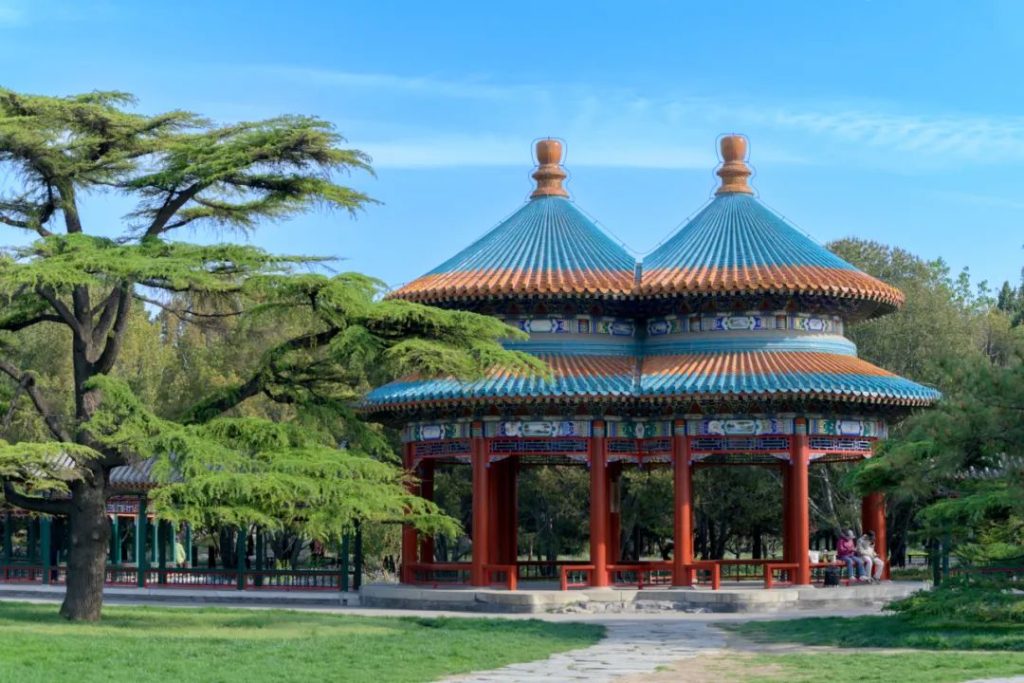
The Double-Ring Longevity Pavilion consists of a pair of nested double-eaved circular pavilions. Its structure is uniquely intricate yet meticulously crafted, presenting a dignified and symmetrical form. The roof is covered with peacock-blue glazed tiles, radiating a vibrant hue. This is the sole surviving example of its kind among China's ancient architectural structures. Legend has it that Emperor Qianlong (Hongli) commissioned its construction in the sixth year of his reign (1741) to celebrate his mother's fiftieth birthday. Its plan symbolizes a pair of longevity peaches, while the steps before the pavilion resemble two peach tips, embodying the meanings of “harmony, auspiciousness, and longevity.” The pavilion was relocated to its present site in 1975.
After touring the Double-Ringed Longevity Pavilion, visitors may exit the park via the nearest West Gate.
A Brief History of the Heaven Worship Ceremony
During the Ming and Qing dynasties, the emperor performed the Heaven Worship Ceremony here annually on the Winter Solstice. Two days prior to the ceremony, the emperor would undergo fasting and abstinence within the Forbidden City. On the third day, the eve of the Winter Solstice, he would proceed to the Ceremonial Hall at the Temple of Heaven for further observance. On the Winter Solstice itself, at the seventh watch before sunrise (around 4:00 AM today), the hour was announced. The emperor set out, and the bell tower in the northeast corner of the abstinence palace began tolling. At the Dressing Platform, he washed and changed his garments. Divine tablets were delivered to their designated positions on the platform—seven sets of altars known as the Seven Canopies. A calf was placed upon the sacrificial pyre before the Circular Mound Altar, where it was burned with pine branches. The lanterns on the southwest lantern poles were raised high, and the coiled-dragon night-illuminating candles were lit. The musical ensemble was arrayed on the southern plaza, playing the Zhonghe Shao music. Accompanied by civil and military officials, the grand ceremony of sacrificing to Heaven formally commenced. The emperor ascended the altar through the southern gate of the Lingxing Gate. At this moment, the bells ceased. Upon reaching the second tier's southern worship position, he stood ready, awaiting the ceremonial master's announcement of the ritual sequence. He then solemnly recited the sacrificial text addressed to the Supreme Heavenly Emperor. After the rites concluded, the offerings before the divine altars were transported to the sacrificial pyre (offerings removed from the main altar pavilion were burned again, with the emperor standing respectfully nearby to observe, known as “watching the burning”) and the pyres (the Circular Mound Altar had twelve pyres in total: eight arranged east to west north of the burial pit; and one pair outside each of the eastern and western Lingxing Gates of the inner protective wall). Offerings from the secondary altar pavilions were transported to the eight incineration furnaces for burning, while those from the four subordinate pavilions were sent to the Lingxing Gates. The rising smoke symbolized the offerings ascending to the celestial court. Subsequently, the ox's tail, hair, and blood were buried in the earthen pit, representing the enduring remembrance of ancestral origins—a time when humans subsisted on raw meat and blood.
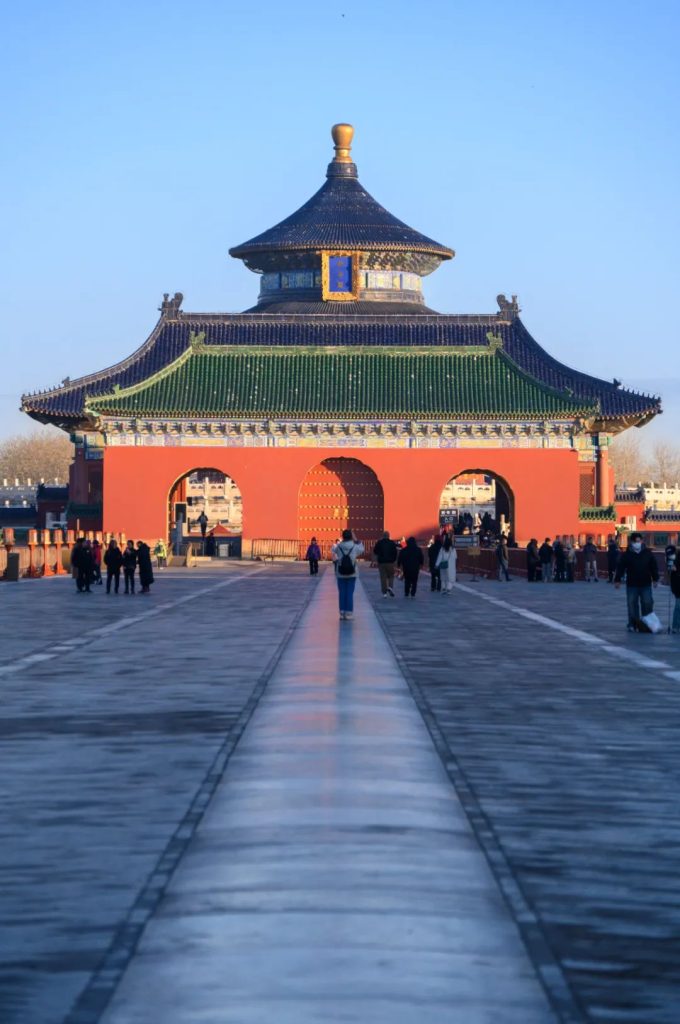
Park Opening Hours
High Season: Opens at 6:00 AM, last entry at 9:00 PM, closes at 10:00 PM
High Season: (April 1 to October 31 annually)
Low Season: Opens at 6:30 AM, last entry at 9:00 PM, closes at 10:00 PM
Low Season: (November 1 to March 31 annually)
Attractions: (Hall of Prayer for Good Harvests, Echo Wall, Circular Mound Altar, Palace of Abstinence, Northern Kitchen, Northern Sacrificial Pavilion)
High Season: Opens at 8:00 AM, last entry at 5:30 PM, closes at 6:00 PM
Low Season: Opens at 8:00 AM, last entry at 4:30 PM, closes at 5:00 PM
All attractions are closed on Mondays (except national holidays and July 15 to August 31).
High Season: (April 1 to October 31 annually)
Admission: 15 RMB, Discounted: 7.5 RMB Combination Ticket: 34 RMB, Discounted: 17 RMB
Off-Season: (November 1 to March 31 annually)
Admission: ¥10, Concession: ¥5 Combination Ticket: ¥28, Concession: ¥14
Attraction Tickets
Hall of Prayer for Good Harvests, Echo Wall & Circular Mound Altar:
Admission: ¥20, Concession: ¥10
Public Transportation
East Gate: Take Buses 6, 34, 35, 36, 39, 41, 43, 60, 72, 116, 128, or 599 to Fahua Temple Station; or Buses 54, 957, or 958 to Tiantan Stadium Station.
Take Subway Line 5 to Tiantan East Gate Station and exit via Exit A.
South Gate: Take Bus Routes 36, 53, 62, 122, 958, 141, 200 Inner Loop, or 200 Outer Loop to Tiantan South Gate.
West Gate: Take Bus No. 2, 20, 36, 53, 71, 72, 90, 93, 120, 622, Express Bus Line 1, or 141 to Tiantan West Gate.
Take Subway Line 8 to Tianqiao Station and exit via Exit C.
North Gate: Take Bus Routes 6, 34, 35, 36, 72, 106, or 110 and get off at the North Gate of the Temple of Heaven.
Parking Information: A park-operated parking lot is available at the East Gate of the Temple of Heaven Park, charging 10 yuan per hour. Street parking is also available around the park perimeter.