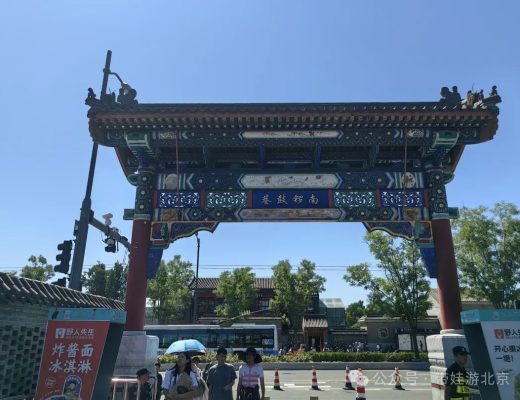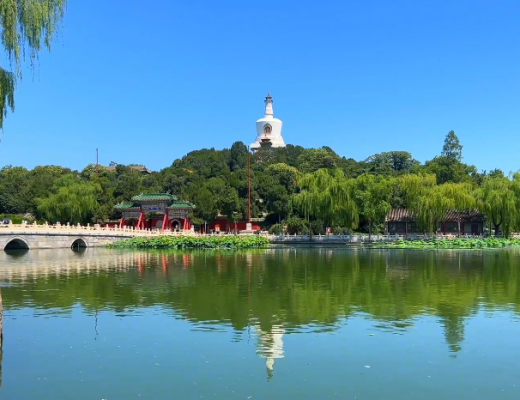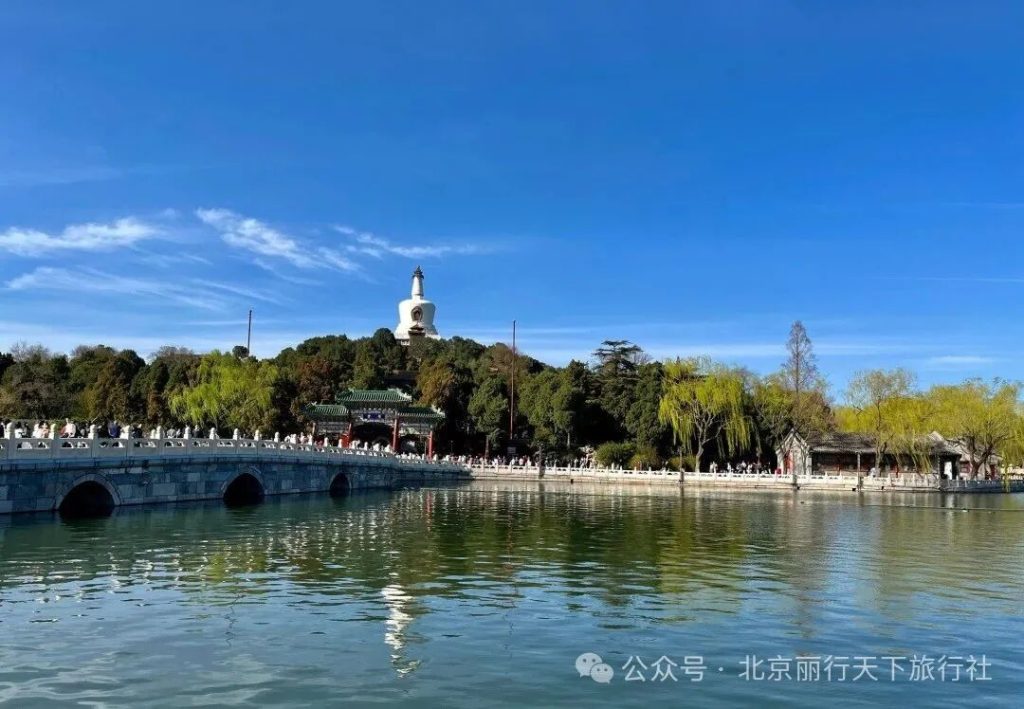
Beihai Park is located at No. 1 Wenjin Street in Xicheng District, Beijing, adjacent to the Forbidden City and Jingshan Park. As one of China's oldest and best-preserved imperial gardens, it holds the status of a National 4A-level Tourist Attraction. Covering 69 hectares, with 39 hectares of water area, it is not only a crucial component of Beijing's Central Axis World Heritage nomination but also carries the historical memory of five dynasties: Liao, Jin, Yuan, Ming, and Qing.
Essential Highlights Tour
Qiongdao Scenic Area
The Symphony of the White Pagoda and Ancient Architecture
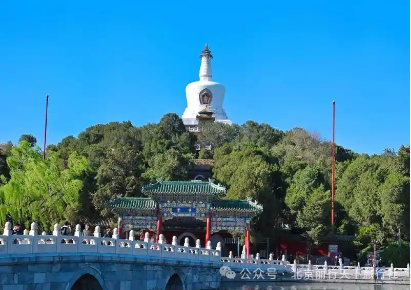
Yong'an Temple: Founded in the eighth year of the Shunzhi reign, the temple's Puan Hall enshrines sacred statues of Tibetan Buddhism. The stele inscribed with Emperor Qianlong's handwritten “Comprehensive Record of White Pagoda Hill” details the garden's historical transformations.
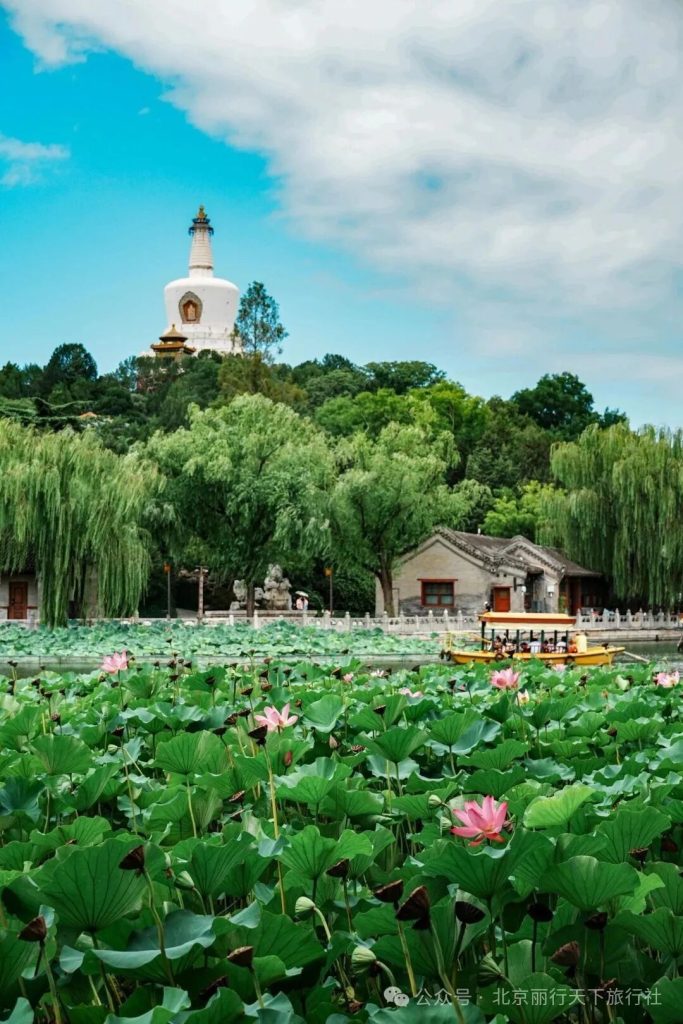
Beihai White Pagoda: A 35.9-meter Tibetan-style stupa. Ascending to the summit offers panoramic views of the Forbidden City's vermilion walls and the azure waters of Shichahai. Best photographed at dawn or dusk for stunning light and shadow effects.
Qiongdao Spring Shade Stele: One of the Eight Views of Yanjing, this Qianlong-inscribed stele harmonizes with ancient pines and cypresses. Beside it stands a millennia-old Chinese scholar tree.
North Shore Scenic Area
Glazed Artistry and Secluded Serenity
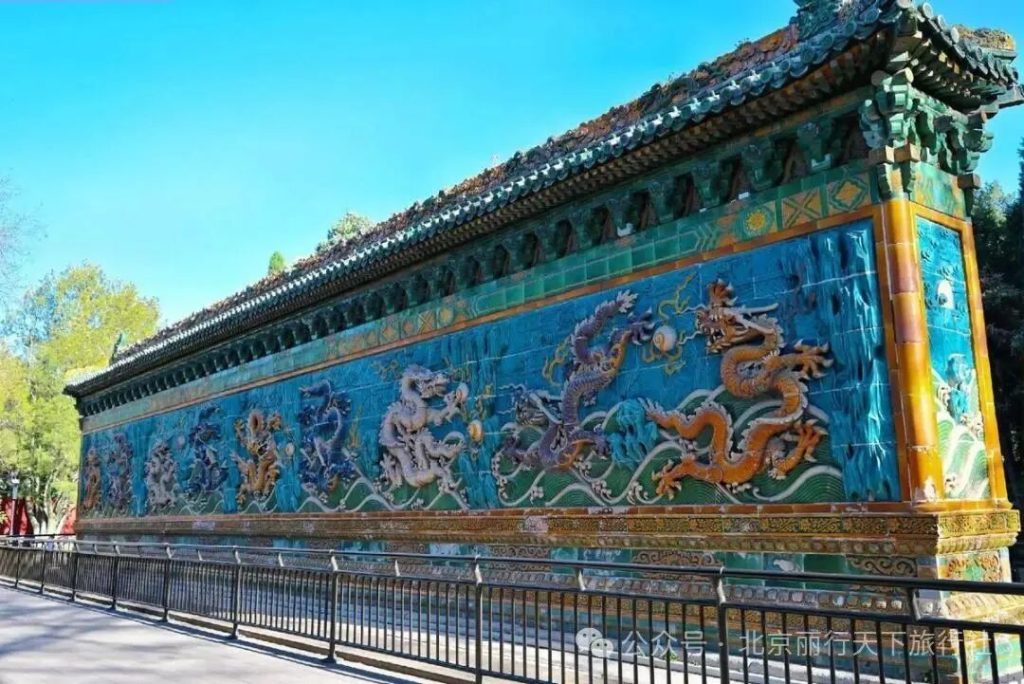
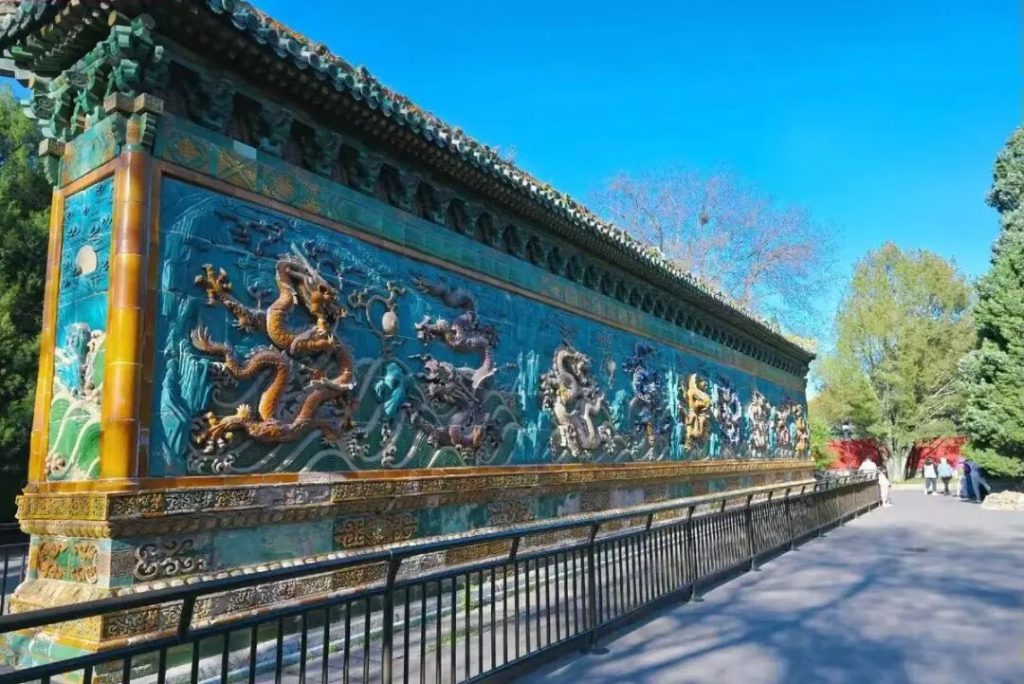
Nine-Dragon Wall: China's sole double-sided glazed screen wall, featuring 635 dragons rendered in 270 glazed bricks. The third white dragon on the eastern side bears a wooden repair on its belly—a testament to its history.
Jingxinzhai: A “garden within a garden” built by Emperor Qianlong for his mother. Its exquisite rockeries and water features, along with the white marble boat before Jingqingzhai and its reflection in the water, embody the Zen concept of “observing movement within stillness.”
Little Western Paradise: China's largest square pavilion-style palace. The Hall of Ultimate Bliss features a painted gold dragon on its coffered ceiling, while its water-enclosed layout symbolizes Buddhism's Mount Sumeru.
East Bank Scenic Area
Southern Charm and Imperial Elegance
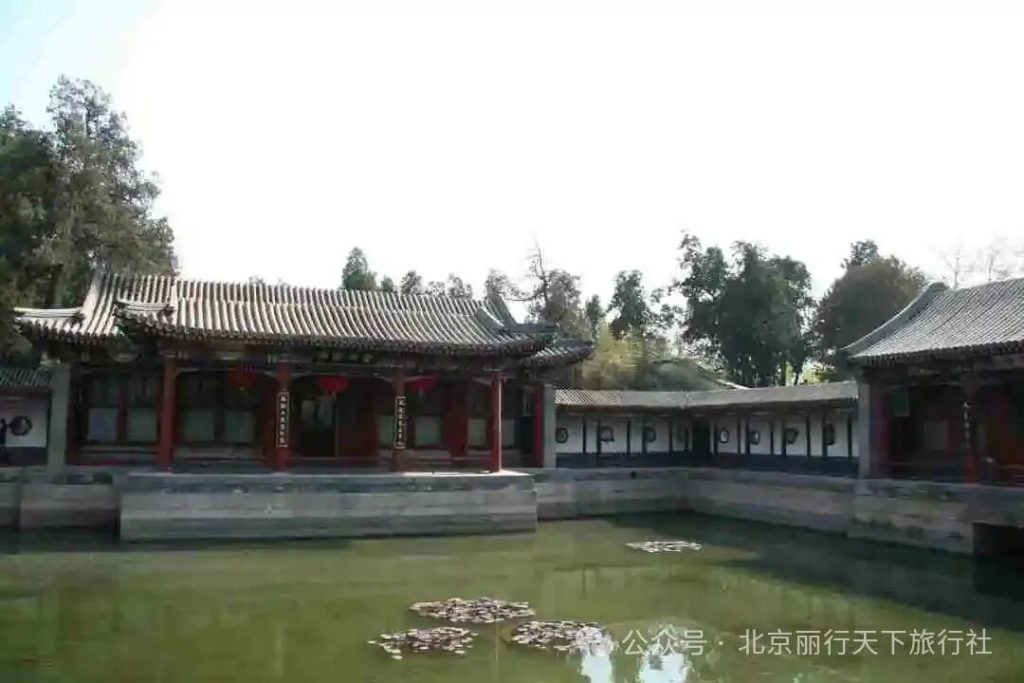
Haopu Pavilion: Modeled after Jiangnan water pavilions, its curved bridges and winding corridors reflect in the pond. Emperor Qianlong once fished here, and in spring, cascading wisteria blossoms blanket the pergola, creating a scene straight from a painting.
Painting Boat Pavilion: Resembling a moored pleasure boat, this structure houses an ancient locust tree from the Tang Dynasty within its ancient pavilion. A stone inscription of Ouyang Xiu's “Record of the Painting Boat Pavilion” is embedded in the wall, exuding the refined taste of literati.
Tuancity Scenic Area
The millennium-old legend of a miniature imperial city
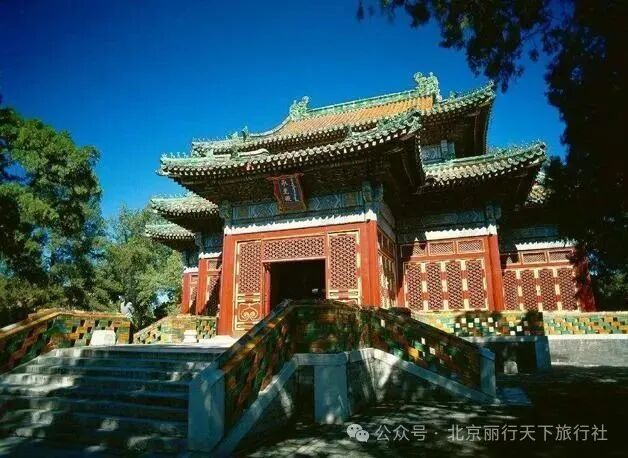
Chengguang Hall: Originally the site of the Yuan Dynasty's Yitian Hall, it was rebuilt as a circular palace during the Ming Dynasty. Inside stands the “Dushandayuhai,” a 3.5-tonne wine vessel used by Kublai Khan to entertain his ministers.
Shade-Providing Marquis Pine: An 800-year-old Chinese pine named “Shade-Providing Marquis” by Emperor Qianlong, its canopy resembles an imperial parasol and serves as one of the landmarks of the Inner City.
Key Visitor Information
Ticket Reservation Guide
Admission Fees:
High Season (Apr 1–Oct 31):
Standard Ticket: ¥10
Combination Ticket: ¥20 (includes Inner City, Yong'an Temple, and other inner gardens)
Low Season:
Standard Ticket: ¥5
Combination Ticket: ¥15
✅️Combination Ticket + Guided Tour Reservation:Trip
Discount Policy: Minors aged 6-18 and full-time undergraduate students or below receive half-price admission with valid student ID. Seniors aged 60 and above enter free with senior citizen ID.
Opening Hours Overview
Park Opening Hours:
High Season (Apr 1 - Oct 31): 6:00 AM - 9:00 PM (Last entry at 8:30 PM)
Off-Season (Nov. 1 - Mar. 31): 6:30 AM - 8:00 PM (last entry at 7:30 PM)
Opening Hours for Inner Gardens and Courtyards:
High Season (Nov. 1 - Mar. 31 & Apr. 1 - Oct. 31): 8:00 AM - 6:00 PM (last entry at 5:30 PM)
Off-season: 8:30 AM - 5:00 PM (last entry at 4:30 PM);
Except for the Grouping City, all other inner gardens are closed on Mondays, except for national holidays.
Transportation Guide
Subway: Exit B/D at Beihai North Station (Line 6), 6-minute walk to North Gate; Exit at Jinyu Hutong Station (Line 8), 15-minute walk to South Gate.
Bus:
North Gate: Routes 13/42/107/111/118/612/701 to “Beihai North Gate” stop.
South Gate: Buses 5, 101, 103, 109, 124, 128 to “Beihai” stop.
East Gate: Bus 5 to “Xibanqiao” stop.
By Car:
No public parking available at the park. Park at Qianhai Hip Joint Hospital parking lot (¥10 for first hour, ¥15/hour thereafter) or commercial parking lots along Metro Line 6. (Beijing license plates only)
Walking Connection:
Exit from Shenwu Gate of the Forbidden City, walk west along Jingshan Qian Street for 10 minutes to reach Beihai East Gate. Ideal for exploring the Central Axis in depth.

Practical Tips for Visiting
Best Routes
Essential 2-Hour Tour: North Gate → First Silkworm Altar → Painting Boat Pavilion → Haopu Garden → Yong'an Bridge → White Pagoda → Spring Shadows on Jade Island Stele → Exit via South Gate.
Panoramic 4-Hour Tour: Tuancheng → Chengguang Hall → Qiong Island → Yilan Hall → Zhishan Bridge → Jingxin Pavilion → Nine-Dragon Wall → Five-Dragon Pavilion → Exit via North Gate.
Special Experiences
Boat Ride: Taiye Pool offers pedal boats (¥120/hour) and electric boats (¥180/hour). Recommended for evening cruises to watch the sunset cast golden hues over the White Pagoda.
Cultural Exploration:
On August 17th, free guided tours are offered at multiple sites, covering topics like the history of the Inner City and the architectural artistry of Yilan Hall. Check the official website for specific times in advance.
Imperial Cuisine:
At the Imperial Cuisine Restaurant, don't miss the minced meat buns and pea paste dessert. Average cost is 150 RMB per person. We recommend calling ahead to reserve a window seat with a scenic view.
Convenient Services
Wheelchairs and strollers are available for rent (500 RMB deposit) at the South and North Gate Visitor Service Centers. A nursing room is located at the South Gate.
Shared power banks are provided at 11 locations throughout the park. Drinking water stations are available near areas like Kuaixuetang and Chuanfu Temple.
Visitor Guidelines and Recommendations
Civilized Visiting
Please respect the cultural relics, historical sites, and flora within the park. Fishing in water areas is prohibited.
Do not feed wild animals. Smoking and drone use are prohibited in areas such as Qiongdao Island and Tuancity.
Beihai Park's beauty lies in its seamless blend of imperial grandeur and everyday life. In spring, willows rustle with warblers; midsummer fills with lotus fragrance; late autumn blankets the ground in golden ginkgo leaves; and winter brings joyful ice skating. Whether strolling across ancient bridges to admire lotuses or gliding across the lake to listen to the wind, this millennia-old garden offers a tranquil retreat amidst the bustling city.
Summer Visitor Tips
During peak season, avoid the weekend crowds between 10:00 AM and 3:00 PM. Opt for weekdays or early morning/evening hours instead.
Wear comfortable sneakers, as the park features many stone paths and some areas require climbing slopes.
Bring sunscreen. The lake surface reflects strong glare in summer; sunglasses are recommended.
Photography Tips
White Pagoda Reflection: Best captured at dawn on the lake east of Yong'an Bridge when windless.
Red Wall Bamboo Shadows: The composition of red palace walls and green bamboo near the Haopu Gate entrance suits ancient-style portraits.
Light and Shadow Sanctuary: Frame shots through the lattice windows of Jingqing Hall at Jingxin Pavilion, using side lighting to create depth.
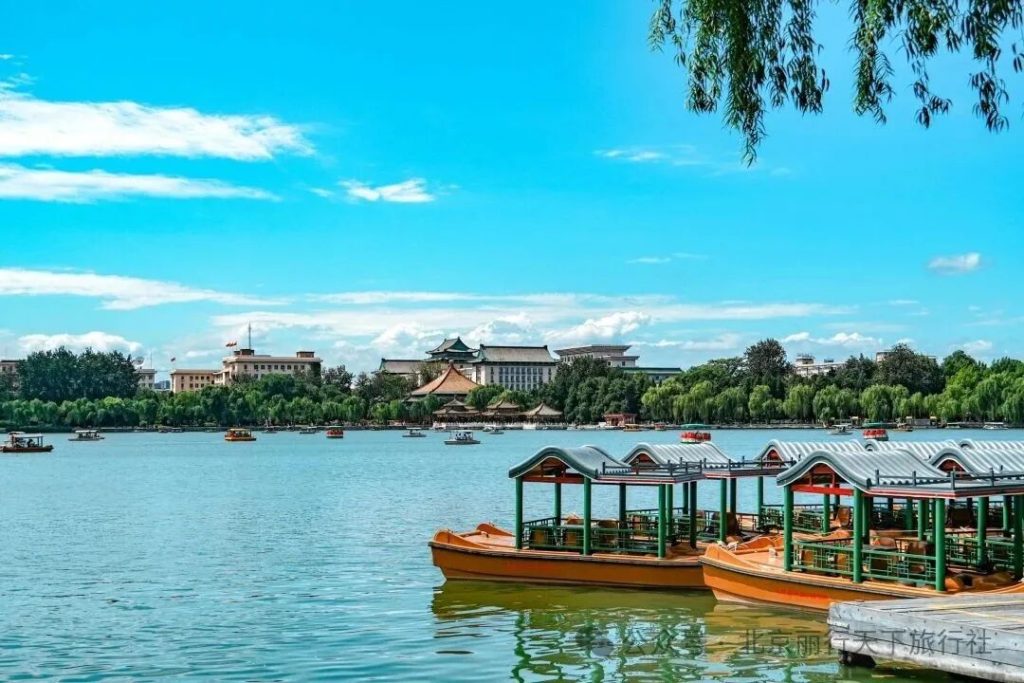
If you too are captivated by the ancient charm flowing through the blue-tiled roofs and black bricks, enchanted by the ink-wash landscape painted by rippling waters and weeping willows, why not bring along this in-depth guide that encapsulates the millennia-old splendor of Beihai Park? Ascend the steps of Yong'an Bridge, trace the weathered stone patterns of the White Pagoda, and listen to the wind whispering by Taiye Lake. Amidst the ripples created by swaying pleasure boats, fulfill a millennia-old rendezvous that transcends time and space. Let the weight of history and the ethereal beauty of nature quietly permeate your soul as you stroll through this timeless realm.