When clouds drift over the shoulders of Moxing Ridge, the whole of Guangzhou seems to become a reflection of the mountain. From the Qin-era “Renxiao City” to today's City of Rams, Baiyun Mountain has stood quietly through the passage of time. The rocks of Moxing Ridge remember Su Shi's inscriptions, the bells of Nengren Temple have echoed through a century of wind and rain, and even the ancient mountain post roads still bear the uneven footprints of porters. Every fold of the landscape seems to hide a code of Lingnan culture—climbing the mountain once feels like reading half of southern Guangdong's history.
Guangzhou Baiyun Mountain Scenic Area lies at the end of the Jiulian Mountains, a branch of the Dayu Range. It has more than 30 peaks and covers a total area of 20.98 square kilometers. Its main peak, Moxing Ridge, rises to 382 meters. The continuous mountain ridges, with their rolling lines and layered contours, create a beautiful natural skyline.
Further Reading: 【Guangzhou Attractions】9 Must-Visit Places Worth Checking Out
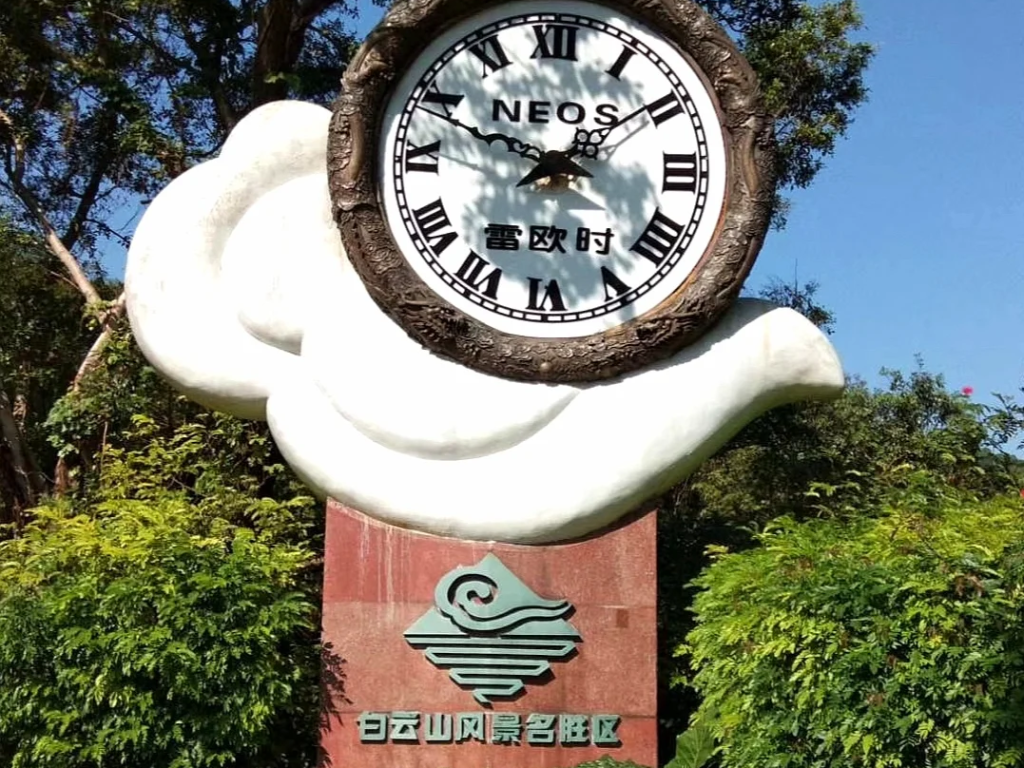
Guangzhou Baiyun Mountain Scenic Area faces broad plains on three sides, making it ideal for panoramic views from above. Visitors can overlook the whole city of Guangzhou and the vast Pearl River Delta plain. Since ancient times, it has been praised as the “Most Beautiful Sight in Guangzhou” and has long been a popular summer retreat. To the east, west, and south of Baiyun Mountain stretch the broad plains of the Pearl River Delta. Warm, humid air from these directions rises along the slopes, meets the cooler mountain air, and easily forms clouds.
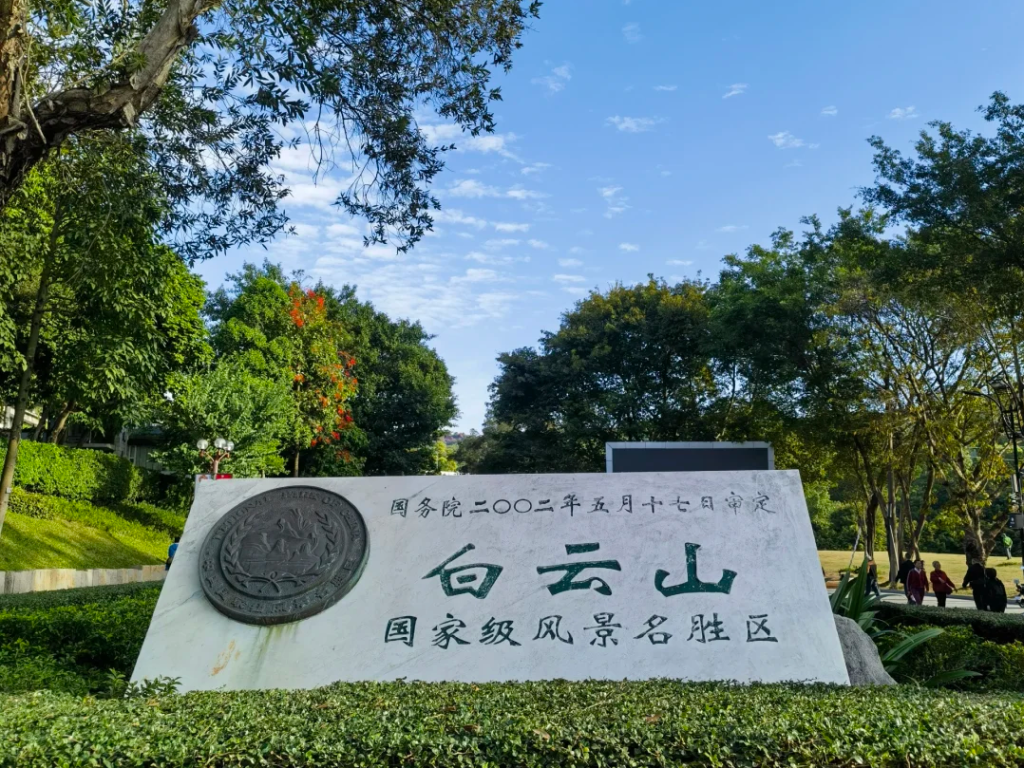
Recommended Attractions at Guangzhou Baiyun Mountain
Santailling Scenic Area
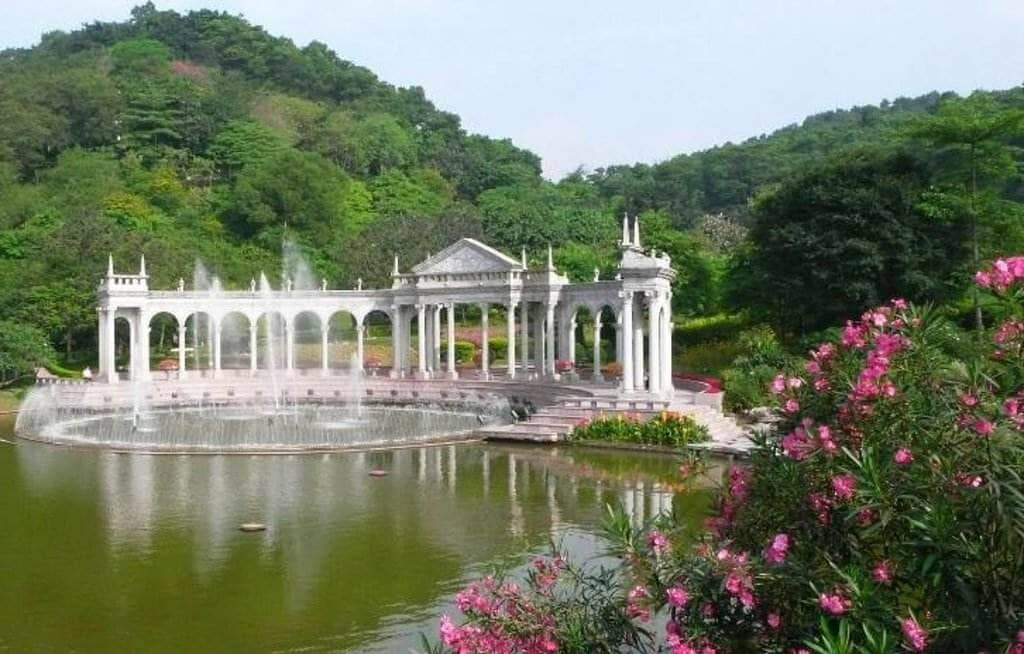
Yuntai Garden is a high-quality landscaped garden focused on rare flowers and plants throughout the four seasons and is one of the largest garden-style parks of its kind in China. Located on Santailling Ridge within Baiyun Mountain, it covers 120,000 square meters. Modeled after the world-famous Butchart Gardens in Canada, it was designed by the Guangzhou Institute of Landscape Architecture. The Guangzhou municipal government invested more than RMB 50 million in the project, which began construction in 1993 and officially opened on September 28, 1995. The garden contains 14 elegant and distinctive attractions.
Mingchun Valley Scenic Area
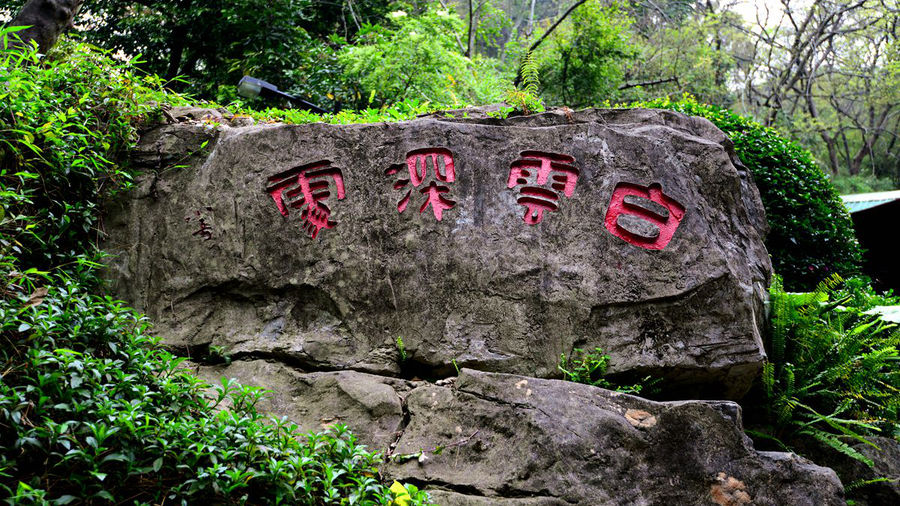
The Mingchun Valley sightseeing area includes attractions such as Pu Valley, Nengren Temple, the Maori Sports and Culture Village, First Peak of Southern China, Baiyun Evening View, Baiyun Dawn View, Mingchun Valley, Dishui Rock, and the Cuiwei Ancient Trail. Because the attractions are concentrated and transportation is convenient in all directions, it is the sightseeing area with the largest visitor flow.
Moxing Ridge Scenic Area
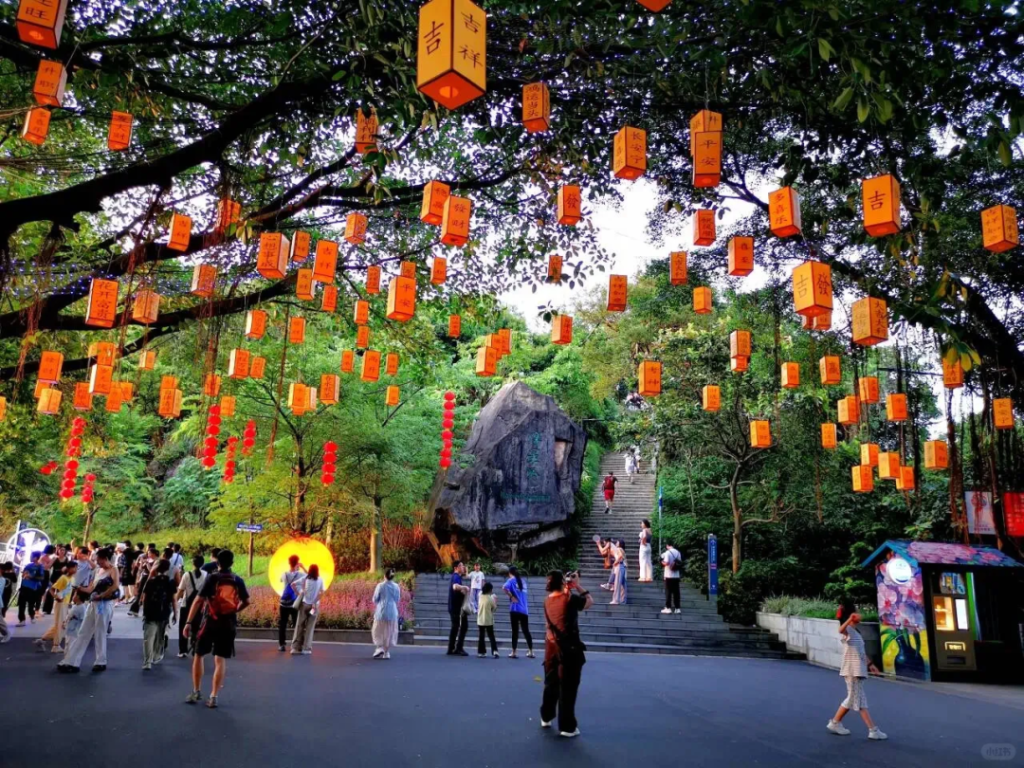
Moxing Ridge was originally known as Biyun Peak. Located between Su Family Ancestral Hall and Longhu Ridge on Baiyun Mountain, it is the highest peak of Baiyun Mountain at 382 meters and ranks first among the mountain's more than 30 peaks. The Moxing Ridge gate can be reached from Qixia Ridge. Before the Song and Ming dynasties, the name “Moxing Ridge” did not exist, and the summit was known simply as the First Mountain. In the Kangxi-era Gazetteer of Guangdong, a map of Baiyun Mountain at the beginning of the volume labeled this peak “Moxing Ridge” and called it the “First Peak of Southern China.” The name Moxing Ridge has been used ever since.
Mingzhulou Scenic Area
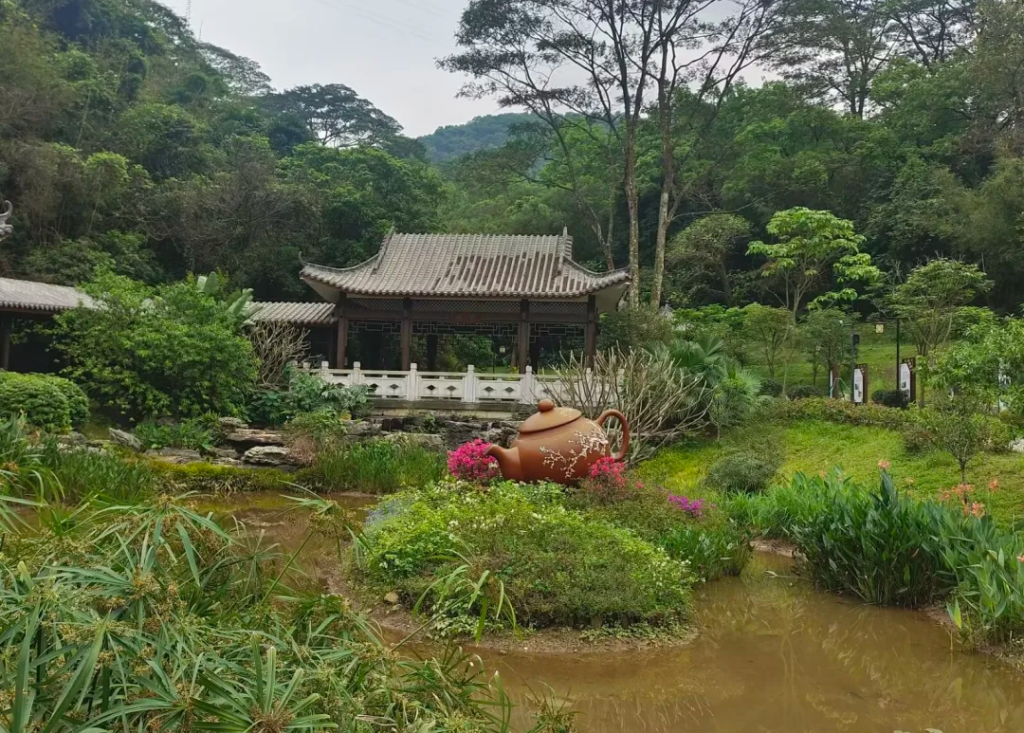
The Mingzhulou sightseeing area is located in the northwestern part of Baiyun Mountain and covers about 8 square kilometers. It extends west to Baiyun Mountain West Gate, east to Dangxiong Pavilion, south to the leisure belt, and north toward Meihuayuan. The area contains 100,000 square meters of lawn and 620,000 trees and shrubs, with green coverage exceeding 95%. Major attractions include Pine Waves of Baiyun, Songtao Villa, Peach Blossom Ravine, Plum Blossom Valley, Mingzhulou, Shuiyue Pavilion, Huangpodong Leisure Tea Corridor, and Return Forest.
Feieling Scenic Area
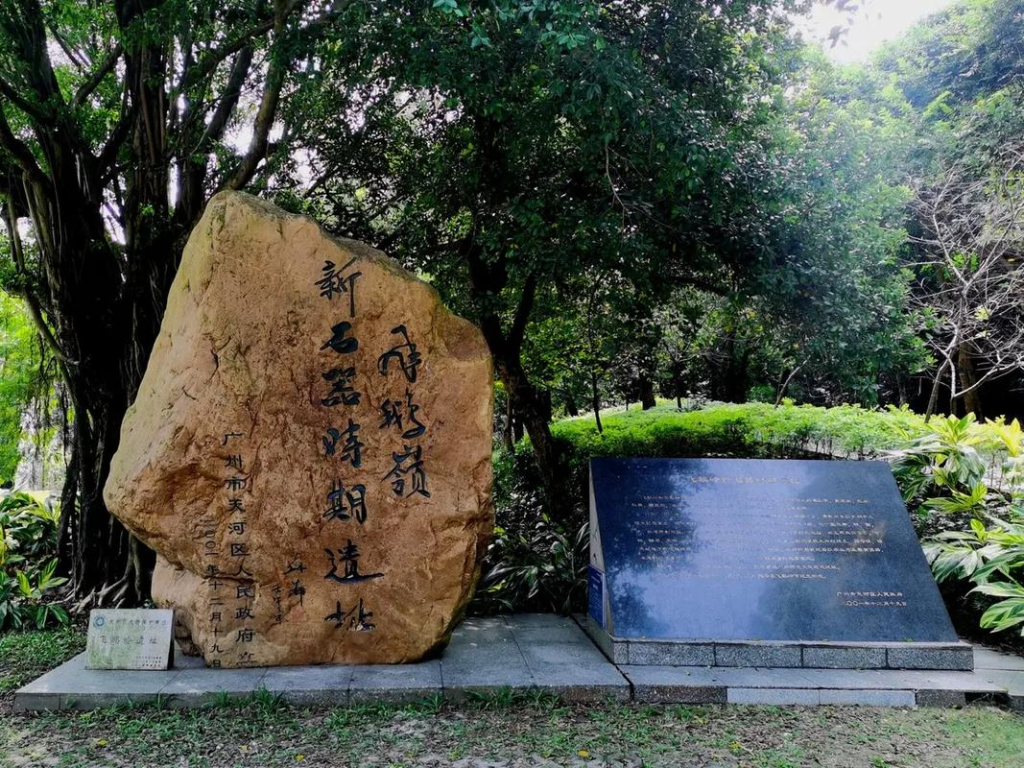
Sculpture Park: Guangzhou Sculpture Park is located on the western side of Feieling Ridge at Baiyun Mountain and covers 460,000 square meters. It was built by the Guangzhou Municipal People's Government in 1996 to commemorate the 2,210th anniversary of the founding of Guangzhou. The park was planned and constructed according to the principles of integrating sculpture with gardens, sightseeing with education, and art with history.
Baiyun Mountain Travel Tips
Cultural Theme Activities
“Hero Flowers Bloom in the Hero City”: Around March each year, Baiyun Mountain serves as one of the core venues for a series of red-culture activities, including the “Kapok Stage,” “Kapok Study,” and “Kapok Journey.” Other events include the painting activity “Hero Flowers Paint the Hero City: Seven Generations of Art Across the Greater Bay Area,” Cantonese storytelling performances featuring intangible cultural heritage, and student song-and-dance performances under the theme “The Most Beautiful Songs Dedicated to the Party.” Visitors can enjoy blooming kapok flowers while experiencing related cultural activities.

“Let Me Tell the Stories of Yunshan”: Baiyun Mountain organizes this activity through its New Era Civilization Practice Station, sharing classic revolutionary stories and stories of Yunshan. By making use of the scenic area's large visitor flow, the program promotes red-culture themes and turns the mountain into a place for learning about history, strengthening civic and Party education, and cultivating a sense of home and country.
Festival-Themed Activities
“Magic Kid Nezha Happy Carnival” Market: During the 2025 May Day holiday, the Mingzhulou Scenic Area held this event with Ne Zha 2 and modern Chinese-style animation as its theme. It created immersive scenes and an interactive market featuring Nezha-themed cultural products, intangible-heritage straw weaving, tea and refreshments, as well as popular water guns, bubble machines, children's ride-on vehicles, and other entertainment facilities.

2025 Guangzhou Summer Water Fun Tourism Festival: From May 24 to June 2, 2025, Mingchun Valley at Baiyun Mountain partnered with Guangzhou Daily and Yue Media to launch this event. It featured five major experience zones, including a water carnival, trendy land-based activities, an immersive market, and main-stage performances. Visitors could join games such as a fun fishing pool, safe paddling pool, children's bumper cars, and goose ring-toss challenges, while also enjoying live singers, energetic dance performances, intangible cultural heritage experiences, and cross-brand collaborations.
Sports and Fitness Activities
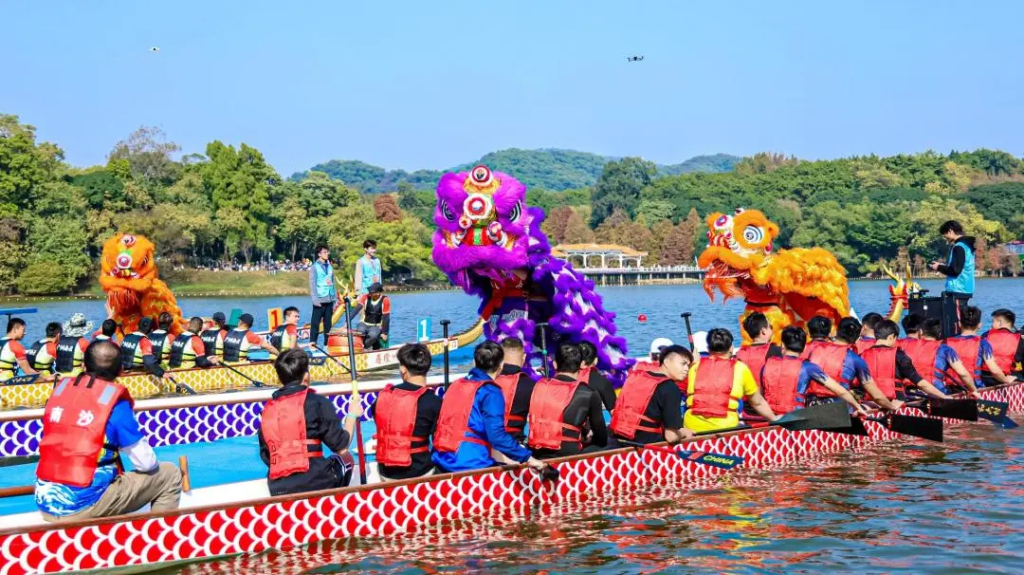
“Welcoming the 15th National Games” ICBC Guangzhou Dragon Boat Championship and Guangzhou Water Sports Carnival: Held at Baiyun Mountain in May 2025, the event combined dragon boat racing, promotion of water sports, financial knowledge outreach, intangible cultural heritage displays, and educational science activities. It aimed to preserve Lingnan culture while promoting public fitness and water sports.
Plant-Themed Fun Orienteering Race: Building on the ex-situ conservation features of Yunluo Botanical Garden, Baiyun Mountain organizes plant-themed orienteering races in which participants learn about plants while competing and experiencing the appeal of nature.
Moxing Ridge Healthy Hiking Event: In response to China's “Year of Weight Management” initiative, Moxing Ridge held the “Burn My Calories” healthy hiking event in May 2025. The program combined the scenic area's hiking characteristics with interactive health experiences, encouraging the public to practice a “green lifestyle” and support overall health.
Nature Healing Activities
“Nature Healing · The Power of the Present” Themed Salon: On July 2, 2025, Baiyun Mountain Scenic Area jointly organized this activity with “Shanxing Lab.” Using the forest as a classroom and the mountains as a healing space, participants were guided by professional therapists through immersive experiences such as mindful tree hugging and mindfulness yoga, creating a deeper connection with nature while slowing down and relaxing both body and mind.
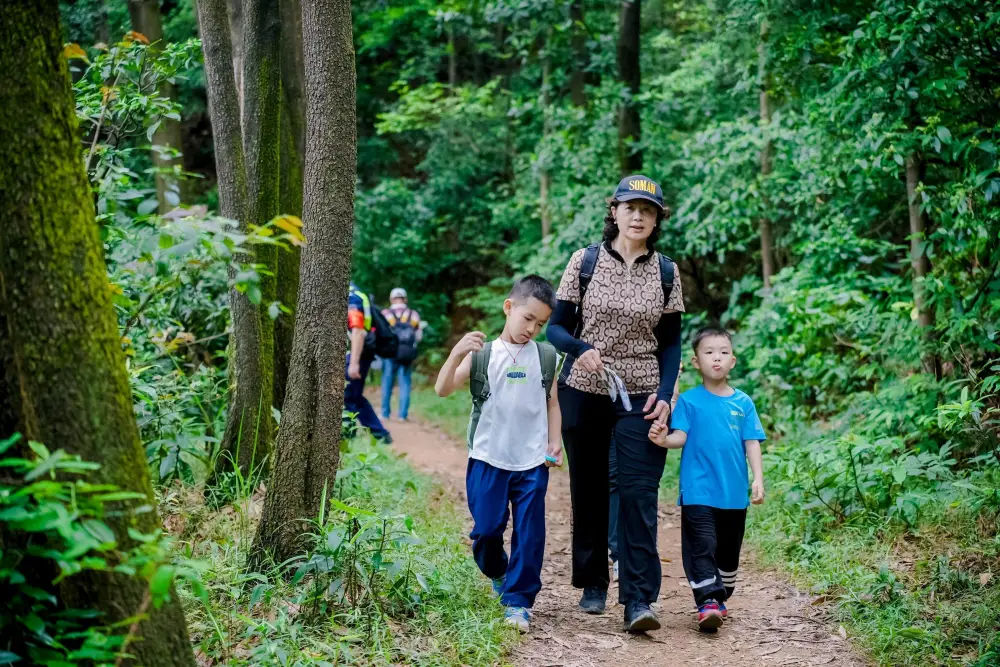
“Shanxing Lab × Liurong Trail Cultural Station” Activity: Baiyun Mountain established this cultural station along the Liurong Trail, with three functional areas: the “Forest-Life Inspiration Station,” “Mountain Hiking Supply Station,” and “Woodland Rest Stop.” It creates a second living space for city residents where they can “leave the hustle without leaving the city,” offering cultural-creative experiences, light food and drinks, scenic rest areas, and other services. The Liurong Trail also introduced a short-loop hiking route to further develop its forest wellness value.
Science Exhibitions and Educational Activities
“Miniature Worlds · Orchid Elegance” Small Bonsai and Orchid Exhibition: Huajian Xiaozhu in the Yunxi Scenic Area previously displayed 70 groups of small bonsai and 50 groups of orchids, together with free public lectures on plant themes, allowing visitors to appreciate the beauty of bonsai and orchids while learning related botanical knowledge.
“Green Mountains Share One Vein, All Life Shares Knowledge” Joint National Park and National Botanical Garden Science Activity: The South China National Botanical Garden and the candidate area for Nanling National Park collaborated in depth for the first time at the Yunxi Scenic Area. The exhibition featured 30 scientific illustrations of plants and animals, promoting biodiversity knowledge and improving visitors' understanding of natural ecosystems.
Recommended Food at Guangzhou Baiyun Mountain
Local Specialties
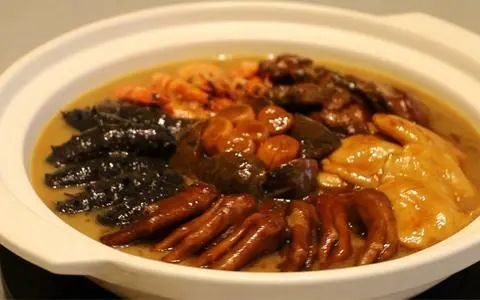
Baiyun pork trotters, Zhuzaiji roast goose, Taihe roast chicken, Longgui roast pork, stir-fried rice noodles, mountain-spring tofu pudding, chicken stewed with fermented vinegar, grass carp poached in spring water, Cantonese poon choi, Mongolian-style cuisine, and more.
Guangzhou Baiyun Mountain Travel Guide
👉Ticket Booking: Trip
Ticket Information
Baoding Mountain Scenic Area: RMB 5 per person
Baiyun Mountain Cableway, One-Way Uphill Full Fare: RMB 25 per person
Baiyun Mountain Cableway, One-Way Downhill Full Fare: RMB 20 per person
Discount Policies:
Free Admission:
1. Children age 6 and under (inclusive), or 1.3 meters tall and under (inclusive).
2. Seniors age 65 and above with valid identification.
3. Active-duty military personnel, retired military cadres, people with disabilities, and firefighters with valid identification.
Half-Price Admission:
1. Children between 1.3 meters and 1.5 meters tall (including 1.5 meters).
2. Minors age 6 through 18 (inclusive).
3. Full-time undergraduate students and students at lower education levels with valid identification.
4. Seniors age 60 through 64 (inclusive).
Other Discounts:
1. Junior and senior high school entrance-exam candidates may receive free admission or discounts on entertainment activities during specified periods. For example, from now until July 31, eligible candidates can enter Mingchun Valley free of charge with their admission ticket and ID card and can also receive a free blessing ribbon.
2. From now until August 31 (Monday to Friday only), junior and senior high school entrance-exam candidates can ride the Baiyun Mountain Baiyun Flying Zipline for a discounted price of RMB 108 per person with their exam admission ticket (regular price RMB 288).
(Note: The prices above are for reference only. Actual prices are subject to the scenic area's rates on the day of your visit.)
Guangzhou Baiyun Mountain Transportation Guide
● Metro:
1. South Gate: Take Metro Line 11 to Yuntai Garden Station. From Exit A, take the dedicated elevator, turn right, pass through the tunnel, and continue via Hengzhigang and Yunshan South Road. From Exit C1, take the escalator to the overpass and walk to Yunshan South Road. From Exit C2, take the escalator and walk via Guangyuan Middle Road and Yunshan South Road. From Exit E, walk via Luhu Road, Hengzhigang Road, and Yunshan South Road. Alternatively, take Metro Line 6 to Shaheding Station Exit A, then take a taxi for about 8 minutes.
2. West Gate: Take Metro Line 2 to Xiaogang Station Exit A, then walk directly to the scenic-area entrance.
3. North Gate: Take Metro Line 3 to Yongtai Station Exit B2. This route is suitable for visitors driving or arriving from northern Guangzhou.
● Bus:
1. South Gate: Take bus routes 24, 63, 285, B16, 245, Tourism Line 1, and others to Yuntai Garden Terminal, then walk about 5 minutes to the Baiyun Mountain South Gate ticket office. Alternatively, take routes 46, 60, 175, 179, 199, 223, 241, 257, 540, or B18 to Baiyun Cableway Station, then walk about 10 minutes to the South Gate ticket office.
2. West Gate: Take bus routes 38, 66, 76, 76A, 127, 223, 265, 424, 529, 805, 864, B18, University Town Line 1, and others to Guangwai Baiyun Mountain West Gate Station, then walk about 5 minutes to the West Gate.
● Convenience Shuttle Bus:
For families or groups of friends, hiring a private vehicle can also be a convenient option. From central Zhaoqing, charter rates are about RMB 300 per day, offering greater flexibility. On weekends and public holidays from 7:00 to 21:00, a direct convenience shuttle runs from Exit B of Baiyun Culture Square Station on Metro Line 2 to Baiyun Mountain West Gate.
● Driving:
From central Guangzhou, drive north along Guangyuan Middle Road and navigate directly to “Baiyun Mountain Scenic Area.” From Panyu, take the South China Expressway north to Chungang Interchange, transfer to the Guanghe Expressway, exit at Longdong, then continue via Guangshan First Road and Tianyuan Road before turning onto Guangyuan Middle Road. From Huadu, take the Airport Expressway toward Guangzhou, exit at Sanyuanli, then follow Jiefang North Road, Huanshi Middle Road, and Huanshi East Road before turning onto Guangyuan Middle Road. Several parking lots are available around the scenic area, including the Shuangyangang surface parking lot near the South Gate and the Baiyun Mountain Scenic Area West Gate parking lot.
Guangzhou Baiyun Mountain Travel Routes
1. Family Leisure Route:
Route: Baiyun Mountain West Gate → Return Forest → Cuizhuyuan Gate → Yunshan Tea Garden → Biying Bay → Plum Blossom Valley → Lakeside Boardwalk → Cuizhuyuan Gate → Baiyun Mountain West Gate
Featured Attractions:
Yunshan Tea Garden: Originally an old tea factory on Baiyun Mountain, it has now been transformed into a natural Lingnan-style garden with carved beams, painted details, and an antique atmosphere. It is a great place to take Lingnan-style photos while also introducing children to tea culture.
Biying Bay: One of the popular photo spots at Huangpodong Reservoir. The water is clear, with surrounding mountains and green trees reflected on the surface. Gentle breezes create ripples across the lake, making it an ideal place for families to enjoy the scenery.
Plum Blossom Valley: The ponds are filled with colorful water lilies in pink, pale yellow, purple, and red, creating a scene reminiscent of Monet's garden. Children can observe the shapes and colors of the lilies while enjoying the beauty of nature.
Lakeside Boardwalk: This 520-meter over-water viewing boardwalk lets children enjoy close-up views of the lake and mountains and even watch little grebes paddling and fishing, creating the feeling of entering a peaceful hidden paradise.
2. Natural Scenery Route:
Route: Baiyun Mountain South Gate - Pu Valley - Nengren Temple - Keqi Great Lawn - Summit Square - Jiulong Spring - Shuangxi Villa - Mountain Villa - Dangxiong Pavilion - Pine Waves of Baiyun - Peach Blossom Ravine - Yunshan Tea Garden - Lakeside Boardwalk - Plum Blossom Valley - Baiyun Mountain North Gate
Featured Attractions:
Pu Valley: Waterfalls and streams run along the route beneath dappled shade. Small shrimp and fish bring life to the water, while insects and birds call from the forest, giving the feeling of entering a tropical rainforest. It is an excellent place to escape the summer heat.
Nengren Temple: One of the many ancient temples on Baiyun Mountain, it features simple and elegant architecture with red walls and green tiles. The surrounding environment is quiet and peaceful.
Pine Waves of Baiyun: A vast pine forest below Moxing Ridge, where the wind rushing through the trees sounds like rolling ocean waves. Visitors can sit here and enjoy the cool, refreshing breeze through the forest.
Peach Blossom Ravine: Every spring, peach blossoms cover the slopes like pink clouds, creating a beautiful landscape and making this one of the best places on Baiyun Mountain to enjoy peach blossoms.
Lakeside Boardwalk: Walking along the waterside boardwalk provides close-up views of Huangpodong Reservoir, with green mountains reflected in the water and a relaxing lakeside atmosphere.
3. Historical and Cultural Experience Route:
Route: Baiyun Mountain West Gate - Mingzhulou - Guangzhou Forest of Steles - Moxing Ridge South Gate - Nengren Temple - Zhengxianyan Archway - Baiyun Mountain South Gate
Featured Attractions:
Mingzhulou: The building has an antique architectural style that blends naturally with the surrounding landscape. It was once a place where scholars and poets composed poetry and paintings and has a rich cultural heritage.
Guangzhou Forest of Steles: This site brings together poems and calligraphy by renowned masters from different historical periods, with numerous stone tablets and carvings demonstrating the depth of Chinese calligraphic art. Visitors can appreciate a variety of calligraphy styles and experience the appeal of this traditional art.
Nengren Temple: One of the oldest temples on Baiyun Mountain, it has a long history and preserves many ancient buildings and cultural relics, including Buddhist statues and stone inscriptions. These relics bear witness to changes in Baiyun Mountain over time and have significant historical and cultural value.
Zhengxianyan Archway: Built to commemorate Immortal Zheng, a figure in Guangzhou folk religion with deep connections to Baiyun Mountain. The site offers an important window into local folk beliefs and the area's historical culture.
4. Fitness Hiking Route
Route: Baiyun Mountain West Gate - Return Forest - Yunshan Tea Garden - Peach Blossom Ravine - Pine Waves of Baiyun - Dangxiong Pavilion - Mountain Villa - Shuangxi Villa - Jiulong Spring - Summit Square - Keqi Great Lawn - Nengren Temple - Pu Valley - Baiyun Mountain South Gate
Featured Attractions: This route covers many classic Baiyun Mountain attractions, including the quiet woodland of Return Forest, the traditional-style garden of Yunshan Tea Garden, the beautiful waterscape of Peach Blossom Ravine, the magnificent pine forest at Pine Waves of Baiyun, the Lingnan garden scenery of Mountain Villa, and the clear water of Jiulong Spring. It combines fitness hiking with a broad experience of Baiyun Mountain's natural and cultural beauty.
Easy One-Day Trip Guide
👉Private Day Tour of Guangzhou Baiyun Mountain and Sun Yat-sen Memorial Hall
Recommended Accommodation at Baiyun Mountain
Guangzhou Mountain Villa
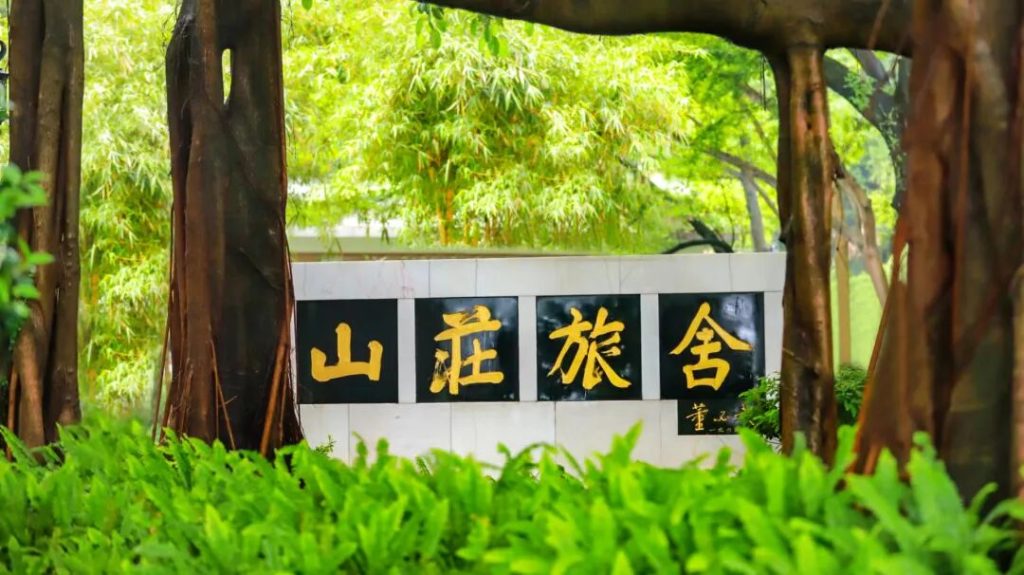
Baiyun Mountain is familiar to many people in Guangzhou, but you may not know that a hidden mountain retreat lies within it. Located in the 5A-rated Baiyun Mountain Moxing Ridge Scenic Area, Guangzhou Mountain Villa feels almost otherworldly, as the photos below show.
The Mountain Villa occupies a uniquely chosen site nestled among landscaped hills and water. Looking up reveals green mountains and drifting clouds, with exceptionally fresh air all around.
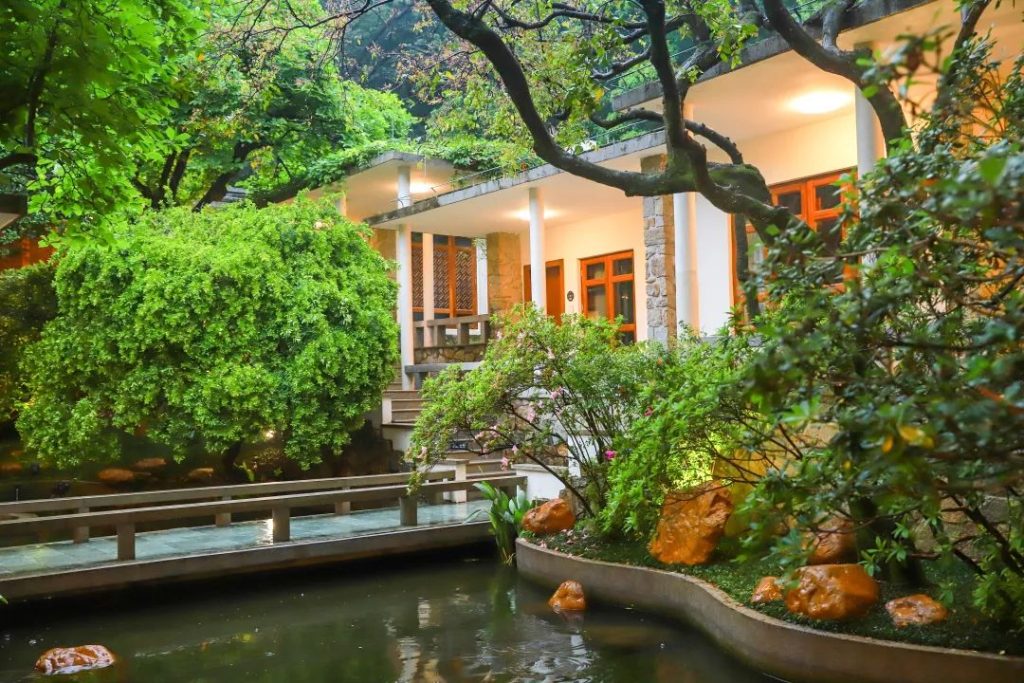
It is regarded as a classic pioneering achievement in the development of modern Lingnan gardens and Lingnan architecture.
It has hosted many distinguished guests from China and abroad as well as national leaders and has been known as “Guangzhou's State Guesthouse.”
After remaining understated for half a century, this celebrated Lingnan garden was carefully restored by the team of architect and academician Mo Bozhi with meticulous attention to detail.
The restoration recreated the original appearance of the Mountain Villa and once again showcased the essence of Lingnan garden architecture and Lingnan culture.
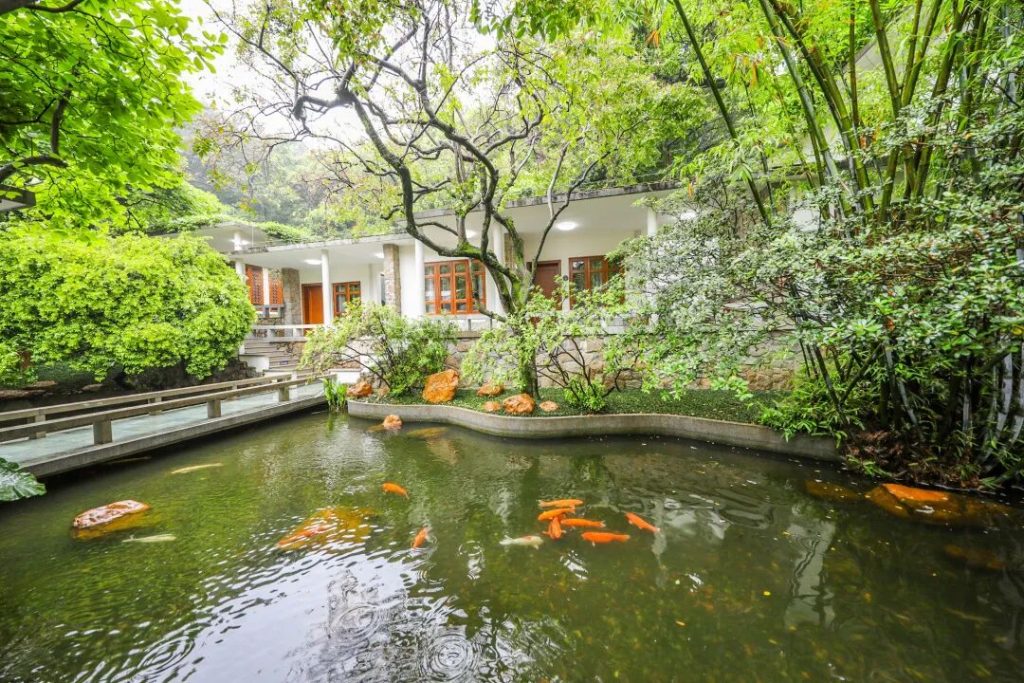
In its landscape design, particular attention is paid to ecological protection while preserving the atmosphere of a mountain residence and the traditional spirit of Lingnan.
Old, vigorous trees and rare green plants can be seen throughout the property.
Architecturally, it continues the rustic Lingnan character of “windows framing mountain views, winding paths and corridors, and streams flowing through the buildings,”
creating a quiet, refined, and elegant atmosphere.
✅Accommodation Booking: Trip
Local Specialties
Chaozhou Xing water chestnut flour, star fruit from Zhuxiongwei Village, Maogang bird's-nest fruit, Maofeng sweet oranges, wampee from Longgang Village, night-blooming cereus from Renhe Town, Chinese yam from Liaocai Village, colorful peppers from Nanfang Village, and more.

Important Notes
1. Ticket Reservations: Check ticket prices and discount policies in advance through the official website or reputable travel platforms and confirm whether reservations are required. Prices may change during holidays. Online booking often offers discounts and can help avoid queues at the ticket office.
2. Weather and Clothing: Check the weather forecast before traveling. If severe weather such as heavy rain or strong winds is expected, consider adjusting your itinerary. April to October is generally the best period to visit, but the weather can be hot, so prepare sun-protective clothing, a hat, sunglasses, and sunscreen. If hiking in rainy weather, be sure to bring rain gear and take precautions against slipping.
3. What to Bring: Mosquitoes and insects are common in the scenic area, so bring insect repellent and other protection. Wear comfortable hiking shoes or sneakers for walking around the mountain. Small snacks such as chocolate and candy can also be useful for quickly replenishing energy.
4. Transportation: If driving, check your vehicle in advance, plan the route, and pay attention to road safety. Parking lots are available in the scenic area, but traffic can be heavy during holidays, so allow extra time to find a space. When using public transportation, pay attention to departure times, keep personal belongings secure, and board or leave vehicles in an orderly manner after they have stopped.
5. Protect the Environment: Baoding Mountain has beautiful scenery, so visitors should travel responsibly. Do not spit, litter, damage flowers or trees, or harm vegetation. Help keep the scenic area clean and attractive.
6. Protect Your Belongings: Keep your personal belongings secure at all times, especially in crowded places. When resting or taking photos, do not leave valuables unattended.