Fengdu Ghost City, formerly known as Fengdu Ghost City under the old spelling “Fengdu,” was once an auxiliary capital of the ancient Ba people and is renowned across China for its distinctive underworld culture. The mountain on which Ghost City stands is called “Mingshan,” originally known as “Pingdu Mountain.” When the Northern Song literary master Su Shi visited, he wrote the line “Pingdu, an ancient famous mountain under heaven,” after which the mountain came to be known as Mingshan. Historical figures including Lu You, Feng Zikai, Wang Shizhen, and Feng Yuxiang also left their traces here. Fengdu has a history of nearly 2,000 years, dating back to the second year of the Yongyuan era of the Eastern Han Dynasty. The scenic area lies on the north bank of the Yangtze River in Fengdu County, downstream from Chongqing, facing the new county seat of Fengdu across the river. It was among China’s first group of national AAAA-rated tourist attractions. Fengdu Ghost City Scenic Area is divided into the Ghost City Mingshan Scenic Area and the Ghost King Stone Carving Scenic Area.
Further Reading:【Chongqing Independent Travel】Chongqing Attractions, Transportation, Food, and Shopping
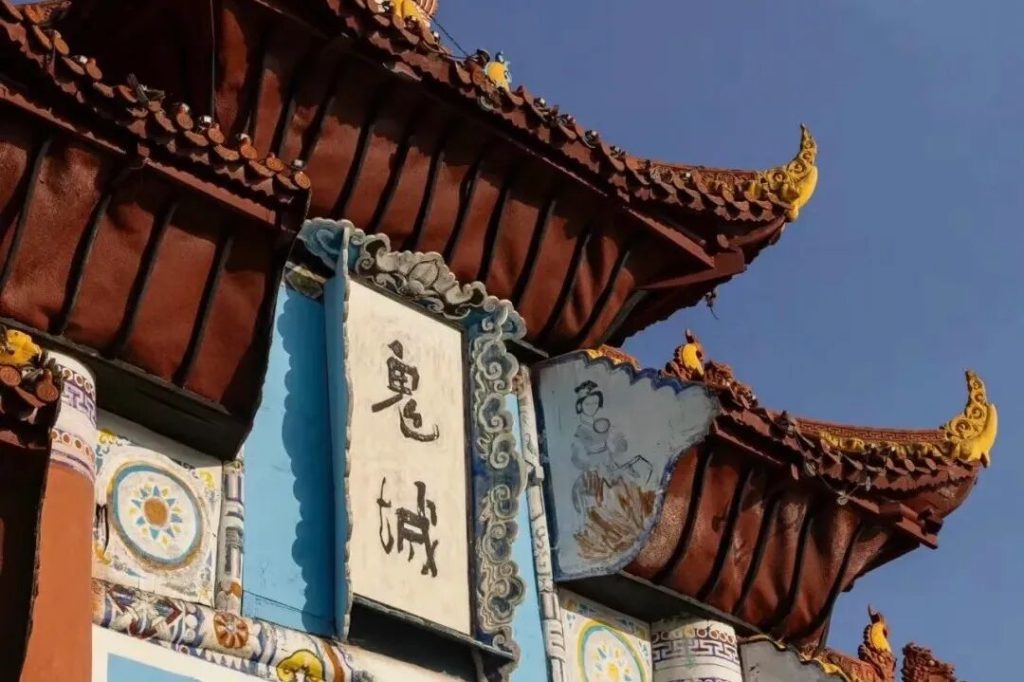
The Mingshan Scenic Area of Fengdu Ghost City includes Fengdu Mingshan, the Ghost Kingdom Divine Palace, and Shuanggui Mountain. There are many ancient temples on the mountain, with 27 temples in total. The later-built Ghost Kingdom Divine Palace is a dynamic man-made attraction that uses modern sound, lighting, motion, electricity, sculpture, laser, and other technologies to vividly present nearly 200 stories about the “ghosts” of Fengdu Ghost City. Facing Mingshan is Shuanggui Mountain, whose main attractions include Luming Temple, Su Gong Shrine, Enlai Pavilion, and the Confucian Temple.
Address: Group 6, Mingshan Subdistrict, Fengdu County, Chongqing (beside the Yangtze River)
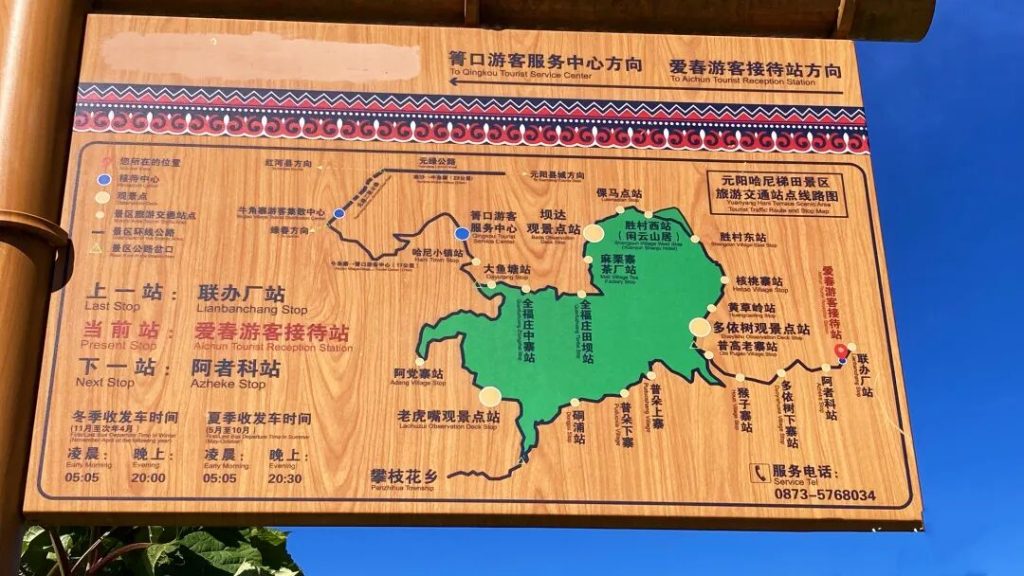
Fengdu Ghost City Transportation Guide
Buses depart hourly from Chongqing Sigongli Transportation Hub and go directly to
Fengdu (about a 2-hour journey)
From Chongqing North Railway Station, take a high-speed train for about 1 hour to
Fengdu Dingzhuang Station, then transfer to Bus 109 to reach the Mingshan Scenic Area
(Information is for reference only; actual conditions shall prevail.)
Fengdu Ghost City Opening Information
Hours: 07:00-18:00 (information is for reference only; actual conditions shall prevail.)
Recommended Must-Visit Attractions in Fengdu Ghost City
Fengdu Ghost City Mingshan Scenic Area includes attractions such as the Ghost City Mingshan Archway, Heng-Ha Shrine, Shanxiao Pavilion, Bao'en Hall, Medicine King Hall, God of Wealth Hall, Naihe Bridge, Liaoyang Hall, Xingchen Dun, the Thirty-Three Heavens, Jade Emperor Hall, Hundred Children Hall, Tianzi Hall, Two Immortals Tower, the Eighteen Levels of Hell, Ghost Gate, Homesickness Terrace, and ancient steles. The following popular must-visit spots are especially recommended...
🌈Fengdu Ghost City is located on the north bank of the Yangtze River in Fengdu County, Chongqing. It is said to be the location of the “underworld” and is one of the most concentrated representations of China’s underworld culture. Legendary features of the netherworld, such as Naihe Bridge and the Eighteen Levels of Hell, are physically represented here.
🌈Must-visit route: Mingshan, where Ghost City is located, is laid out in a long, narrow shape. After entering the scenic area, simply follow the signs and walk uphill along the mountain path. Key stops along the way include the Mingshan Archway, Heng-Ha Shrine, Shanxiao Pavilion, Bao'en Hall, Medicine King Hall, God of Wealth Hall, Naihe Bridge, and more.
Ghost City Mingshan Archway
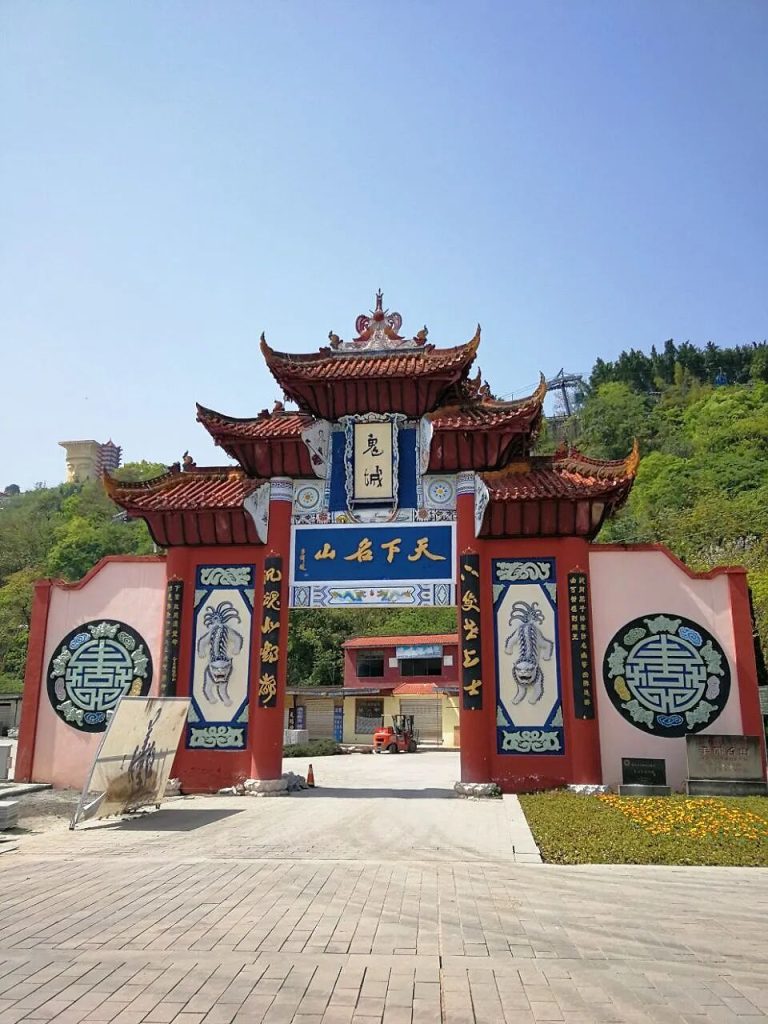
🌈The Ghost City Mingshan Archway is the main entrance to Fengdu Ghost City. It is known for its rich and profound ghost-city culture, exquisite and unusual sculptures, and fascinating legends. The archway bears the four characters meaning “Famous Mountain Under Heaven,” and Fengdu Ghost City lies on the mountain behind it. Before the Northern Song Dynasty, Mingshan was originally called Pingdu Mountain. It was renamed after the great Northern Song writer Su Shi climbed the mountain and wrote the line, “Pingdu, an ancient famous mountain under heaven.”
Heng-Ha Shrine
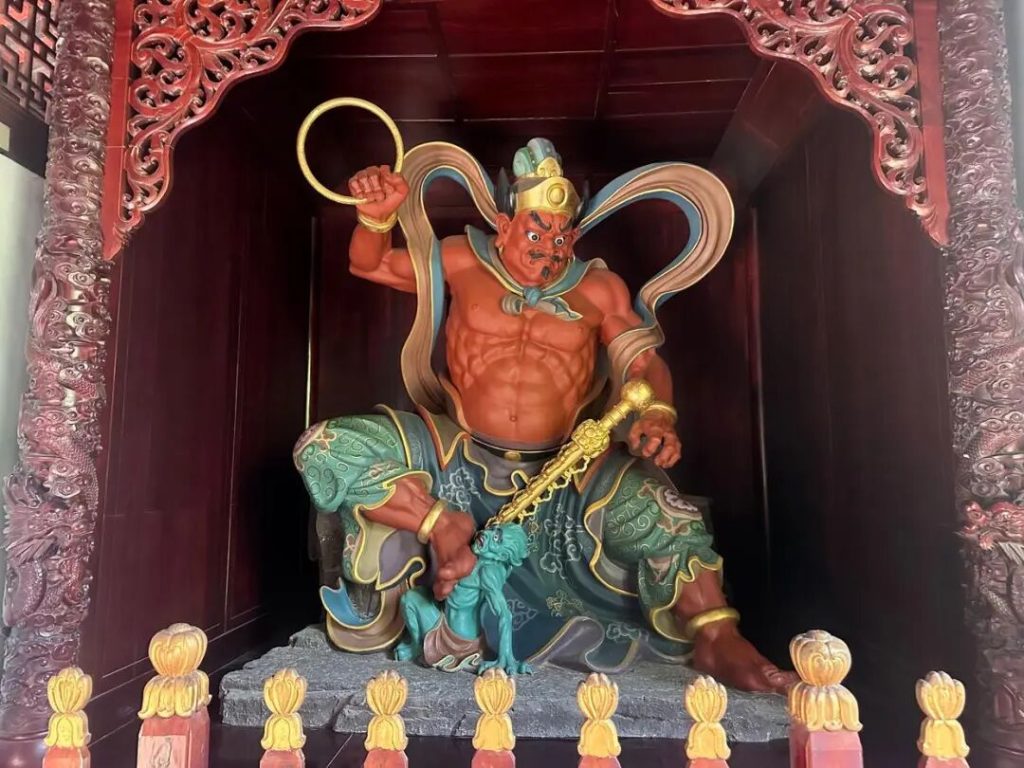
🌈Inside Heng-Ha Shrine are two divine generals. Zheng Lun, with his flared nostrils, is General Heng, while Chen Qi, with his mouth wide open, is General Ha. Together they are commonly known as the “Heng-Ha Generals,” characters from The Investiture of the Gods. Today they are also regarded as guardian deities and are commonly represented as the two Vajra guardians at the entrance to Buddhist temples.
Shanxiao Pavilion
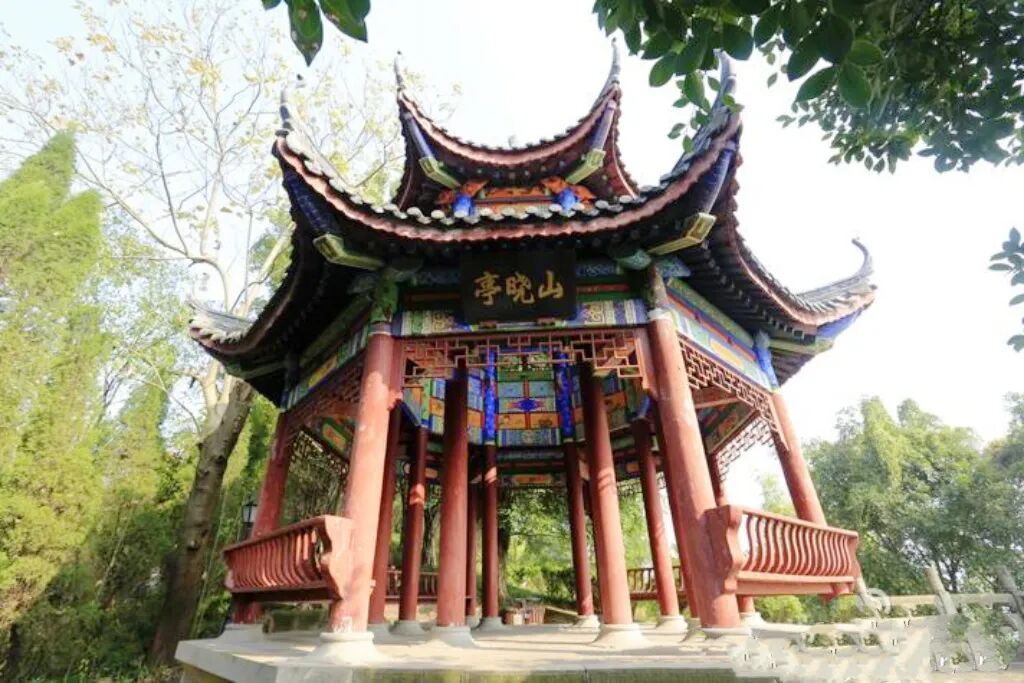
🌈Shanxiao Pavilion is a resting place for pilgrims and visitors climbing the mountain. Its name comes from one of Fengdu’s Eight Scenic Views, “Morning at Pingdu Mountain.” In the morning, Pingdu Mountain is wrapped in light mist, ancient trees are lush and green, and the upturned corners of temple roofs appear and disappear among the foliage, creating a scene like a fairyland on earth.
Bao'en Hall
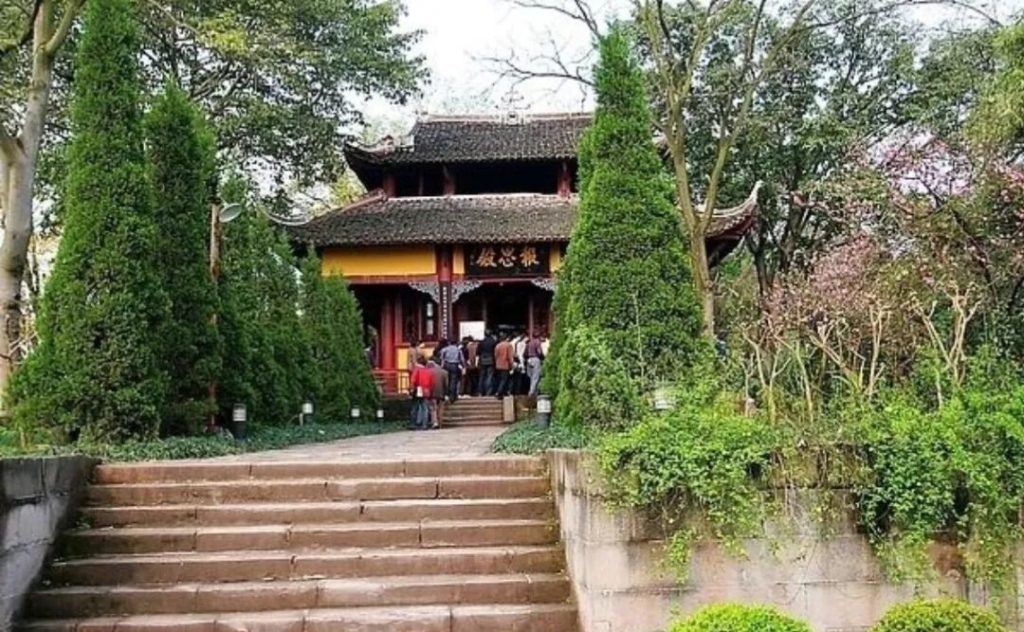
🌈Bao'en Hall enshrines Ksitigarbha and Mulian. Mulian was one of the ten great disciples of Shakyamuni Buddha and was known as “foremost in supernatural powers” and “foremost in filial piety.” Ksitigarbha, Manjushri, Samantabhadra, and Guanyin are collectively known as the Four Great Bodhisattvas of Buddhism. Manjushri represents “great wisdom,” Samantabhadra “great practice,” Guanyin “great compassion,” and Ksitigarbha “great vow.” Ksitigarbha’s role is to teach and guide beings in the six realms. The hall is named Bao'en, meaning “repaying kindness,” because of the story of “Mulian Rescues His Mother.” Mulian’s mother, Qingti, was sent to hell and became a hungry ghost because she had shown disrespect toward Buddhism. To save her and repay her for raising him, Mulian followed Shakyamuni Buddha’s guidance and held an Ullambana ceremony on the fifteenth day of the seventh lunar month, said here to be Ksitigarbha’s birthday. After many hardships, he finally rescued his mother. The story of “Mulian Rescues His Mother” became widely known, hence the name Bao'en Hall.
Medicine King Hall

🌈The Medicine King Hall on Mingshan enshrines two historical physicians honored as Medicine Kings: Sun Simiao and Pi Tong. Sun Simiao, also known as Zhenren, was a famous physician of the Tang Dynasty from Huayuan in Jingzhao (today’s Yaozhou District, Shaanxi). He wrote renowned medical works such as Essential Prescriptions Worth a Thousand Gold Pieces and Supplement to Essential Prescriptions Worth a Thousand Gold Pieces, and later generations revered him as a medical sage and Medicine King Bodhisattva. Pi Tong, from Anguo in Hebei, was a founding meritorious official of the Eastern Han Dynasty. He followed Liu Xiu and distinguished himself in the campaigns against Wang Mang’s usurpation, and was appointed governor of Quyang. He was not only skilled in medicine and pharmacology but also advocated support for folk medicine. From then on, Anguo developed a tradition of cultivating medicinal herbs, making medicines, and valuing medical care, eventually becoming known as China’s “Medicine Capital.” During the Song Dynasty, Emperor Huizong granted Pi Tong the title “Ling Gong” and ordered a temple to be built in his honor. His titles were gradually elevated until he became known as the “Medicine King.” The hall also contains Chen Mingsheng’s Mani Treasure Torch and Zhusheng Elixir, symbolizing new life following the end of life. Medicine King Hall is a place where people pray for fewer illnesses and better health.
God of Wealth Hall

🌈The God of Wealth Hall enshrines two deities of wealth: Bigan, the Civil God of Wealth, and Zhao Gongming, the Martial God of Wealth.
Naihe Bridge
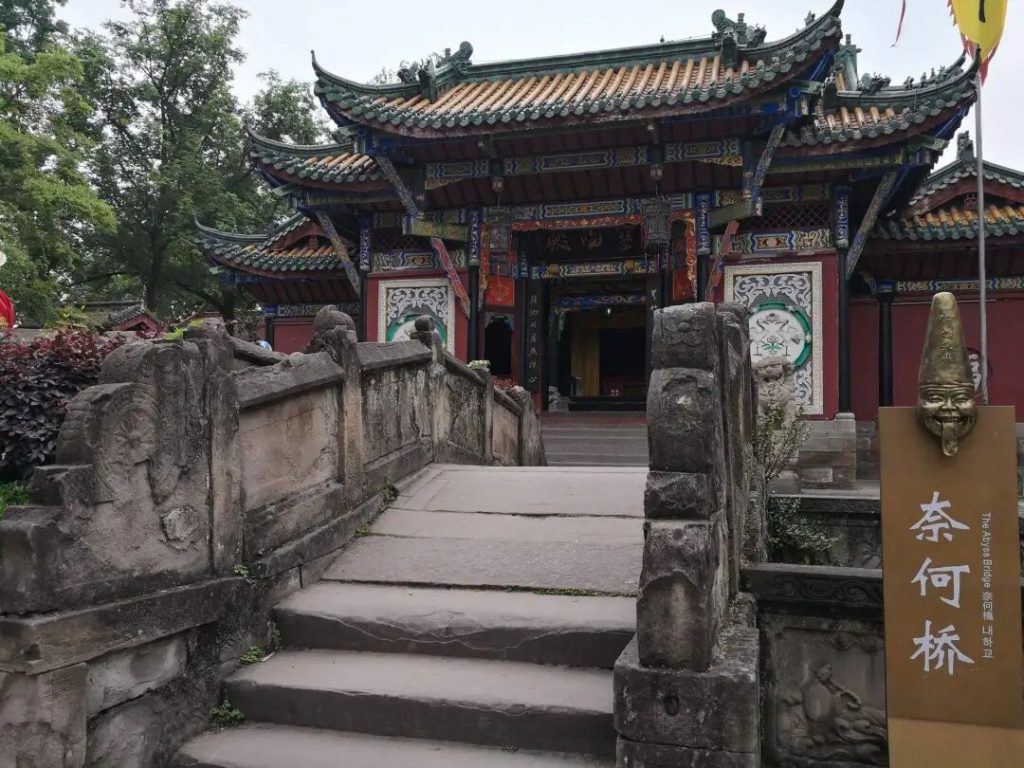
🌈Naihe Bridge is one of the distinctive features of Fengdu Ghost City because it is regarded as the entrance to the Ghost Kingdom. According to legend, a bridge once spanned the rushing Yangtze River, connecting the Ghost Kingdom with the human world. This was Naihe Bridge. The legend has a long history, and the idea of a passage used by spirits and deities closely resembles the later folklore surrounding Naihe Bridge.
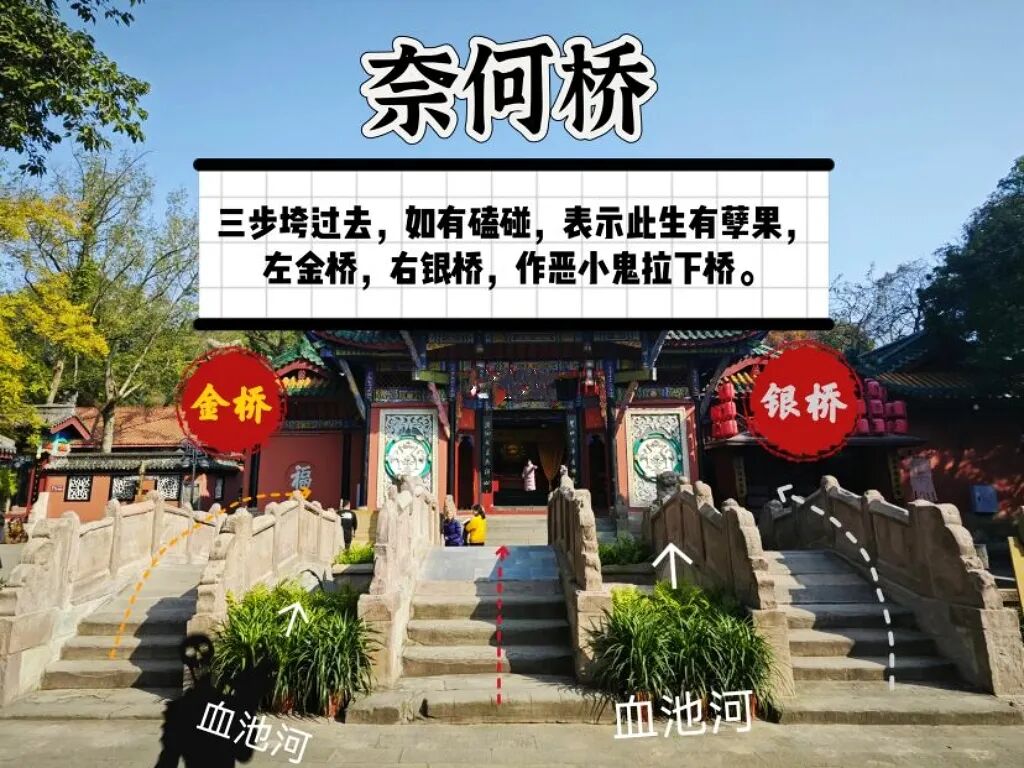
🌈Naihe Bridge was originally an auxiliary structure of Liaoyang Hall and was built during the Ming Dynasty. It was later associated with the legendary Naihe Bridge, while the pool beneath it became known as the “Blood River Pool.” There is also a stone bridge on either side: the Gold Bridge on the left and the Silver Bridge on the right. Upright officials and people of high moral character are said to be guided by gods or Buddhas across the Gold Bridge to ascend as immortals; those who performed good deeds and accumulated virtue are welcomed by White Impermanence, cross the Silver Bridge, and are then judged by the ruler of the underworld before being reincarnated into a wealthy family.
Liaoyang Hall
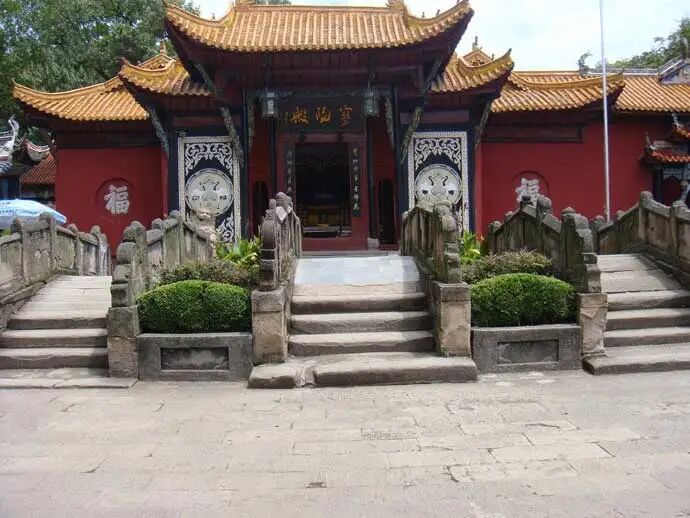
🌈Liaoyang Hall was built during the Yongle reign of the Ming Dynasty as an ancestral worship hall for Zhu Chun, Prince Xian of Shu. It was burned down at the end of the Ming Dynasty and rebuilt in the early Qing Dynasty.
Xingchen Dun
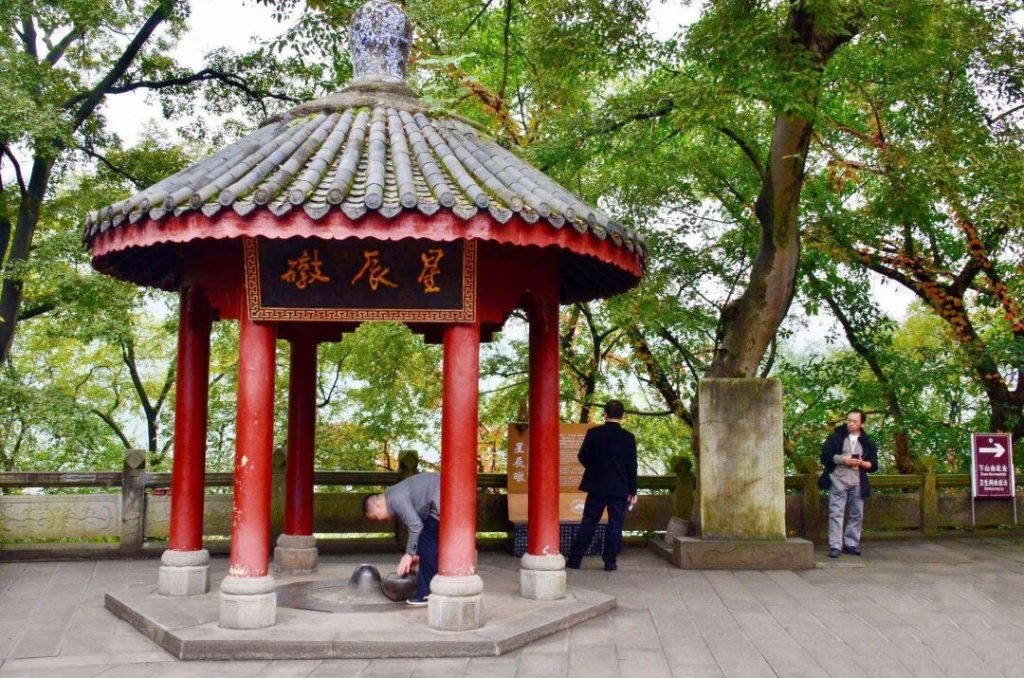
🌈One attraction not to miss in Ghost City is Xingchen Dun, where a popular master performs the “turning stone brings good fortune” feat. The demonstration with an iron stone weighing more than 150 kilograms is an impressive display of strength. Xingchen Dun consists of two parts. The upper iron weight, called the “Mind-Spirit Iron,” is hemispherical and weighs 182.5 kilograms; the lower base is called the “Iron Spirit Root.” Legend says it was cast by the Tang general Yuchi Jingde while supervising temple construction on Mingshan to train his wrist strength. It is said that if someone can rotate and stack the upper part of Xingchen Dun onto the raised center of the base, it can cure “heart ailments.” Here, this does not mean heart disease, but emotional troubles caused by worry and anxiety.
Thirty-Three Heavens
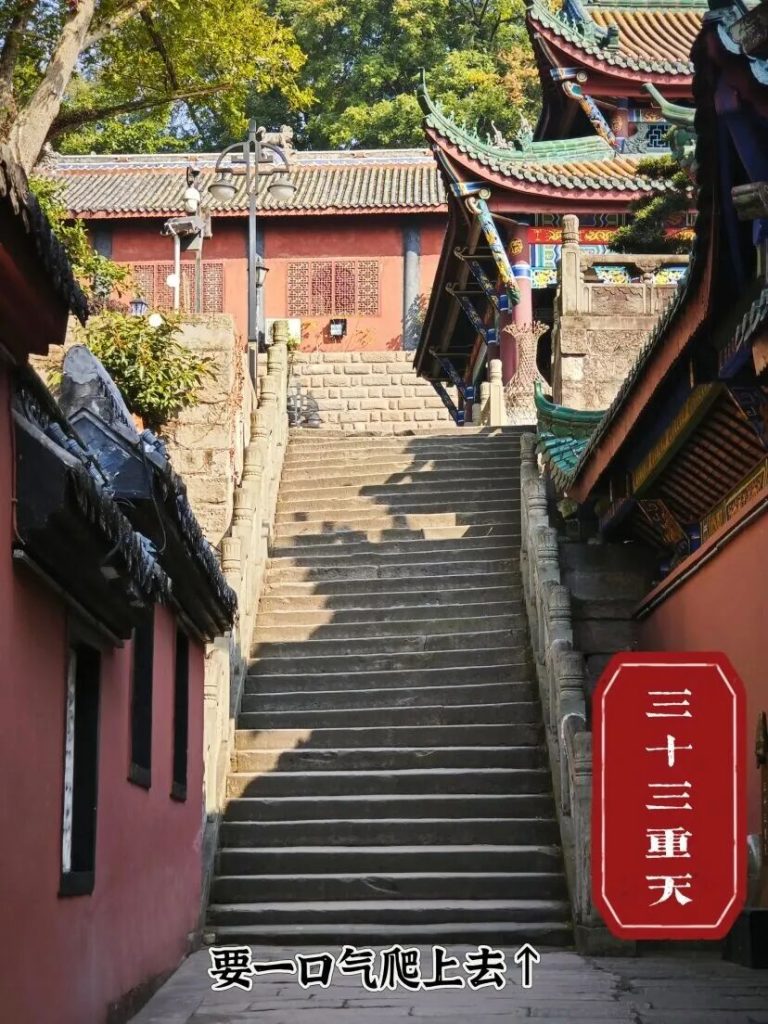
🌈Fengdu Ghost City has a flight of thirty-three stone steps, representing the Thirty-Three Heavens. Climbing all thirty-three steps leads to Jade Emperor Hall. Ancient people believed that heaven had many levels: some spoke of nine heavens, others thirty-six, and still others ninety-nine. The Thirty-Three Heavens here are based on records in Zi Bu Yu. Each step represents one level of heaven and has its own name. It is said that anyone seeking success in an official career or in business can run up all thirty-three steps in one breath and thereby “ascend to heaven in a single bound.”
Jade Emperor Hall
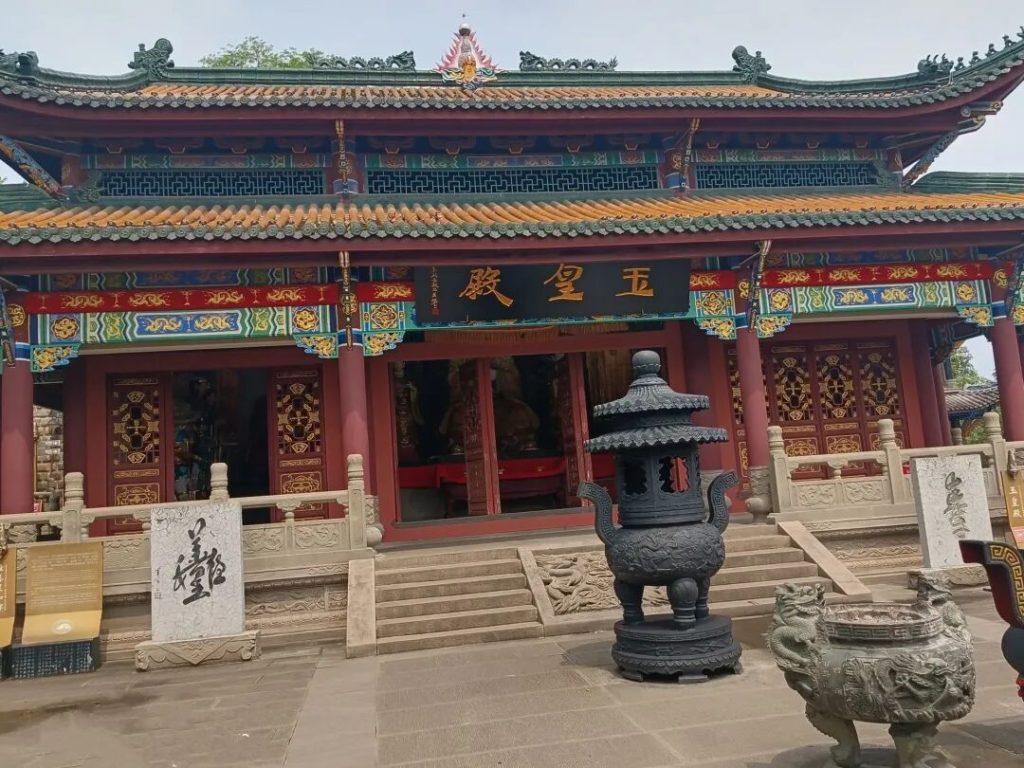
🌈At the top of the Thirty-Three Heavens stands Jade Emperor Hall, the residence of the Jade Emperor. The hall was formerly called “Lingxiao Palace.” It was rebuilt in the fourth year of the Kangxi reign of the Qing Dynasty (1665) and named “Jade Emperor Temple,” before being renamed “Jade Emperor Hall” late in the Kangxi reign, a name it retains today.
Hundred Children Hall

🌈Hundred Children Hall was traditionally a place where pilgrims prayed to the Bodhisattvas for children and for the healthy growth of their children. It enshrines the three great Bodhisattvas Guanyin, Samantabhadra, and Manjushri, as well as the Goddess Who Grants Children and the Goddess of Safe Childbirth.
Yellow Springs Road
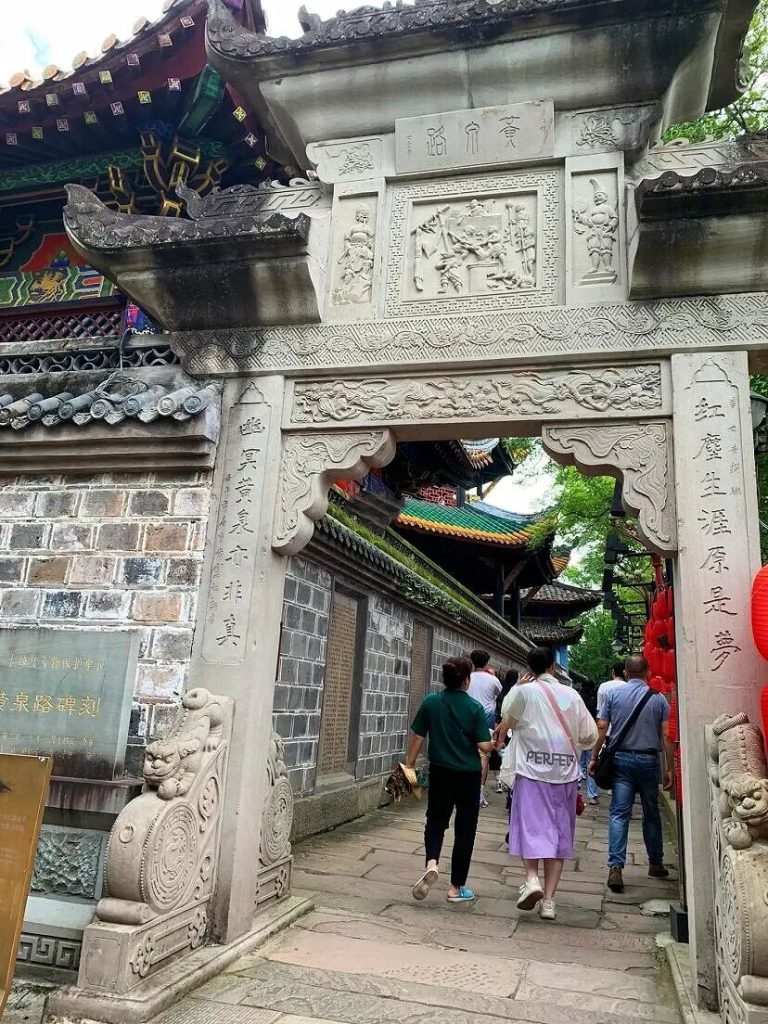
🌈Yellow Springs Road is the stretch leading toward the Ghost Kingdom. It is said to be filled with yin energy, and only the dead can reach its end. Once ordinary mortals step onto the road, they may find it difficult to discover the way back. For this reason, Yellow Springs Road is described in Ghost City as an inverted path where the realms of humans and ghosts are hard to distinguish.
Ghost Gate
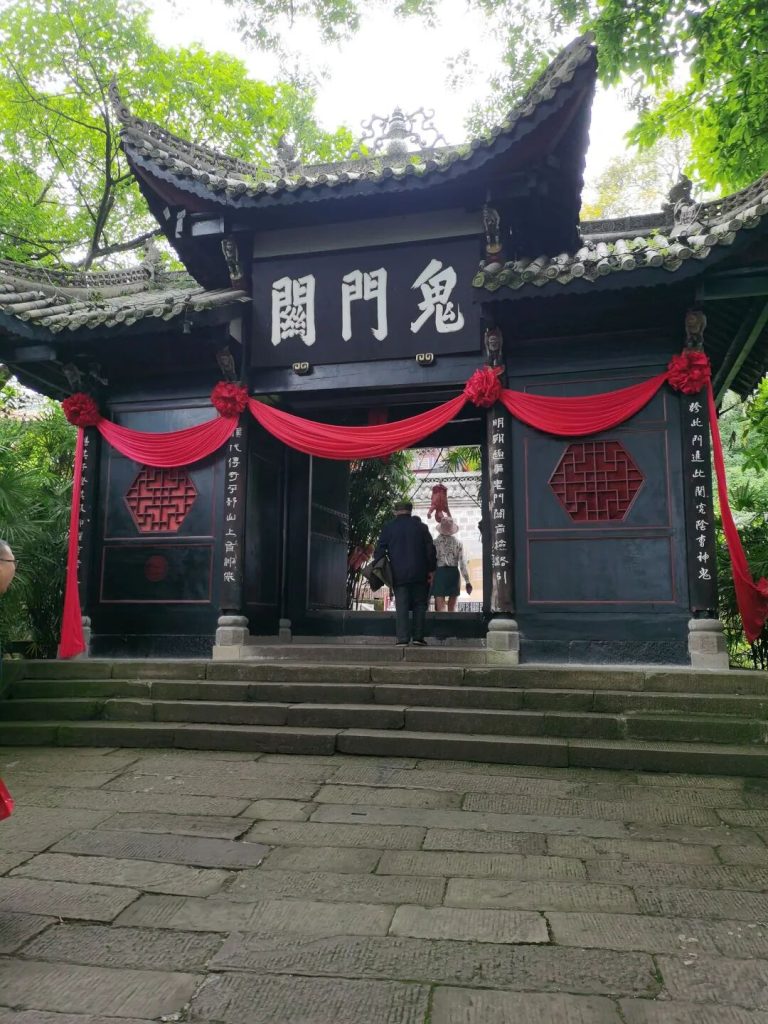
🌈According to legend, Ghost Gate is the unavoidable checkpoint for entering the Ghost Kingdom. Anyone arriving here must be inspected to see whether they hold the Ghost Kingdom pass known as a “road permit.” This serves as the document for reporting to the Ghost Kingdom after death. The permit is said to be three chi long and two chi wide, printed on soft yellow paper, and bears the inscription: “A road permit issued by the Yama Emperor of Fengdu; all people under heaven must possess this permit in order to enter the underworld, be reincarnated, and ascend to heaven.” It carries three official seals, including those of the Underworld City God and Fengdu County authorities. When the permit is burned during burial or cremation, it is believed to accompany the soul to the underworld and allow unobstructed passage wherever it goes.
Homesickness Terrace
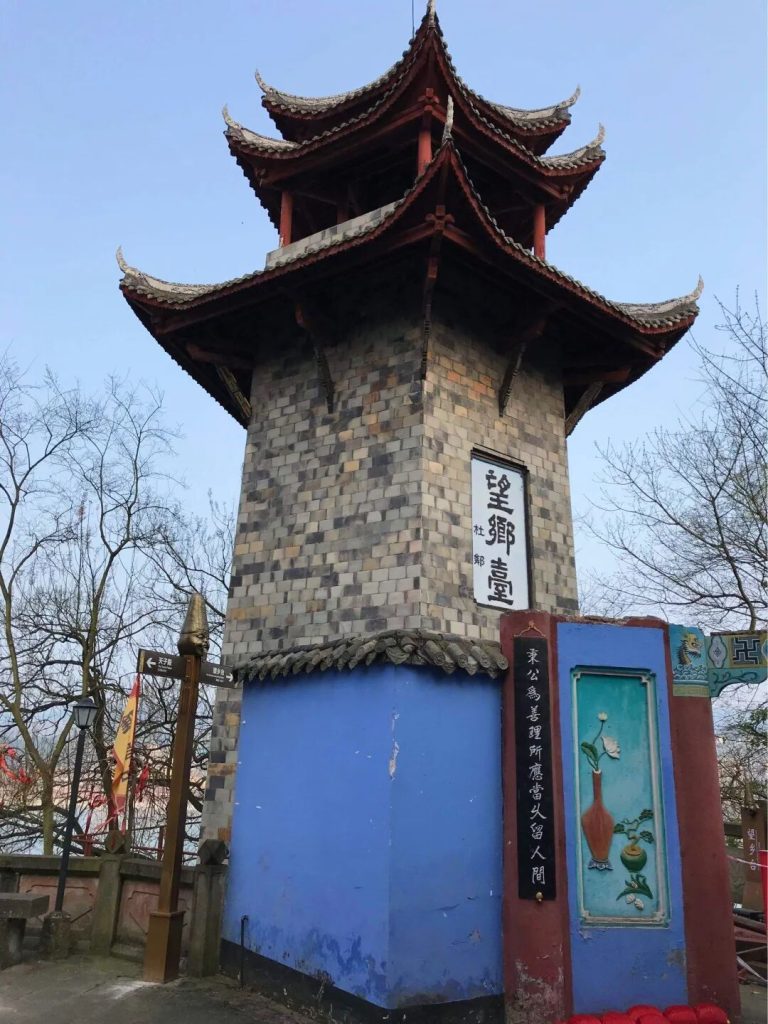
🌈Homesickness Terrace was first built during the Western Jin Dynasty and rebuilt in 1958. It is said to be the tower that the deceased ascend on the seventh day after death to look back toward their hometown. Located near the center of Fengdu Ghost City, it is essentially one of the highest points in the scenic area. Nearby stands the main administrative center of the underworld, Yama’s “office,” Tianzi Hall. This is also the largest group of ancient buildings in the Mingshan Scenic Area, first built during the Western Jin Dynasty and renovated during the Kangxi reign of the Qing Dynasty. Legend says that in former times, visitors who had traveled from afar to Fengdu Ghost City would look into the distance from here, gaze toward their homeland, and think of their loved ones. From Homesickness Terrace, visitors can enjoy a bird’s-eye view of the entire Ghost City and appreciate the surrounding mountain and river scenery.
Tianzi Hall
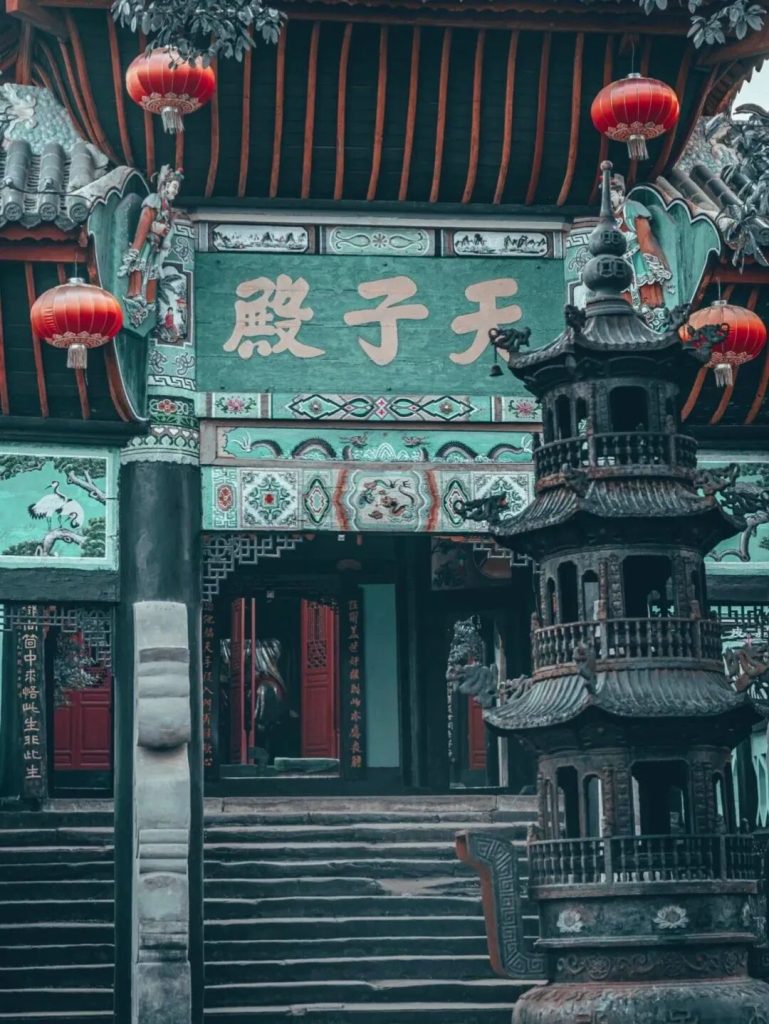
🌈Tianzi Hall is one of the major attractions in Ghost City. According to ancient legend, the Ghost Emperor of Fengdu could summon countless ghosts and spirits to present offerings and prayers to him. Standing high among the mountains along the Yangtze River, the building is imposing and lifelike. Fengdu is sometimes called China’s home of the “Divine Comedy,” and this is a place where visitors pay homage to the Ghost Emperor. Tianzi Hall is the core of Ghost City and is also the oldest, largest, most extensive, and best-preserved temple on Mingshan.
Eighteen Levels of Hell
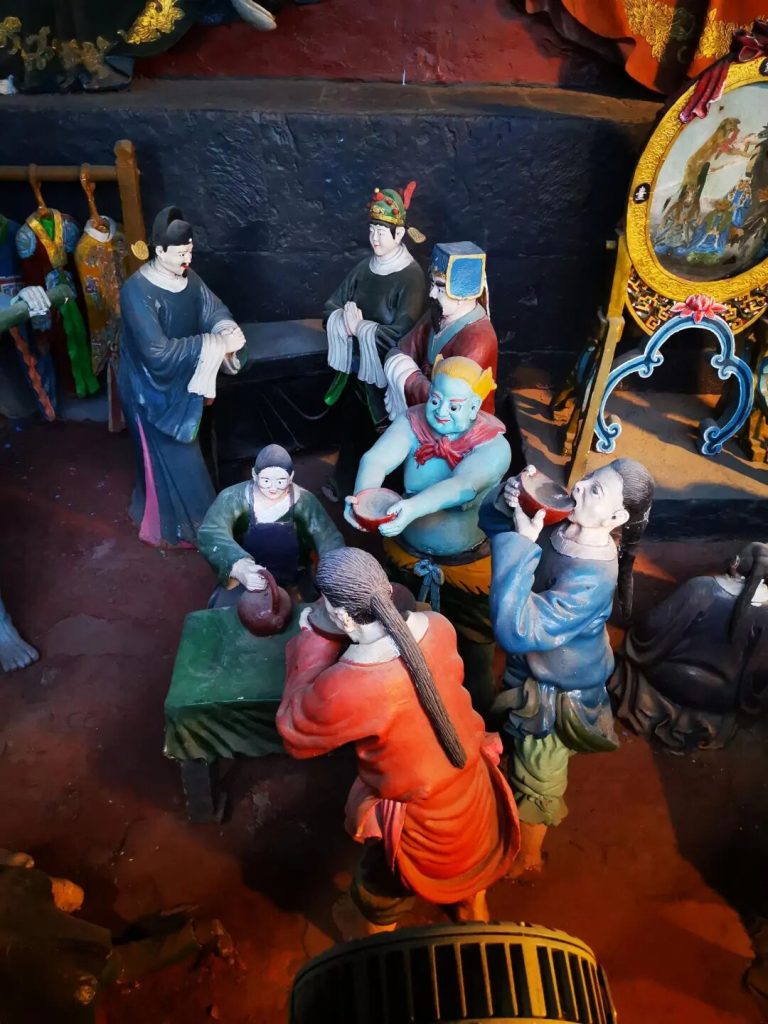
🌈On the two sides of Tianzi Hall are the “Eastern and Western Hells,” representing the legendary “Eighteen Levels of Hell.” These are places of punishment, featuring tortures such as grinding, heart removal, branding, freezing water, the mountain of knives, dismemberment by vehicles, pounding, sawing, boiling in oil, tongue pulling, forced scripture copying, and the wheel of punishment. Yet throughout China’s long history, some of these punishments were also inflicted on living people, truly creating a hell on earth.
Two Immortals Tower
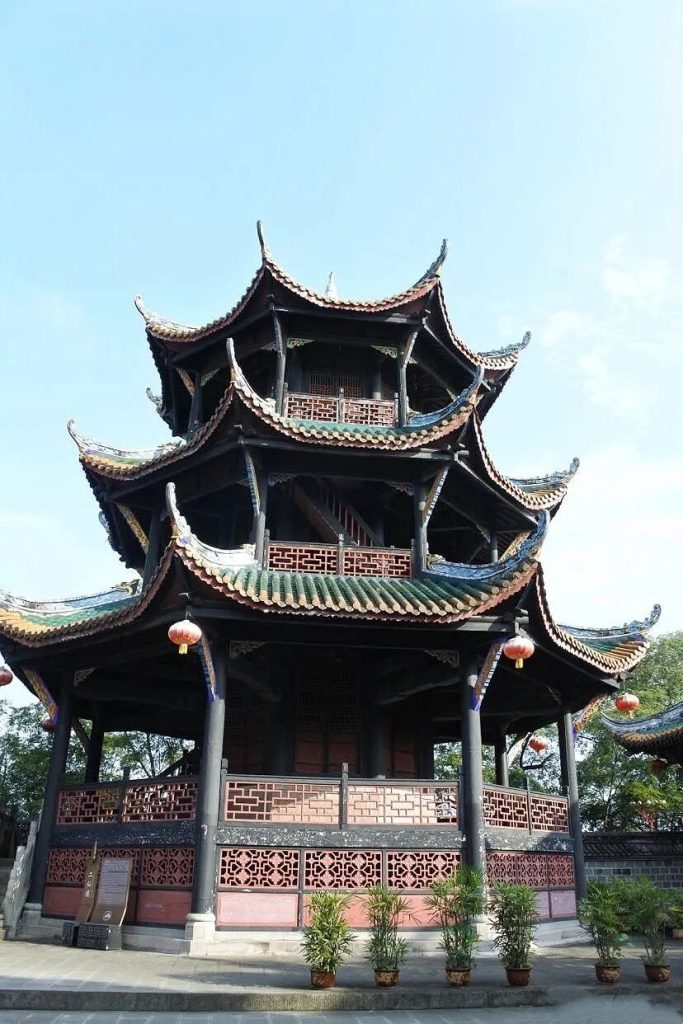
🌈Beside the Western Hell stands the “Two Immortals Tower,” with statues of the two immortals Yin Changsheng and Wang Fangping upstairs. According to legend, these two immortals cultivated themselves here and attained immortality, helping give rise to Fengdu Ghost City on this “famous mountain under heaven.” Later generations built the tower here in their memory.
Ancient Steles
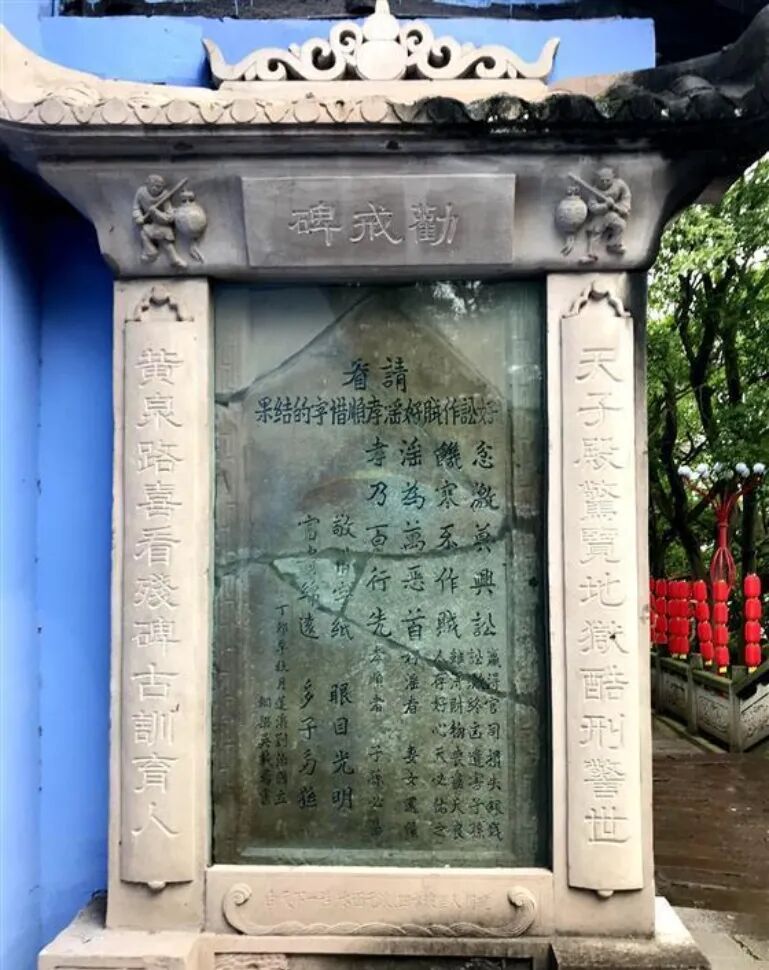
🌈Mingshan has ten steles from the Tang Dynasty, three from the Qing Dynasty, and one from the Republic of China period. Visitors interested in historical research should not miss them!
Ghost Kingdom Divine Palace

🌈Located between Mingshan and Shuanggui Mountain, this was the country’s largest palace devoted to “Ghost City culture.” Built as a “living Ghost City” using modern sound, lighting, electricity, and other technologies, it covers about 30 mu. The complex features ancient stone archways, blue-brick city walls and gates, palace buildings and pavilions, hanging beaded curtains, and an atmosphere once accompanied by melodious music. Below the palace lies Underworld Street, with winding corridors and staggered buildings. Its main attractions included the Underworld Archway, Underworld City Tower, Magu Cave, stone gateways, God of Wealth Temple, Underworld Restaurant, Mandarin Duck Pavilion, City God Temple, Spirit Realm, and Divine Path. However, it has now been abandoned!
Legends of Fengdu Ghost City
The origin of Fengdu Ghost City: Fengdu Ghost City, formerly written as “Fengdu Ghost City” with the old character form, was once an auxiliary capital of the ancient Ba people. Fengdu County was established in the second year of the Yongyuan era under Emperor He of the Eastern Han Dynasty, giving it a history of nearly 2,000 years. Ghost City is famous for buildings and representations of the underworld, including Heng-Ha Shrine, Tianzi Hall, Naihe Bridge, Yellow Springs Road, Homesickness Terrace, and Medicine King Hall. It also features many lifelike statues of people and ghosts, as well as realistic depictions of various infernal punishments...
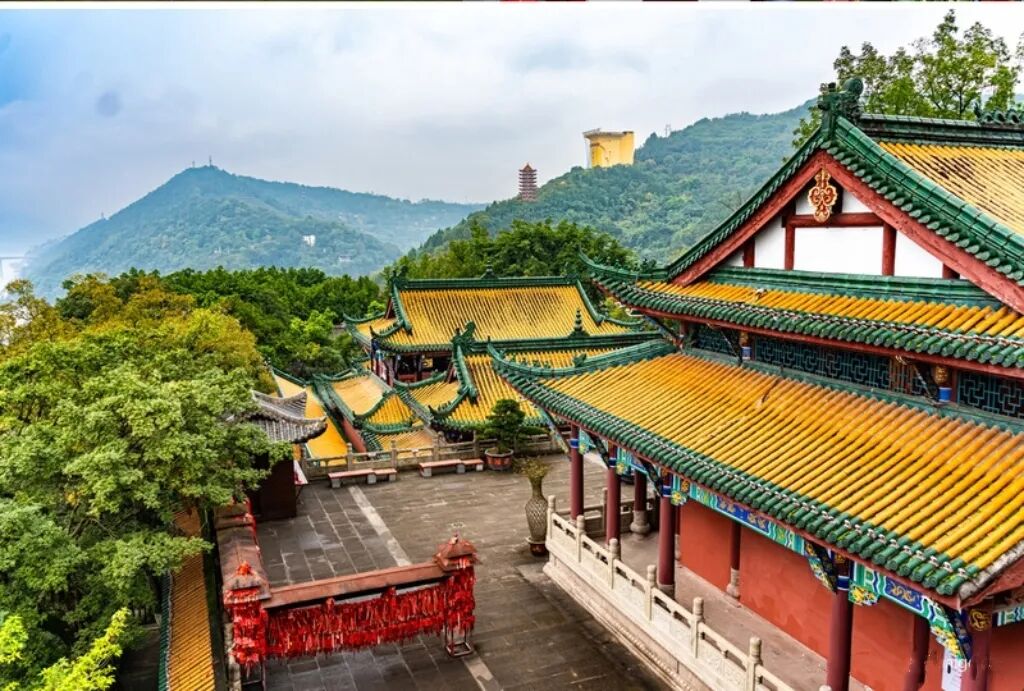
🌈Originally, people lived below the mountain in Fengdu Ghost City while “ghosts” lived on the mountain, and humans and “ghosts” coexisted harmoniously for a thousand years. After the Three Gorges Project began storing water, the water level rose from 135 meters to 175 meters, submerging the old Fengdu county seat, while Fengdu Ghost City remained high above the water—suggesting that the ancients had remarkable foresight. The new Fengdu county seat was relocated to the mountains on the south bank. From then on, the worlds of yin and yang were separated, leaving only a group of “lonely ghosts and wandering spirits” at the old site on the north bank.
The Origin of Fengdu Ghost City
🌈The earliest Taoist tradition on Mingshan grew from the legend of the “Two Immortals” on Pingdu Mountain in the early Eastern Han Dynasty. According to legend, Yin Changsheng, the great-grandfather of the empress of Emperor He of the Eastern Han Dynasty, disliked official fame and studied Taoism and alchemy under Ma Mingsheng. In the first year of the Yanguang era of the Han Dynasty (122), he ascended to heaven in broad daylight from Pingdu Mountain in Fengdu. Another learned figure at the Han court, Wang Fangping, was well versed in astronomy and divination. Influenced by the Taoist thought of Laozi and Zhuangzi, he abandoned official life to pursue immortality and repeatedly declined imperial summons. By the Tang Dynasty, some people mistakenly combined the surnames “Yin” and “Wang” into “Yinwang,” which sounded like “King of the Underworld.” As a result, Mingshan gradually came to be regarded in legend as the residence of the ruler of the underworld and evolved into a ghost capital of the netherworld. In the centuries that followed, many temples and halls associated with the underworld were built there.
🌈Fengdu has long been known as a ghost capital. Legend says that during the Three Kingdoms period, Zhang Lu established the “Pingdu Administrative Center” in the Fengdu area. Zhang Lu was the grandson of Zhang Daoling, founder of the Five Pecks of Rice Taoist movement, which incorporated many elements of shamanistic culture and beliefs in ghosts and spirits. The Pingdu Administrative Center was later renamed Luofeng Mountain, and Fengdu subsequently became known worldwide as China’s Ghost City.
The Story of the Rakshasa Woman and the Snake Demon
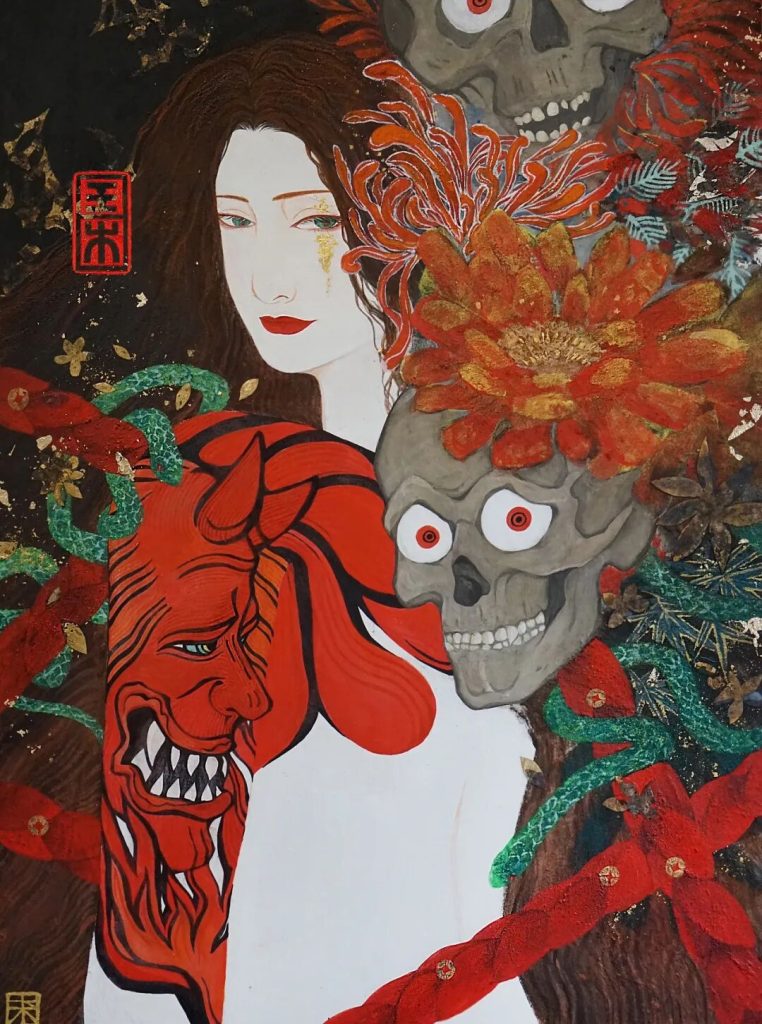
🌈Legend has it that a pig once lived in Fengdu for a long time, and water formed from its urine had the power to turn beautiful women ugly and ugly women beautiful. A Rakshasa woman once came here searching for an elixir and met a snake demon. Since neither female demon was particularly attractive, they realized the water’s magical effect and fought fiercely over it. In the end, the Rakshasa woman won the water and became beautiful, while the snake demon was cast into Fengdu’s underworld.
The Story of Ghost Gate
🌈Ghost Gate is said to be the gateway to the underworld. According to legend, before passing through it, one must show a cheerful smile; otherwise, the fierce spirits may easily be angered. If a fierce spirit takes notice of someone, that person may be destined for the underworld and unable to be reborn. Therefore, before passing through Ghost Gate, people traditionally laugh three times to keep themselves in good spirits.
The Story of the Awakening Stone Lions and Tolling Bell
🌈At the third watch of every midnight, the great bell in Fengdu Ghost City is said to ring three times, while the stone lions on the ground suddenly awaken from sleep, rise, and begin to run. Legend says that all of this happens because ghosts and spirits are celebrating the annual Ghost-Welcoming Festival.